
Number and Letter HuntFree printable worksheets
Aims
- Switching between two sequences, numbers and the alphabet, at every step (shifting attention)
- Finding the number or letter you are looking for among many (visual search)
- Keeping track of where you are while you keep searching (working memory)
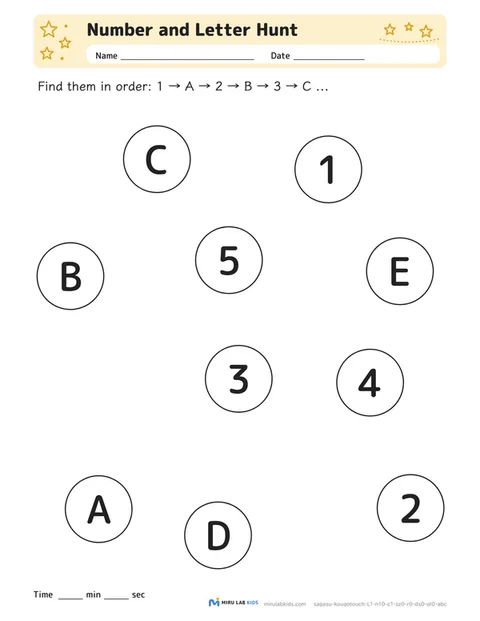
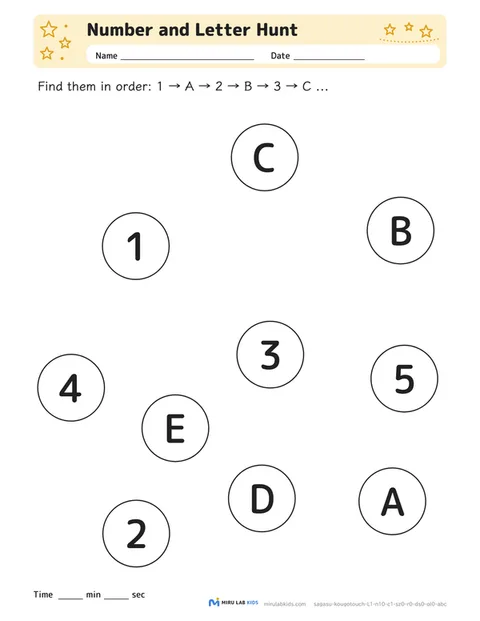
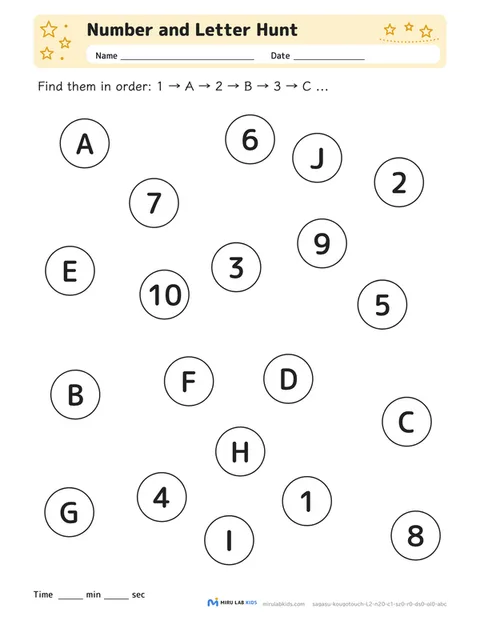
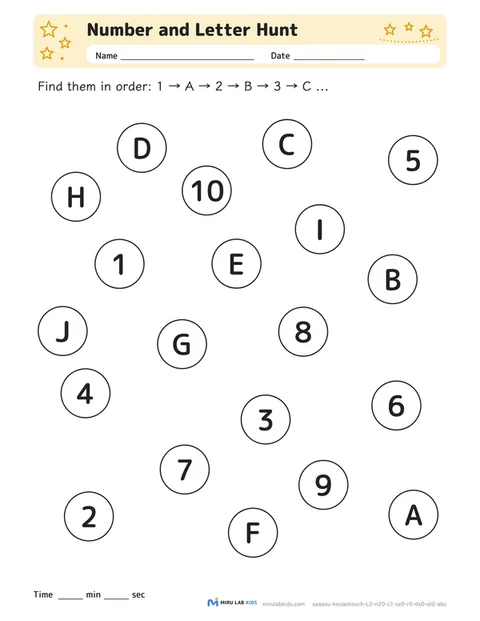
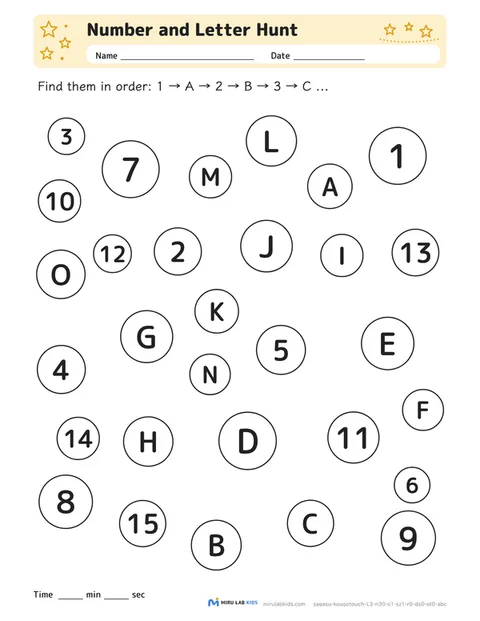
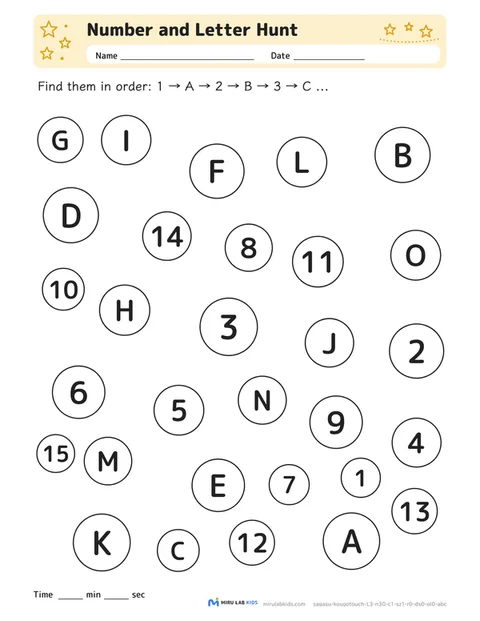
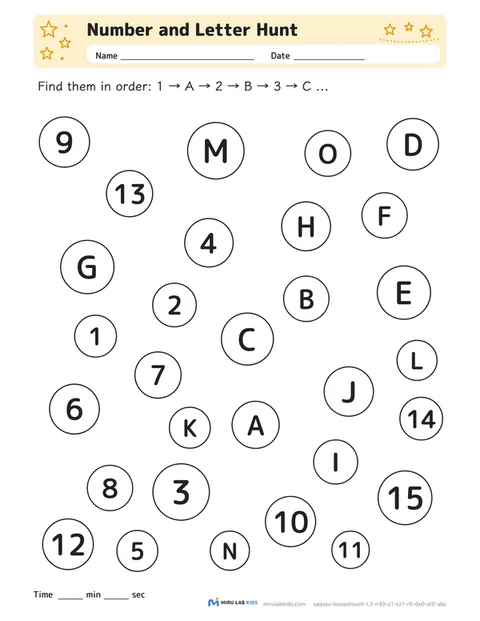
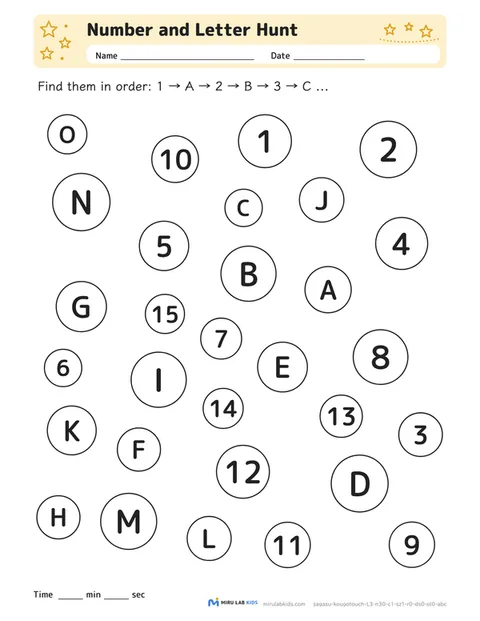
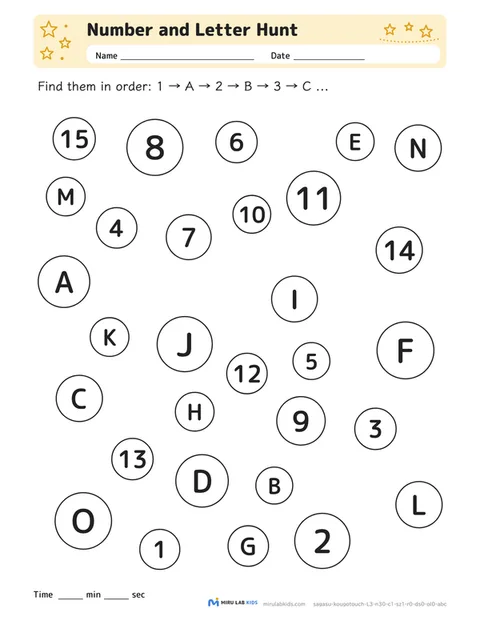
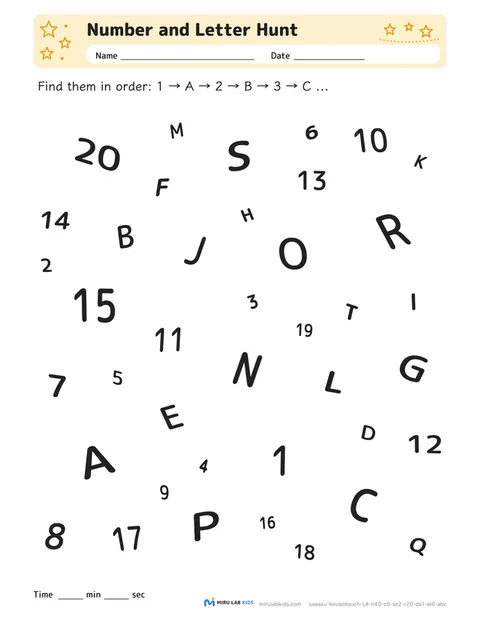
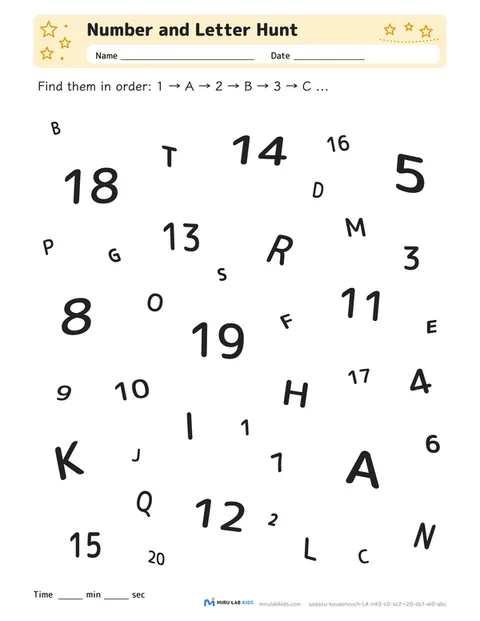
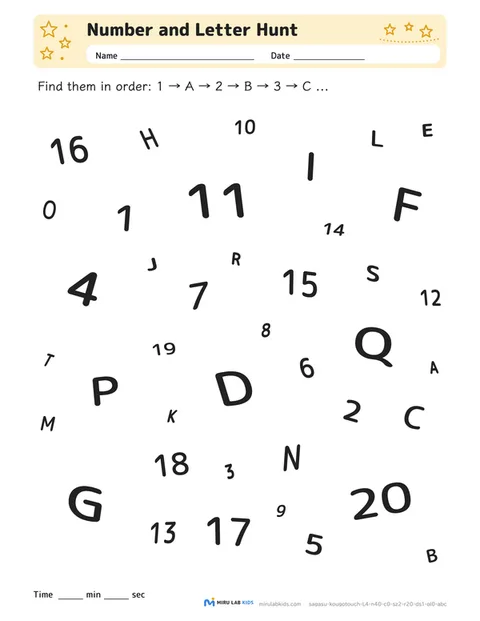
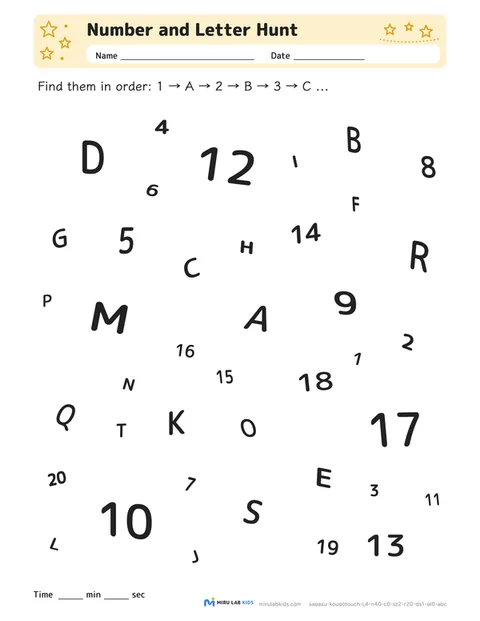
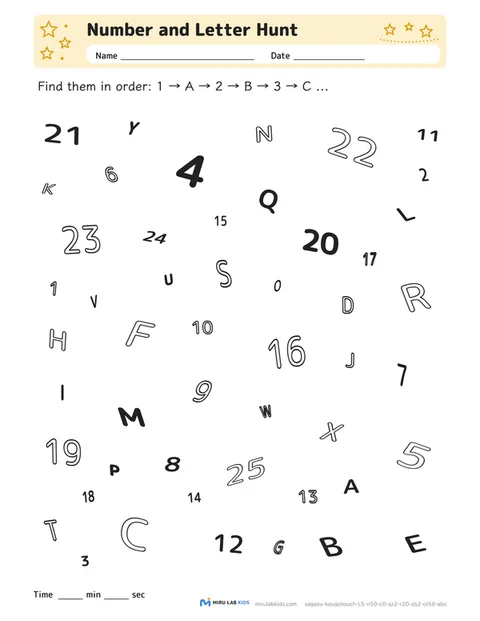
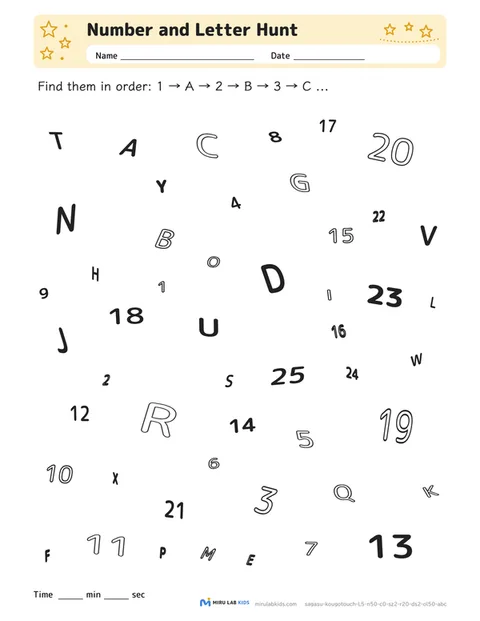
Numbers and capital letters are scattered all over the page, and your child finds them in order, switching back and forth: 1 → A → 2 → B → 3 → C, and so on.This is a step up from Number Hunt.At every step, your child has to switch between "which number comes next" and "which letter comes next." The items are just as easy to see as in Number Hunt, but holding two sequences in mind and switching at every step makes this activity use more attention.Even at the same level, it may take longer than Number Hunt, and children may lose track of where they are along the way.Along with finding a target among many things, the activity aims to build the ability to go back and forth between two sequences while remembering how far you have come.Your child needs to know the alphabet in order.There is no answer page, so the same sheet can be used again and again.
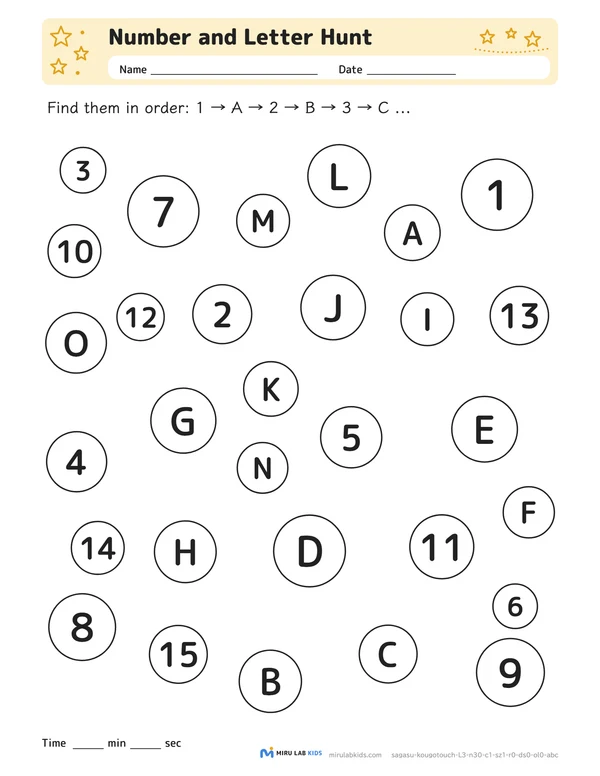 Level 3 example ›
Levels
| Level 1 | 1 to 5 and A to E (10 in all). Every item is in a circle, and all are the same size. | 5 worksheets |
|---|---|---|
| Level 2 | 1 to 10 and A to J (20 in all). Every item is in a circle, and all are the same size. | 5 worksheets |
| Level 3 | 1 to 15 and A to O (30 in all). The circles come in different sizes. | 5 worksheets |
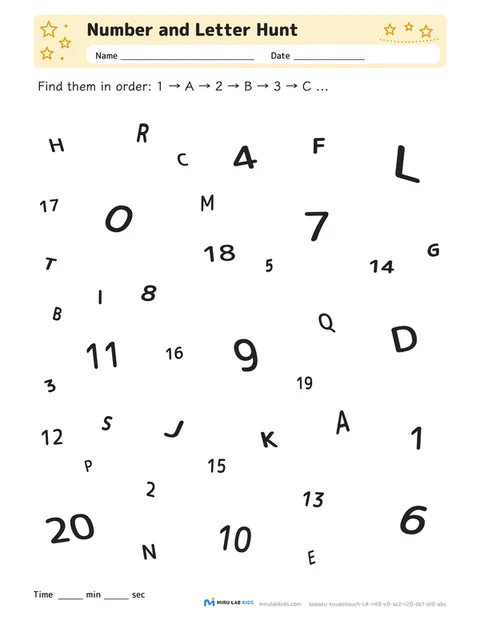
| Level 4 | 1 to 20 and A to T (40 in all). No circles, and sizes vary a lot. Some items are slightly tilted, narrow, or bold. | 5 worksheets |
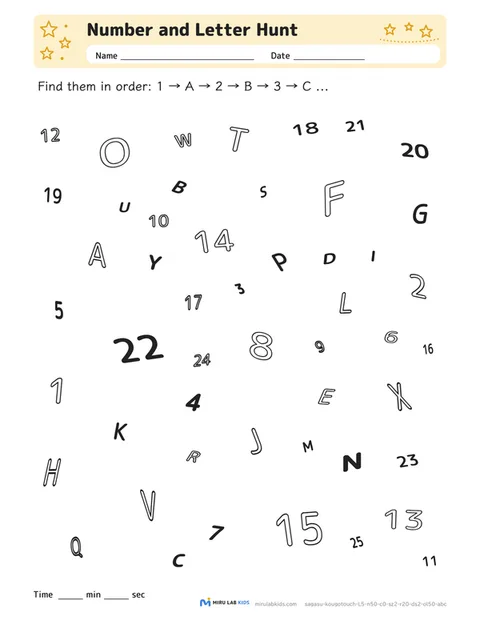
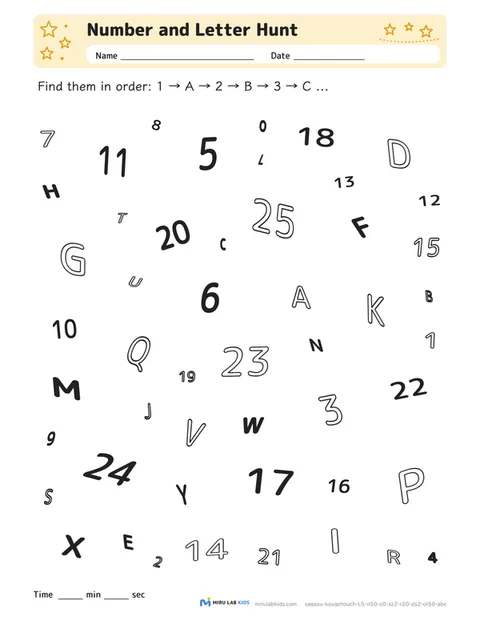
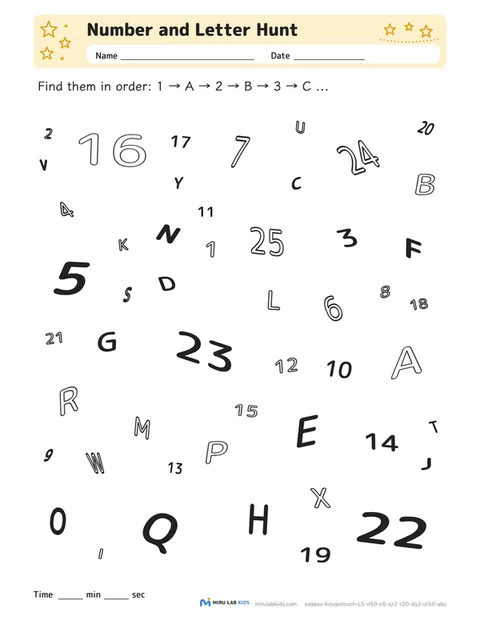
| Level 5 | 1 to 25 and A to Y (50 in all). The items vary even more, and about half are outlined (hollow). | 5 worksheets |
Tips
- Trying Number Hunt first makes it easier to understand how to search in order.
- Before starting, say "1, A, 2, B" out loud together to check the order. Your child can also trace the example in the instructions with a finger.
- Touching each item with a finger lets your child use the same sheet many times. Drawing a slash through each item with a pencil also works.
- If your child loses track, remind them of the last item and whether a number or a letter comes next, for example "You found 3. Which letter comes next?"
- One or two sheets at a time is plenty.
If it is too hard
- Go down one level.
- Try Number Hunt (numbers only) first.
- Keep an alphabet chart nearby to check the order.
- Choose a stopping point, such as "up to 5 and E."
If it is too easy
- Go up one level.
- Record the time and see whether your child can finish a little faster than last time.
- Switch from slashes to touching, so found items are not marked.
Worksheets
Choose a worksheet to open its printing page.
Level 11 to 5 and A to E (10 in all). Every item is in a circle, and all are the same size.
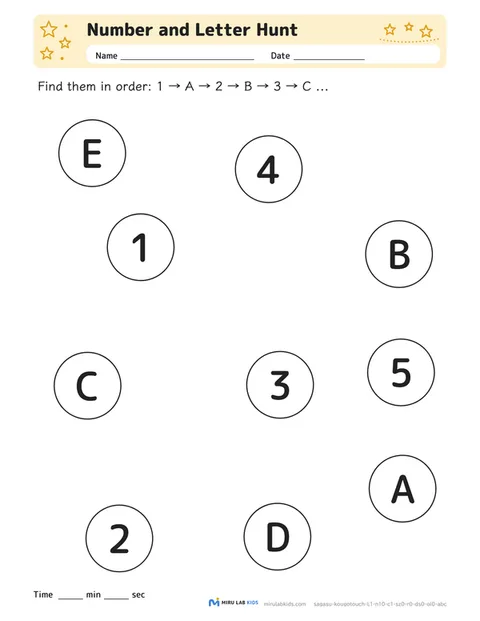
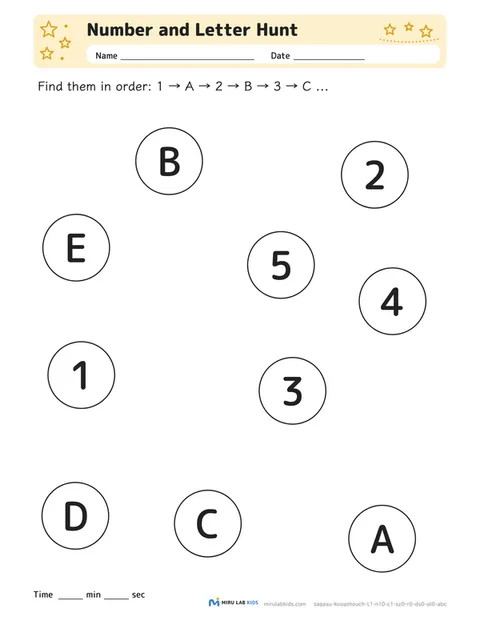
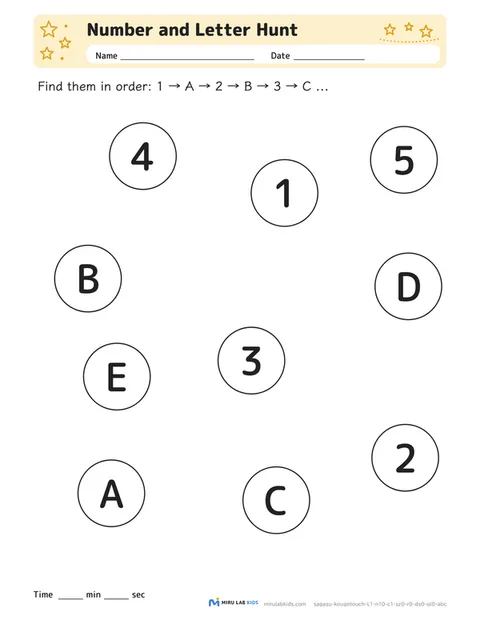
Level 21 to 10 and A to J (20 in all). Every item is in a circle, and all are the same size.
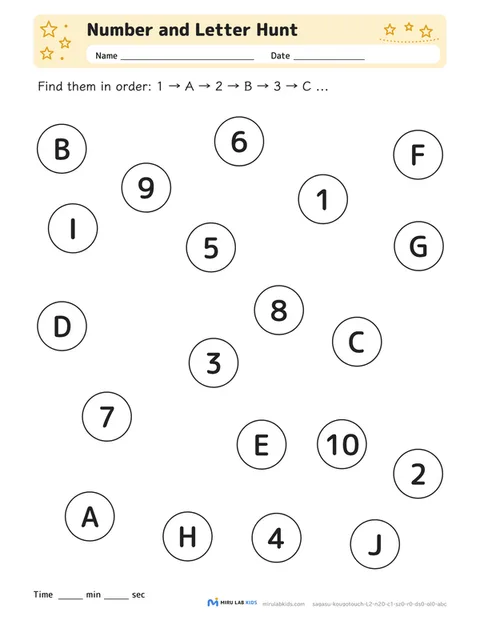
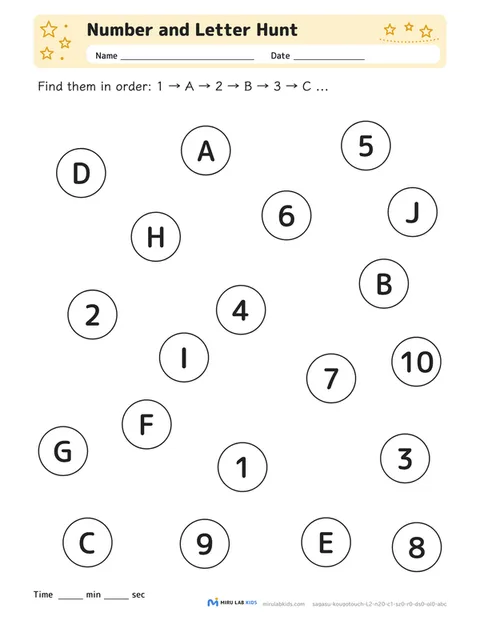
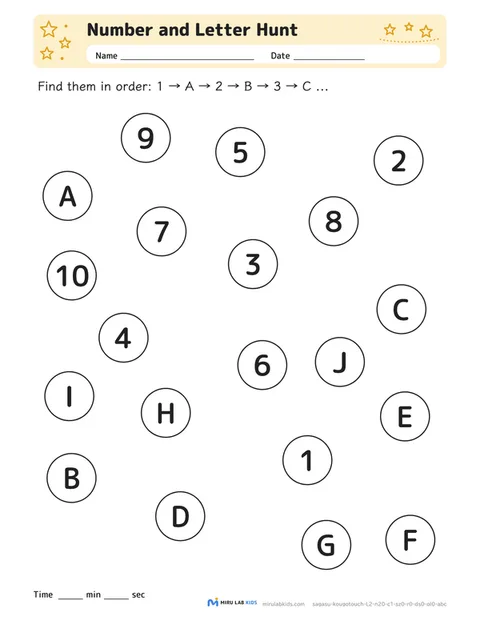
Level 31 to 15 and A to O (30 in all). The circles come in different sizes.
Level 41 to 20 and A to T (40 in all). No circles, and sizes vary a lot. Some items are slightly tilted, narrow, or bold.
Level 51 to 25 and A to Y (50 in all). The items vary even more, and about half are outlined (hollow).
Articles
About the code at the bottom right
The code at the bottom right of each worksheet (for example, sagasu-kougotouch-L1-n10-c1-sz0-r0-ds0-ol0-abc) shows its difficulty settings. Worksheets with the same code have the same difficulty. If you contact us about a worksheet, including this code helps us find it right away.