

Free visual perception worksheets, from easy to challenging
Free printable worksheets that aim to build children's visual skills, such as telling shapes apart, following lines with the eyes, and copying what they see.Each activity lists its aims, so you can choose with a purpose in mind.Pick a level, from easy to hard, and print it out on US Letter or A4 paper.For preschoolers through elementary-age kids, at home, in class, or in therapy.
Choose a worksheet
Recommended worksheets
Choose by skill area
 Shape Recognition
Noticing what is the same and what is different
Find the Same Shape, Hidden Shapes, Incomplete Shapes, Count the Shapes, Overlapping Shapes
 Spatial Relations
Understanding position, direction, and how shapes fit together
Dot Grid Copying, Dot Grid Copying: Pictures, Arrow Path, How Many Blocks?
 Visual Scanning
Searching and tracking with the eyes
Number Hunt, Number and Letter Hunt, Follow the Lines, Circle the Numbers, Spot the Difference
 Visual Memory
Remembering what you see
Remember and Find: Shapes, Remember and Find: Pictures, Remember the Order: Shapes, Remember the Order: Pictures
 Visual-Motor Skills
Drawing and coloring while looking
Dot-to-Dot, Symmetry Coloring, Pencil Obstacle Course
 Visual Planning
Looking ahead and planning a route
Mazes, Number Mazes, Pattern Maze: Pictures, Pattern Maze: Shapes, Shape Addition and Subtraction
Shape RecognitionNoticing what is the same and what is different
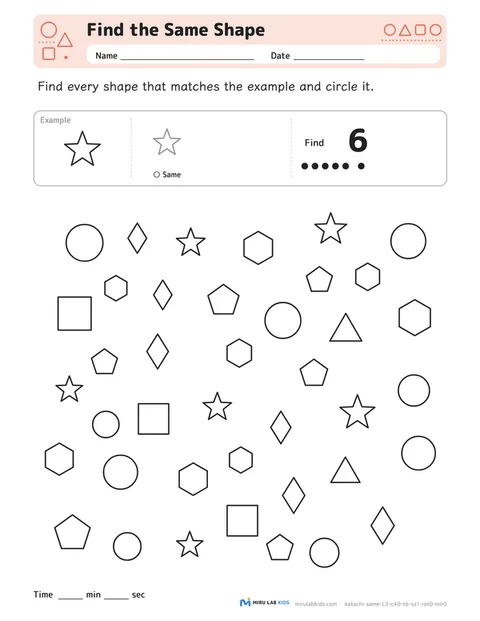
Find the Same Shape
Find every shape that matches the example among many shapes.
Aimsvisual discrimination / visual search / form constancy
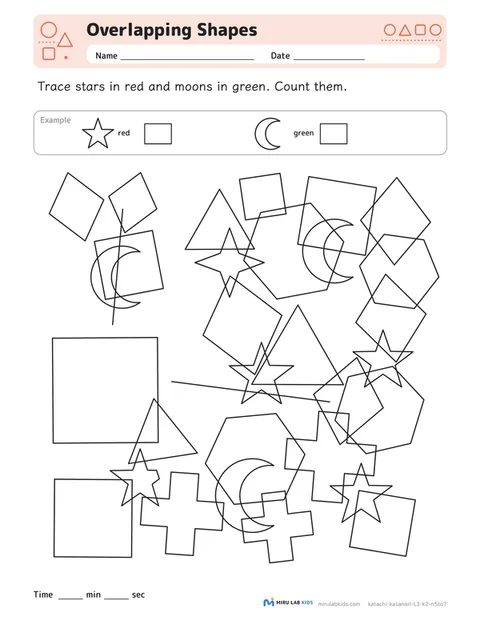
Hidden Shapes
Find every shape that matches the example among many overlapping outlines, trace it in color, and count.
Aimsfigure-ground perception / visual closure and grouping / visual discrimination / smooth pursuit and eye-hand coordination / visual attention and scanning
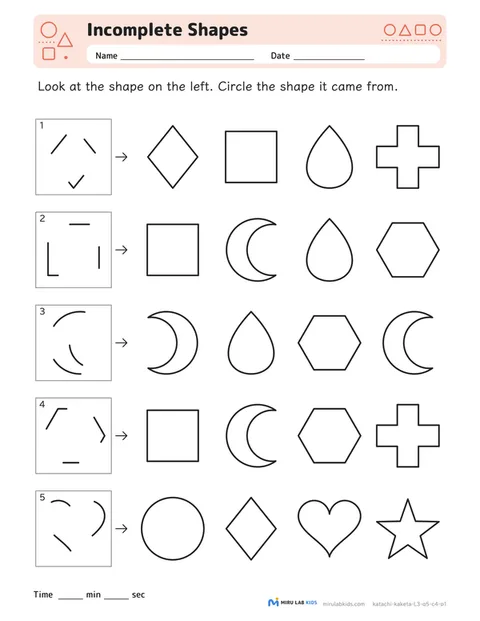
Incomplete Shapes
Look at a shape with parts of its outline missing and choose the shape it came from. Your child fills in the gaps in their mind.
Aimsvisual closure / shape completion / visual discrimination / spatial relations and careful comparison
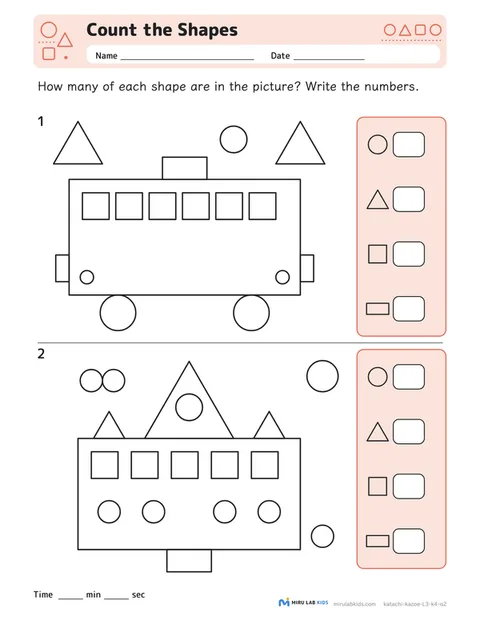
Count the Shapes
Look at a picture made of circles, triangles, squares and more, and count how many of each shape there are.
Aimspart-whole perception / form constancy / visual discrimination / attention and visual scanning
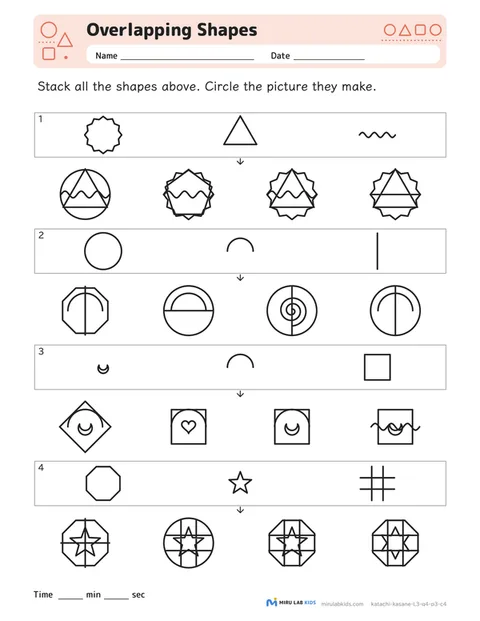
Overlapping Shapes
Stack all the shapes in the box on top of each other at the center. Which picture do they make? Your child puts shapes together in their mind.
Aimsshape synthesis / figure-ground / visual discrimination / form constancy and mental rotation
Spatial RelationsUnderstanding position, direction, and how shapes fit together
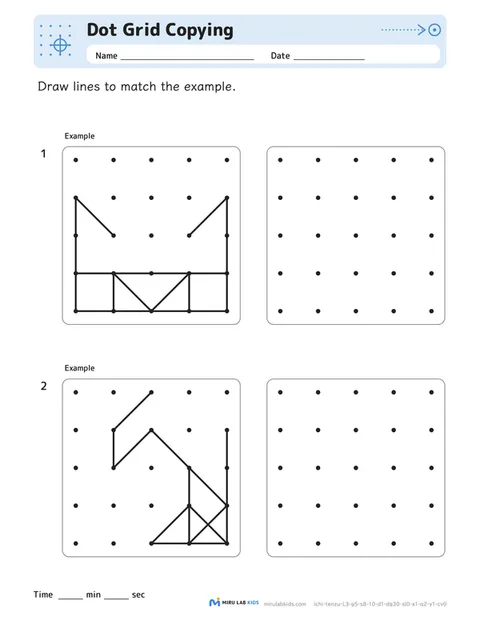
Dot Grid Copying
Copy the lines from the example grid onto the empty dot grid next to it.
Aimsvisual-spatial relations / saccades and shifting attention / eye-hand coordination
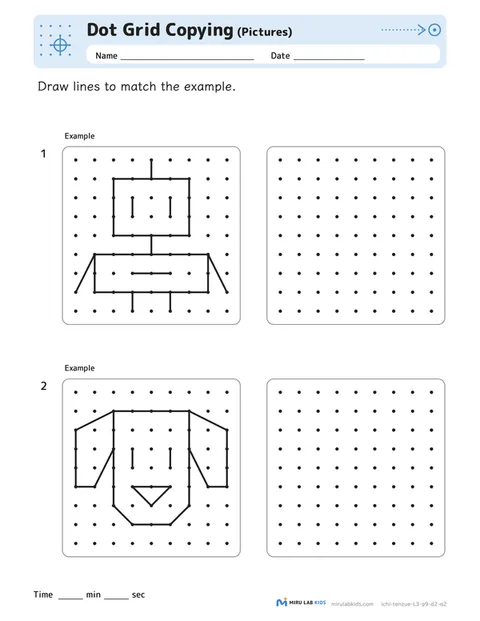
Dot Grid Copying: Pictures
Copy the lines from the example grid, and a picture such as a fish or a house appears.
Aimsvisual-spatial relations / saccades and shifting attention / eye-hand coordination
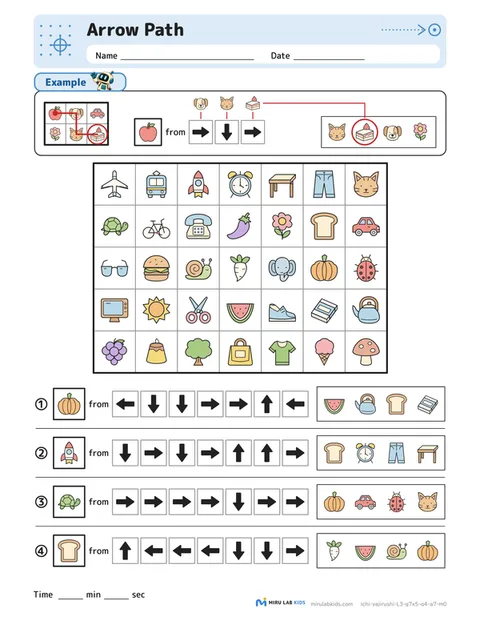
Arrow Path
Start at a picture on the grid, follow the arrows, and choose the picture you land on. Your child moves their position in their mind.
Aimsunderstanding direction / visual-spatial working memory / spatial relations / Levels 4 and 5
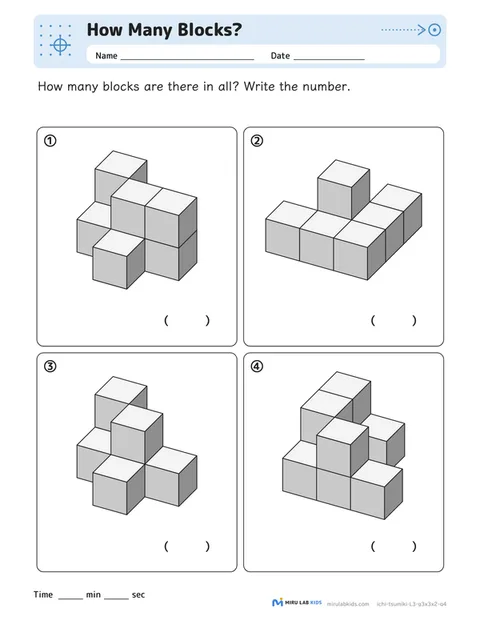
How Many Blocks?
Look at a stack of blocks drawn from above at an angle and count how many there are in all, including the ones you cannot see.
Aimsspatial reasoning / Counting hidden blocks by thinking "this block must be holding up the one on top" / Counting layer by layer or row by row to avoid missing or double-counting blocks / spatial relations
Visual ScanningSearching and tracking with the eyes
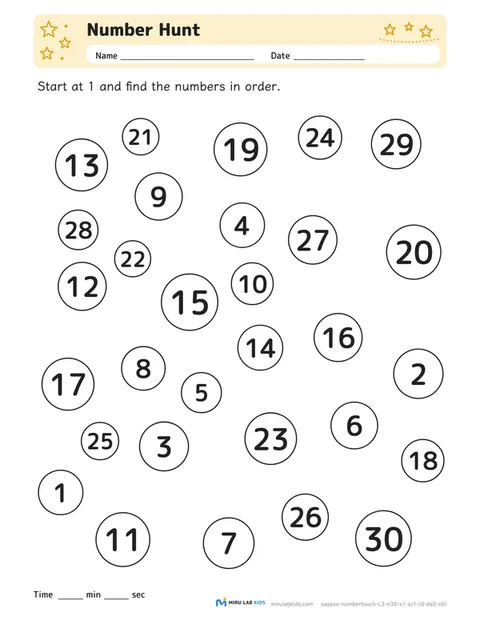
Number Hunt
Find the numbers scattered across the page, in order from 1.
Aimsvisual search / saccades / sustained attention
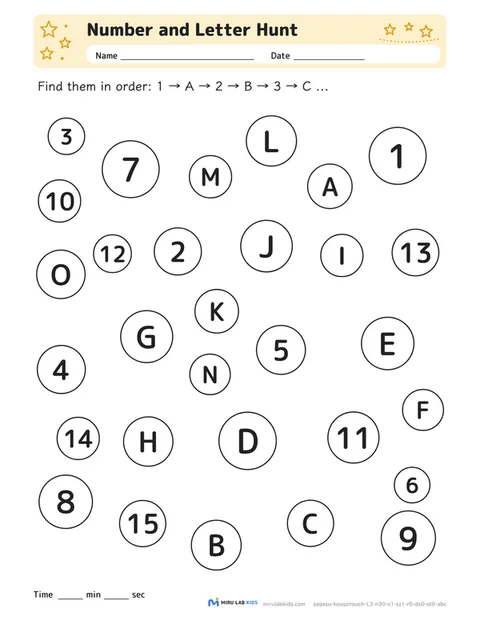
Number and Letter Hunt
Switch back and forth between numbers and letters, 1 → A → 2 → B, and find them in order.
Aimsshifting attention / visual search and saccades / working memory
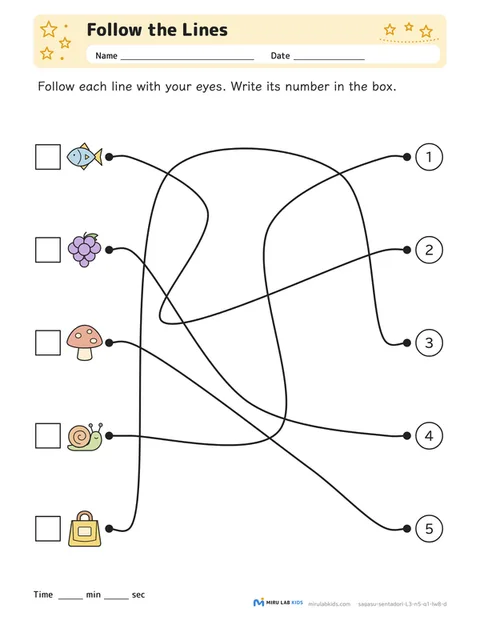
Follow the Lines
Follow tangled lines with the eyes to find which number each picture connects to.
Aimsvisual tracking and smooth pursuit / Telling which line continues where lines cross / sustained attention
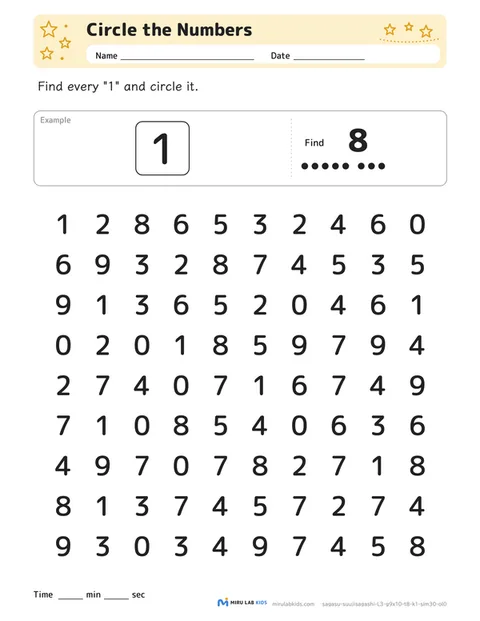
Circle the Numbers
Find and circle every target number in rows of numbers.
Aimsvisual search / visual discrimination / saccades / sustained attention
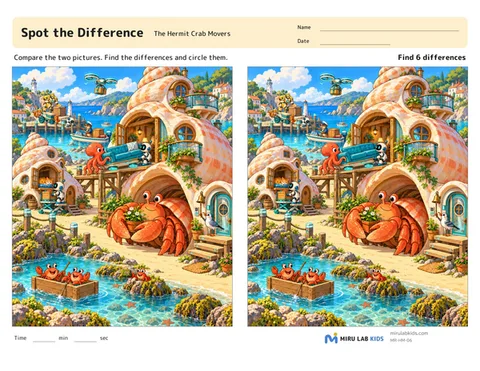
Spot the Difference
Compare two color pictures side by side, find what is different, and circle it. From a single character up to busy scenes full of characters.
Aimsvisual discrimination / visual attention and scanning / visual memory / saccadic eye movements / figure-ground perception
Visual MemoryRemembering what you see
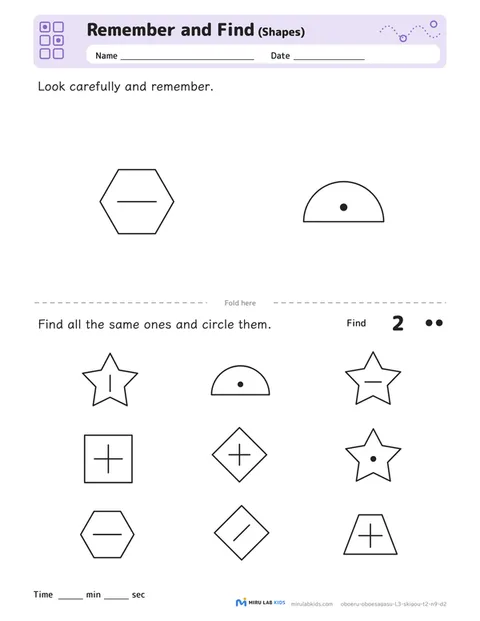
Remember and Find: Shapes
Remember the symbols at the top, fold the page to hide them, then find all the same symbols below.
Aimsvisual memory / visual discrimination / visual search
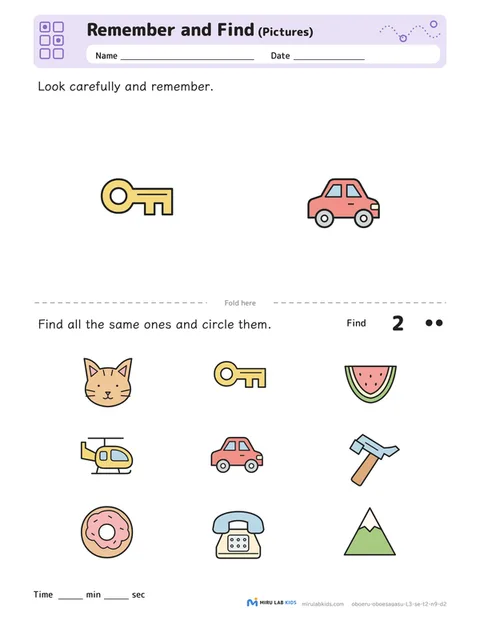
Remember and Find: Pictures
Remember the pictures at the top, fold the page to hide them, then find all the same pictures below.
Aimsvisual memory / visual discrimination / visual search
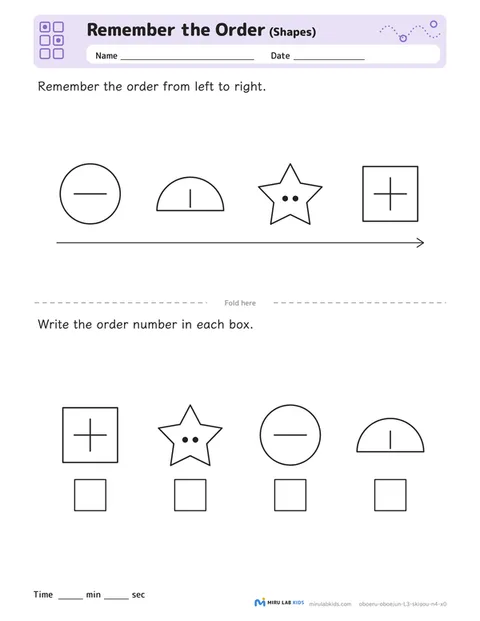
Remember the Order: Shapes
Remember the order of the symbols at the top, fold the page to hide them, then write the order number under each symbol below.
Aimsvisual memory and sequential memory / visual discrimination / saccades
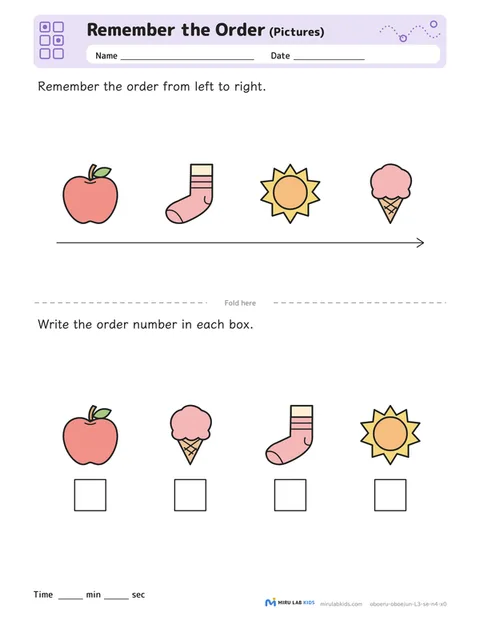
Remember the Order: Pictures
Remember the order of the pictures at the top, fold the page to hide them, then write the order number under each picture below.
Aimsvisual memory and sequential memory / visual discrimination / saccades
Visual-Motor SkillsDrawing and coloring while looking
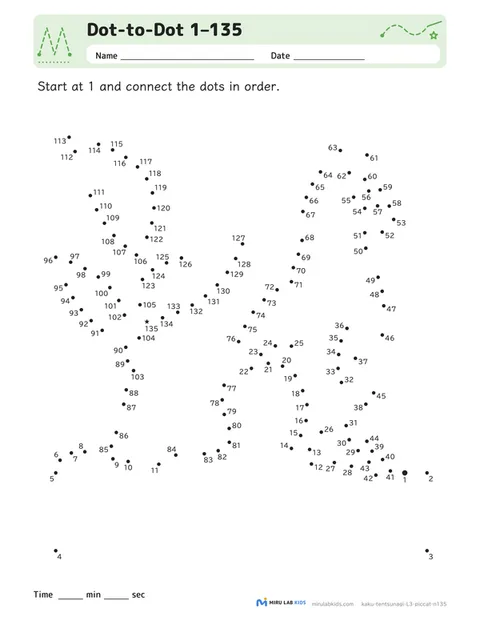
Dot-to-Dot
Connect the dots in number order, and a picture slowly appears.
Aimsvisual search and saccades / sustained attention / eye-hand coordination
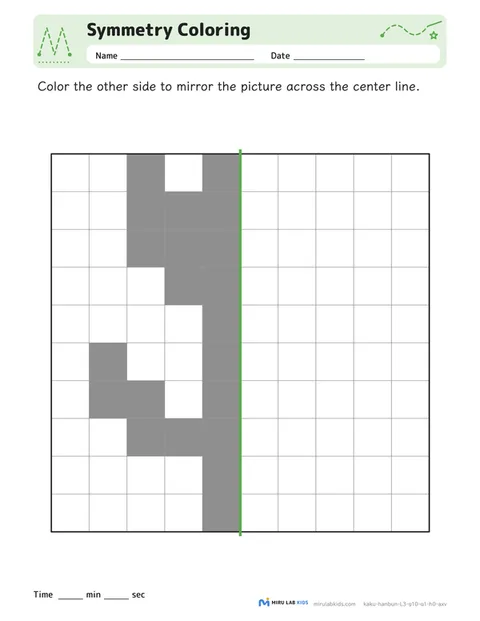
Symmetry Coloring
Color the other half of the grid to mirror the example, and a picture appears.
Aimsvisual-spatial relations / mental flipping / saccades and shifting attention / eye-hand coordination
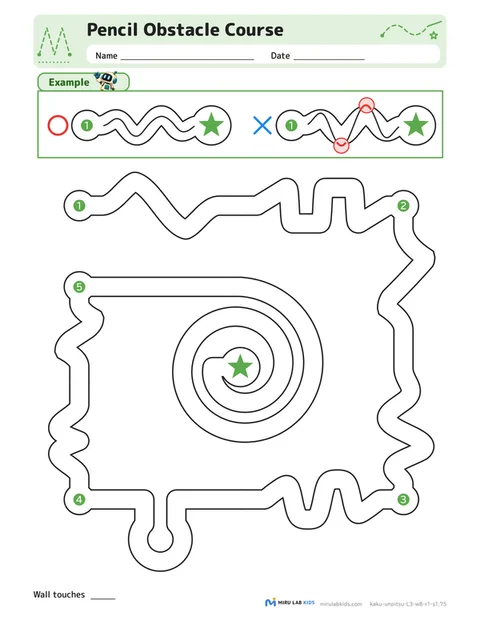
Pencil Obstacle Course
Move a pencil along a path between two lines without touching the walls. Each sheet is one course with obstacles of different shapes.
Aimseye-hand coordination / pencil control / Using the fingers and wrist to turn the pencil at curves and corners / sustained attention
Visual PlanningLooking ahead and planning a route
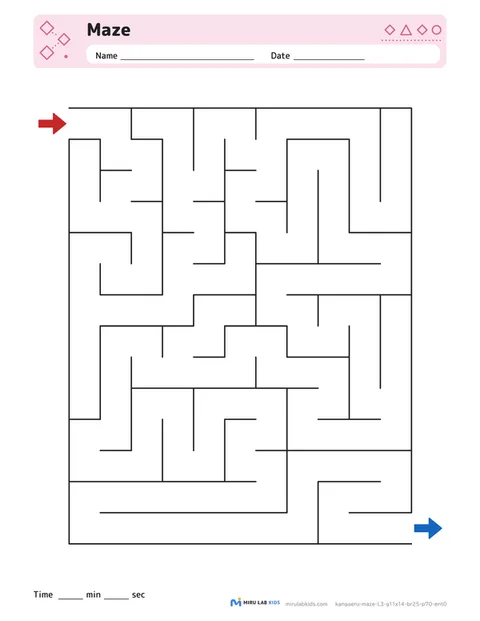
Mazes
Find the way from the start arrow to the finish arrow through a grid maze.
Aimsvisual tracking, smooth pursuit, and scanning / eye-hand coordination / planning
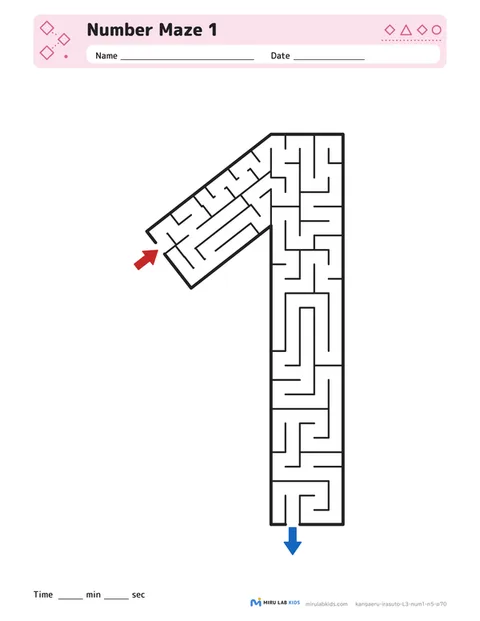
Number Mazes
Mazes shaped like the numbers 1 to 9. Solving one means tracing the shape of the number.
Aimsvisual tracking, smooth pursuit, and scanning / eye-hand coordination / form perception
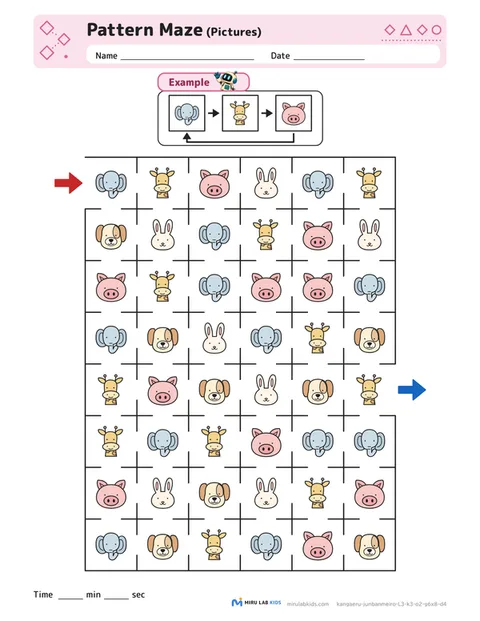
Pattern Maze: Pictures
Follow the picture pattern from square to square to reach the finish.
Aimsvisual search / visual discrimination / working memory / planning
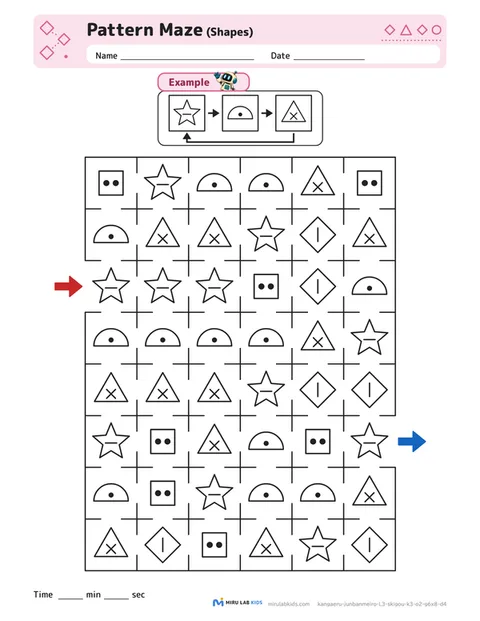
Pattern Maze: Shapes
Follow the symbol pattern from square to square to reach the finish. A step up from the picture version.
Aimsvisual discrimination / visual search / working memory / planning
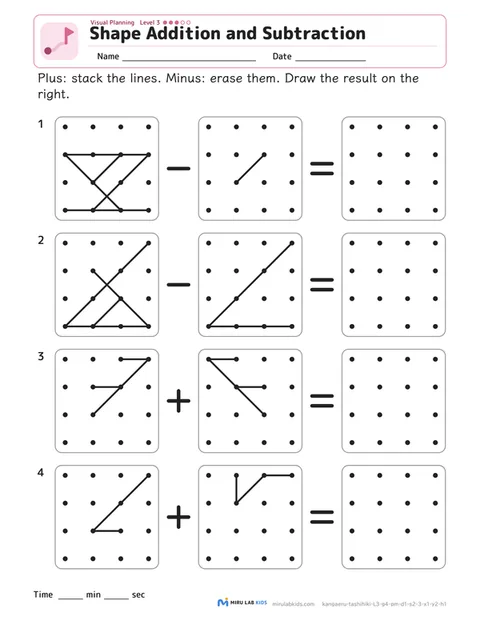
Shape Addition and Subtraction
Look at two dot-grid pictures. For +, stack their lines; for −, erase the lines. Then draw the result. Your child puts lines together and takes them away in their mind.
Aimsshape synthesis and analysis / spatial relations / eye-hand coordination / visual memory
How to use
- 1
Choose
Pick an activity and a level. If you are not sure, start with a lower level.
- 2
Print
Open the PDF and print it on US Letter or A4 paper. For most activities, page 1 is the worksheet and page 2 is the answers (a few have no answer page).
- 3
Record the time
Write the time it took at the bottom of the page, so you can compare next time. Keep a log on the tracking sheets, or turn the times into a graph, to see how things change.
Articles
Articles about visual perception, written by a physical therapist.
-
 Start here
What Is Visual Perception? More Than Good Eyesight
Visual perception is not the same as eyesight. It is the set of skills we use to make sense of what we see and to act on it. A physical therapist explains what it includes and how it connects to everyday life and learning.
Read › -
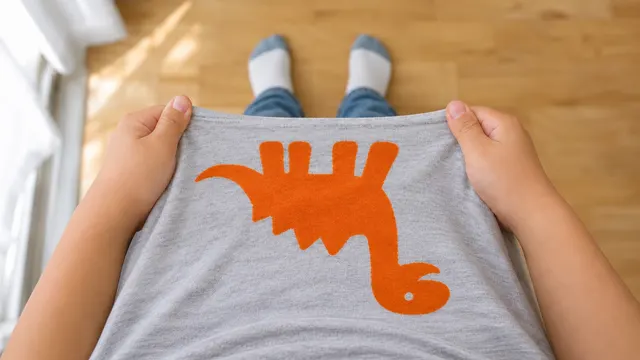
Why Does My Child Put Clothes On Backwards or Inside Out? Getting Dressed Uses More Visual Skills Than You Think
T-shirts on backwards, shoes on the wrong feet. Mix-ups when getting dressed are not just about "not looking carefully." A physical therapist breaks the task into three parts (finding the clues, matching the clothes to the body in the mind, and knowing the front and back of one's own body), and shares how to see where a child gets stuck and how to add clues they can notice on their own.
Read › -
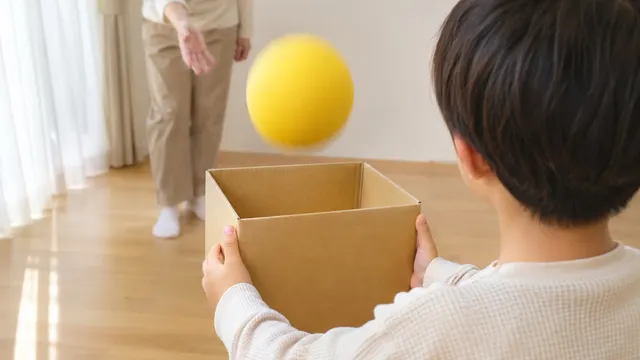
When a Child Has Trouble Catching a Ball: Breaking It Down from "Tracking" to "Reaching"
Hands that come out too late, or close only after the ball has hit the body. Trouble catching is not just a matter of being "unathletic." A physical therapist breaks catching into four parts (tracking the ball, judging distance, timing the hands, and keeping the body steady), and shares what different kinds of misses can tell you and a step-by-step way to practice using a box.
Read › -
When a Child's Tracing Slips onto Another Shape: Understanding Figure-Ground Perception
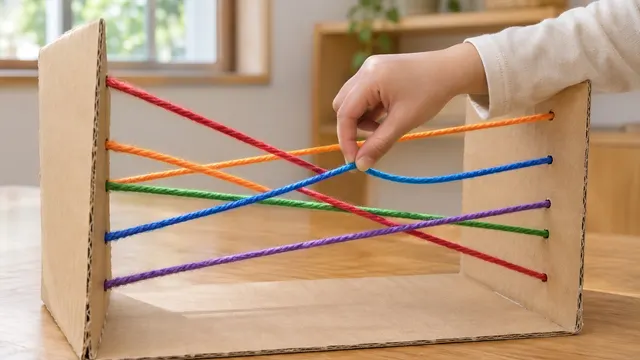
Tracing a shape among overlapping lines, then ending up on a different shape partway through. This has to do with a natural property of the eyes. A physical therapist explains what figure-ground perception is, why tracing slips onto other lines, a string activity that shows how viewpoint and movement change what we see, and ideas to try at home, drawing on ideas used in pediatric therapy.
Read ›