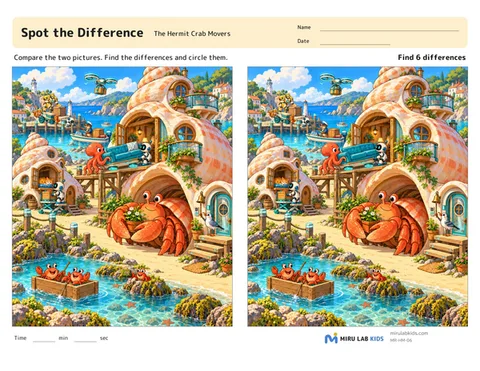
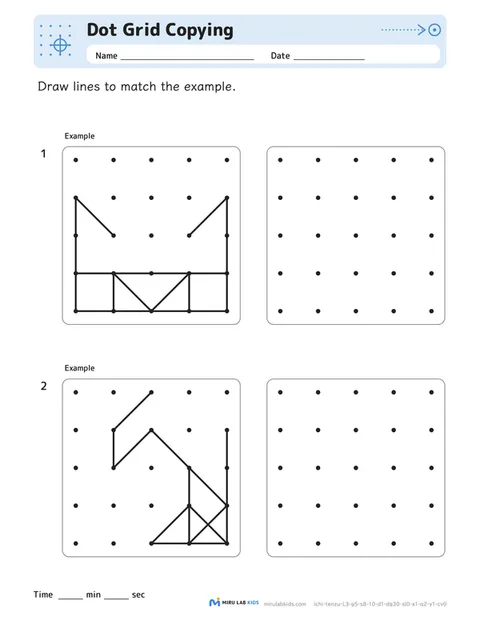
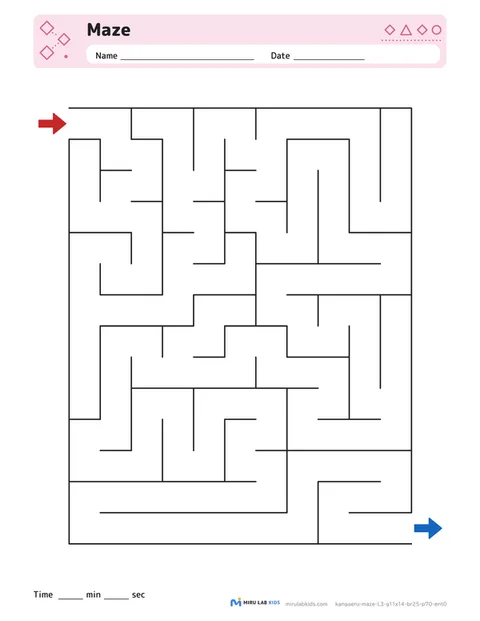
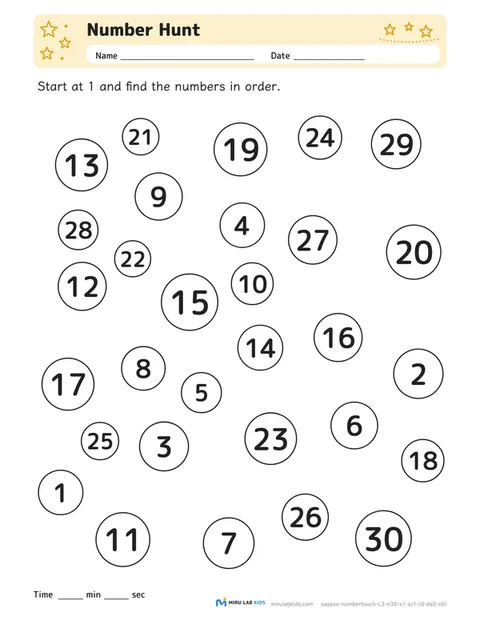
Overlapping ShapesFree printable worksheets
Aims
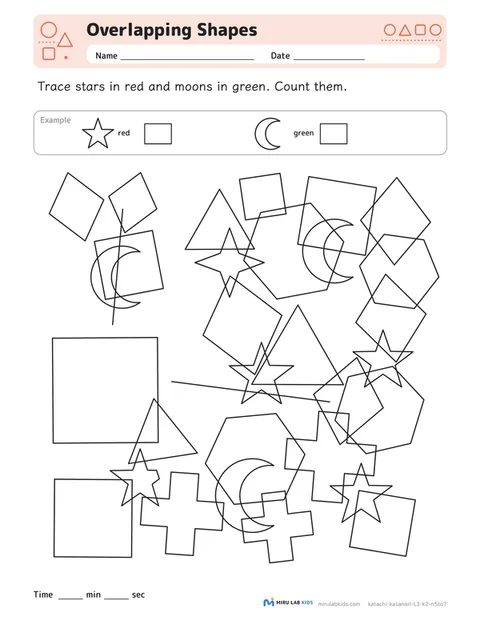
- Putting several shapes together in the mind and picturing the result (shape synthesis)
- Picking out each shape among overlapping lines (figure-ground)
- Telling apart look-alike shapes, such as a hexagon and an octagon or patterns with a different number of dots (visual discrimination)
- Judging whether a tilted picture is the same by how the shapes face each other (form constancy and mental rotation)
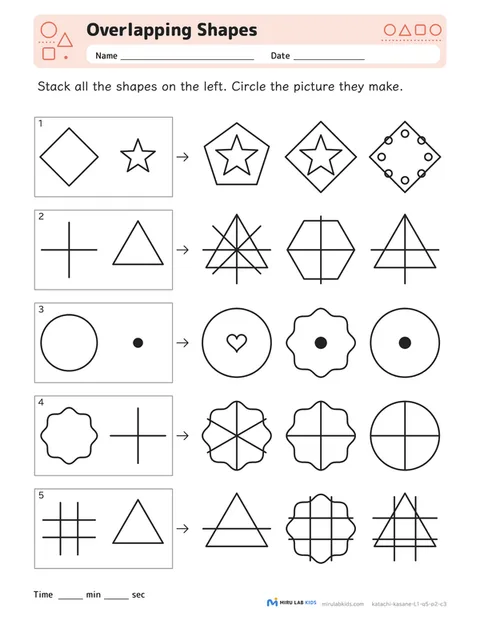
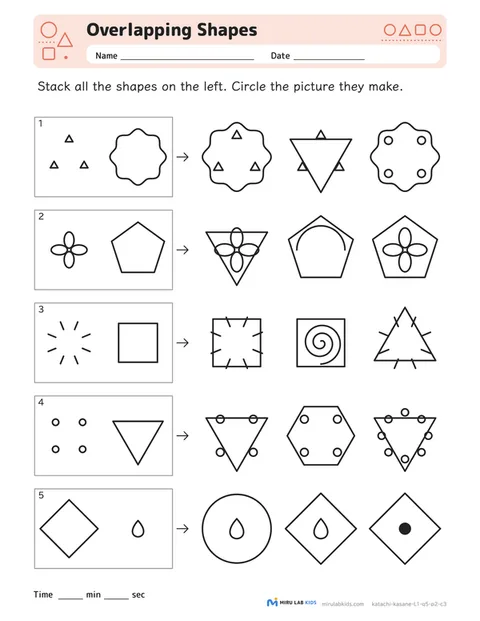
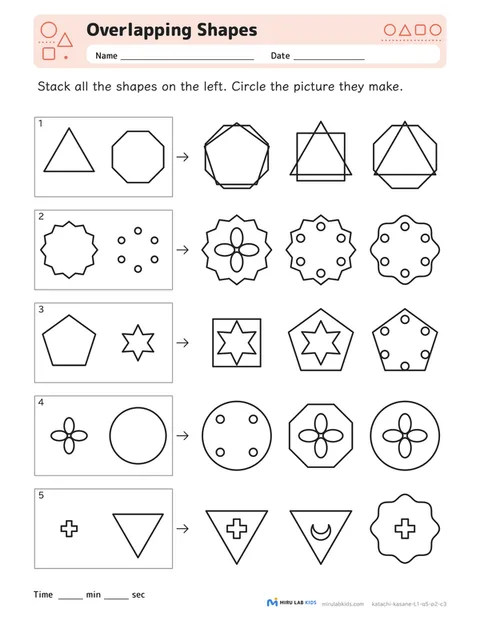
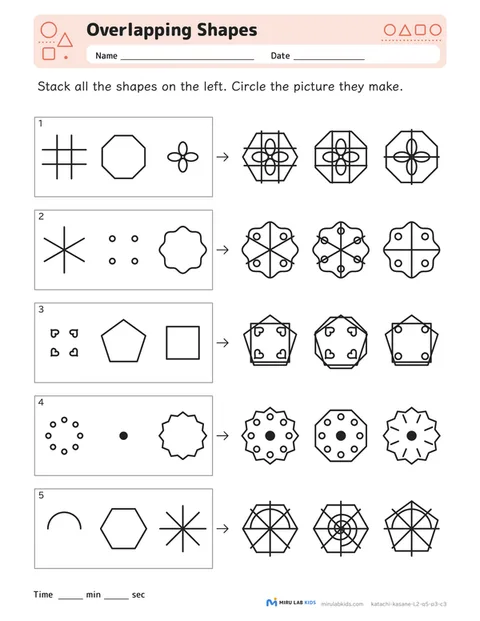
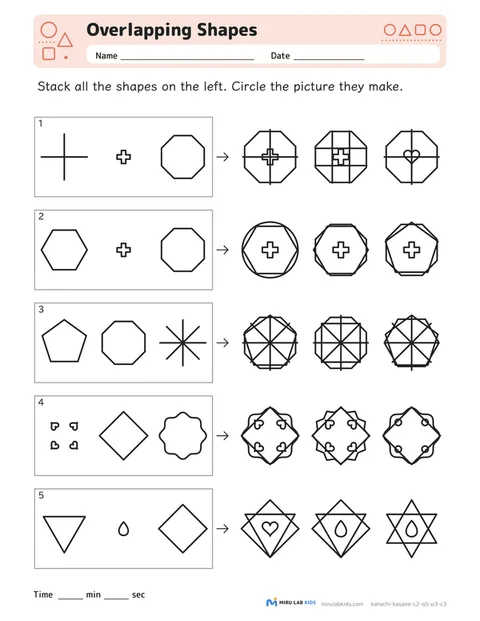
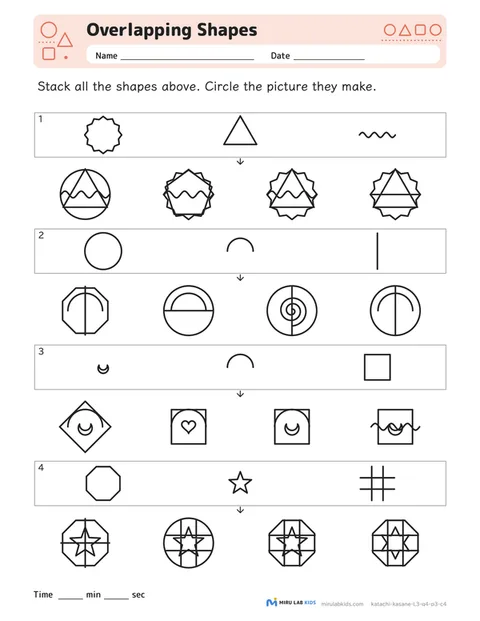
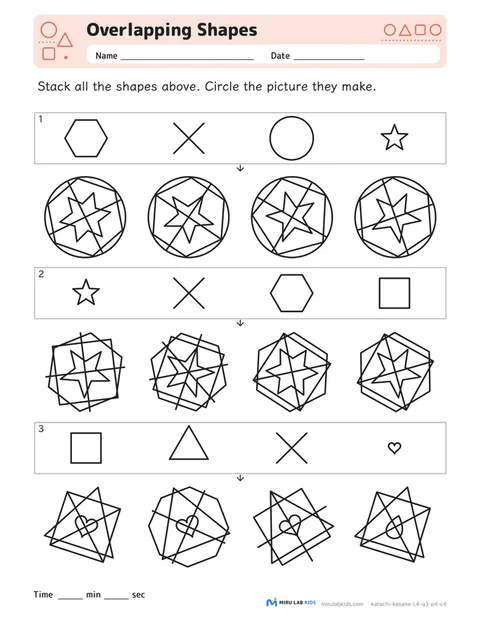
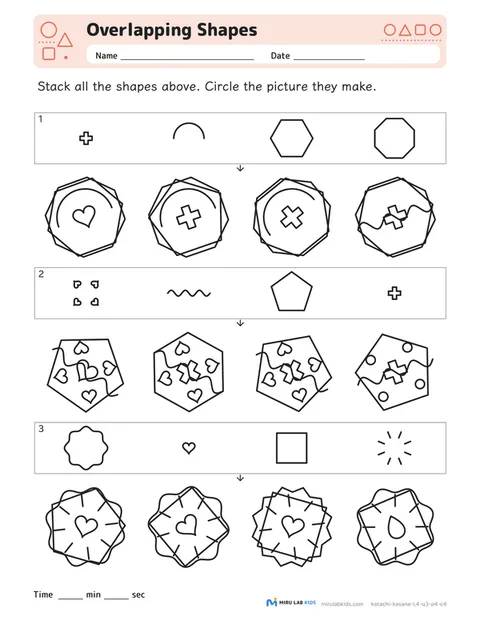
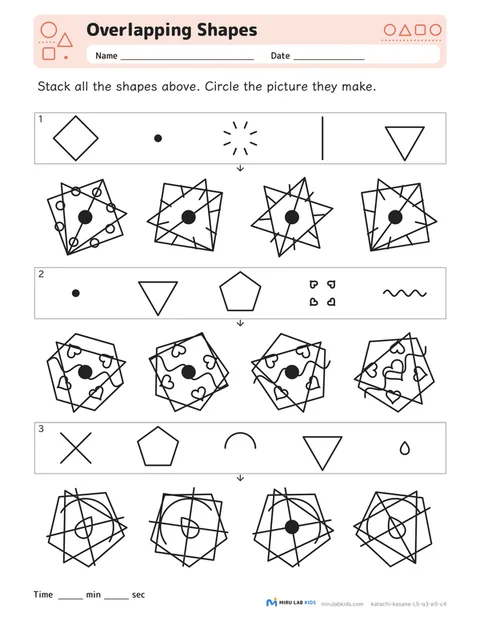
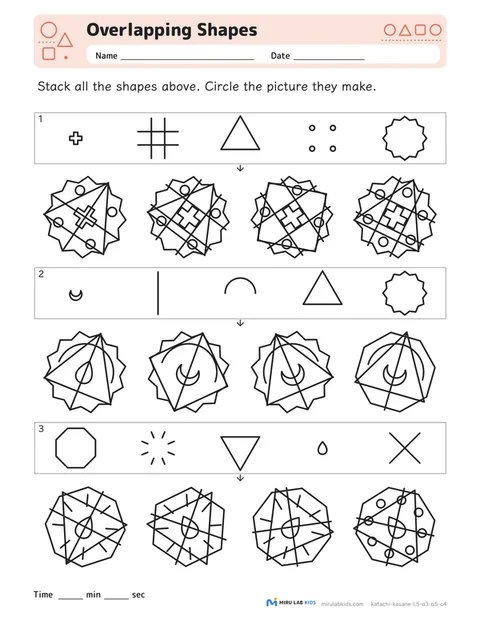
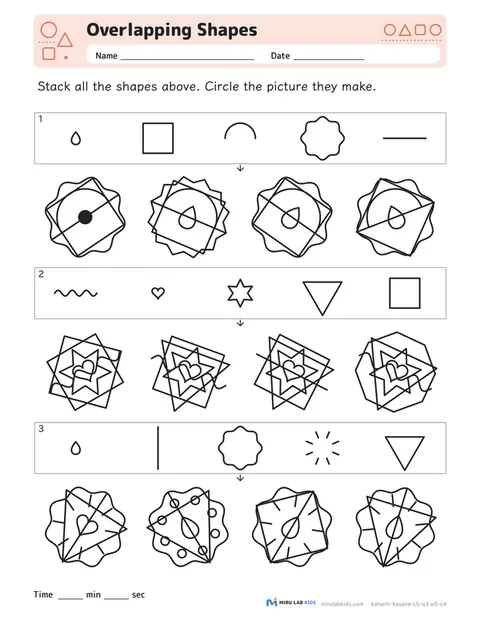
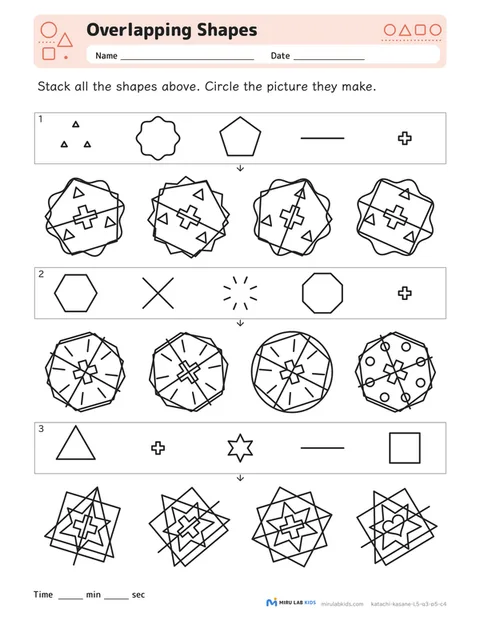
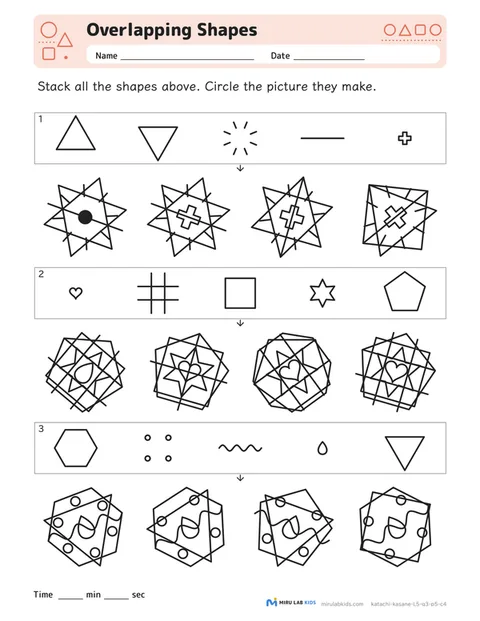
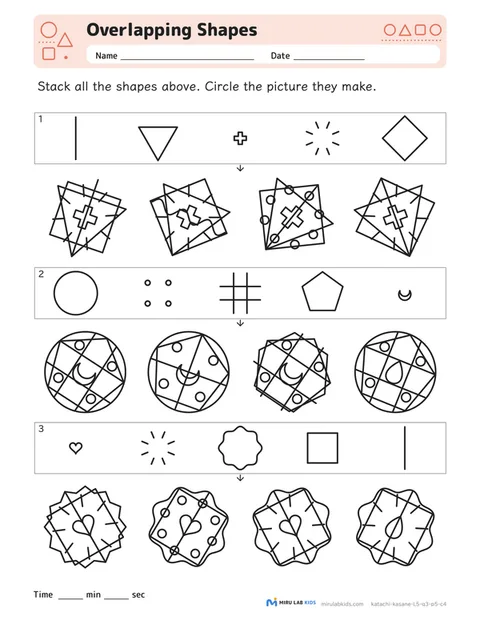
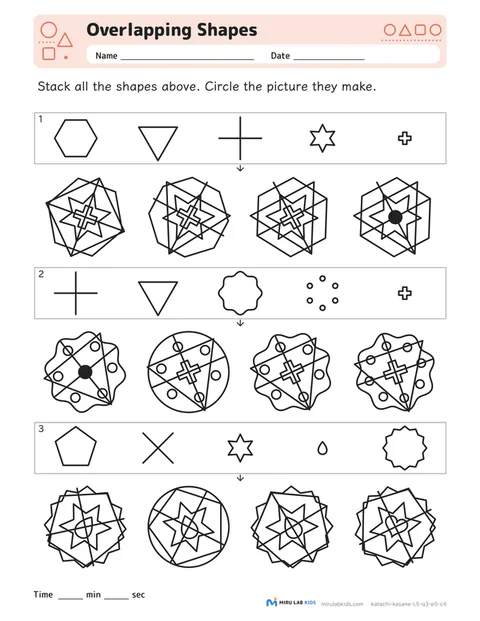
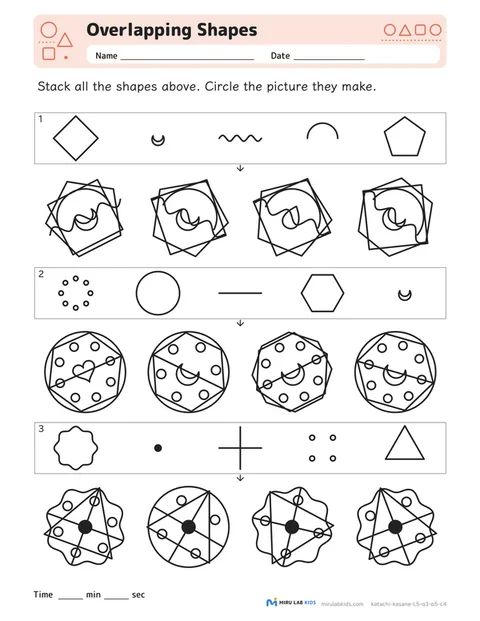
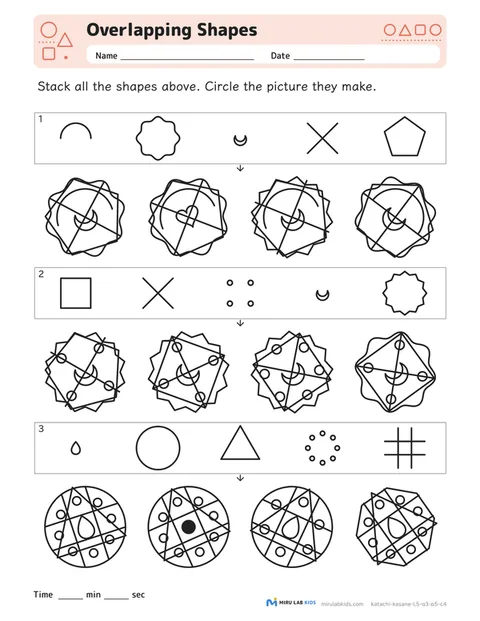
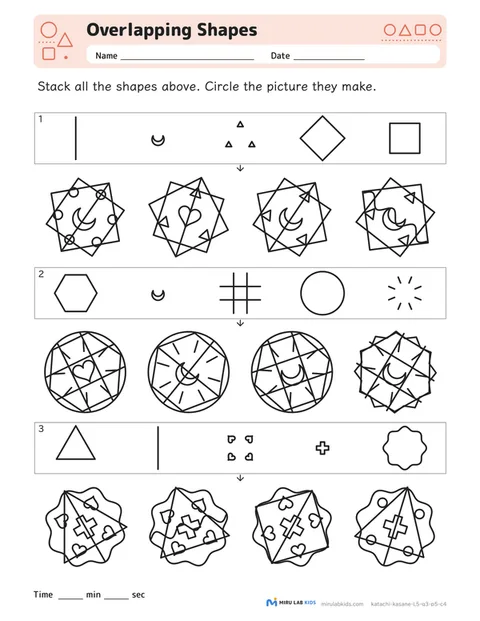
Your child stacks all the shapes (parts) in the box on top of each other at the center and circles the picture they make.Your child looks for each part in the pictures and chooses the one where every part is there.In each wrong choice, just one part has been swapped for a look-alike shape.The pictures all look equally neat, so your child has to check the parts one by one.At higher levels there are more parts.From Level 3 some choices differ only in how the parts face each other, and at Levels 4 and 5 the pictures are tilted.The activity aims to build the ability to see how shapes fit together.
Prints fine in black and white.
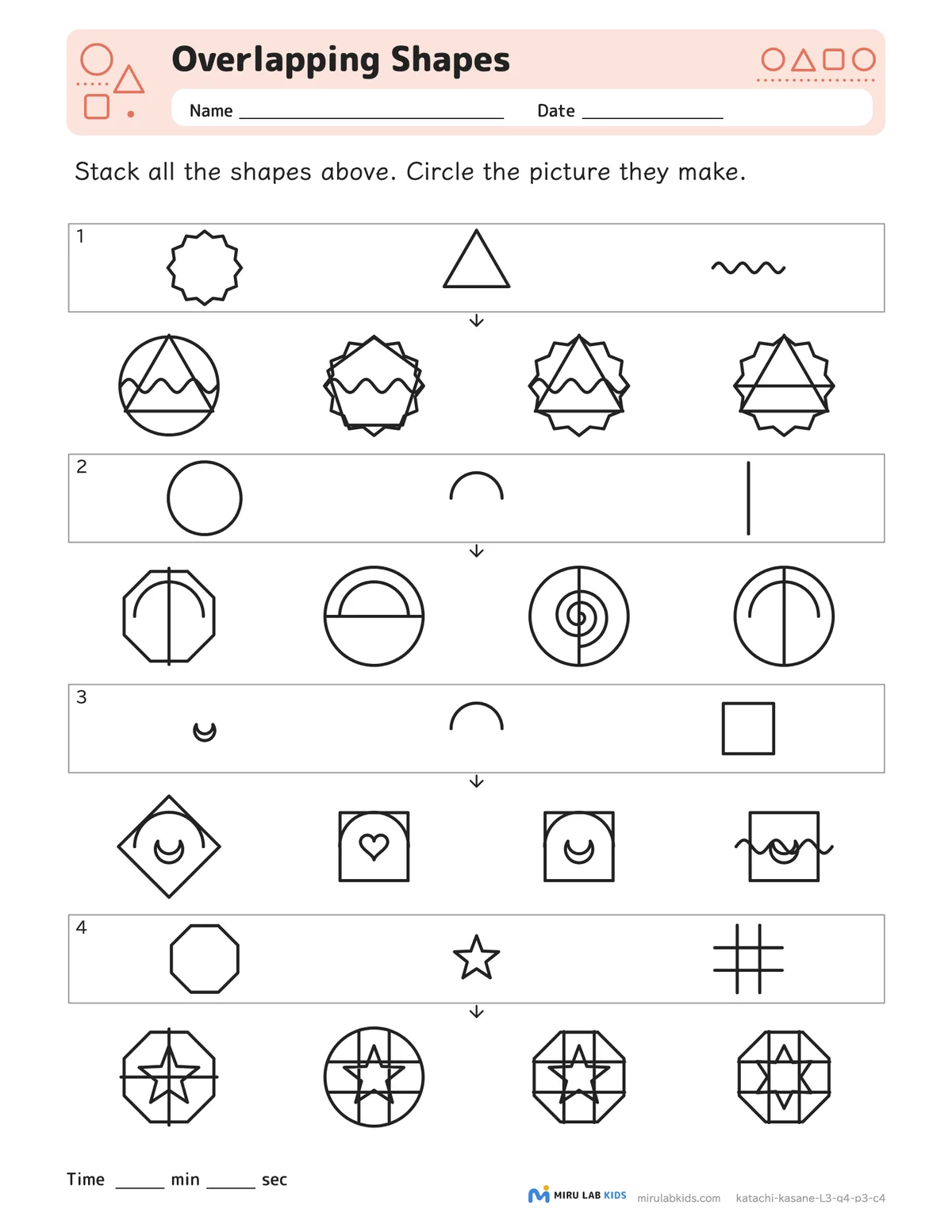 Level 3 example ›
Levels
| Level 1 | Two parts. 3 choices; in the wrong pictures a part is a different shape. | 10 worksheets |
|---|---|---|
| Level 2 | Three parts. 3 choices; in the wrong pictures a part is swapped for a look-alike. | 10 worksheets |
| Level 3 | Three parts. 4 choices, including pictures that differ only in how the parts face each other. | 10 worksheets |
| Level 4 | Four parts. 4 choices, each picture tilted. | 10 worksheets |
| Level 5 | Five parts. 4 tilted choices. With many lines, checking each part takes patience. | 10 worksheets |
Tips
- Point to the parts in the box one at a time and check whether each one is in a picture. Circle the picture that has every part.
- A picture that matches when the whole picture is turned counts as the same. A tilted picture is correct if it matches when turned.
For what to say, choosing a level and what to do if it is too hard, see Overlapping Shapes: a guide for grown-ups.
Worksheets
Choose a worksheet to open its printing page.
Print in bulk
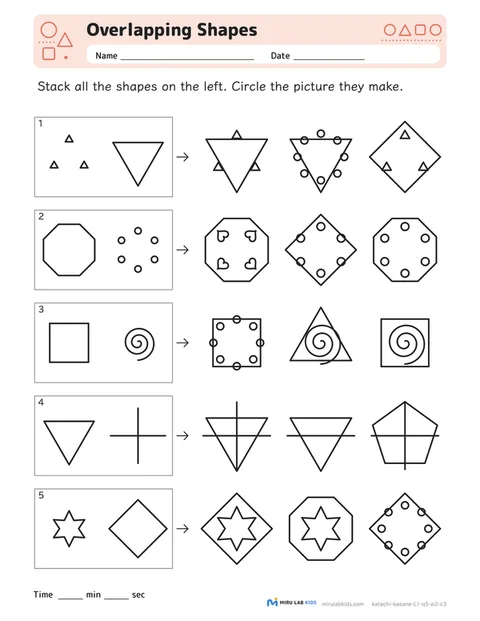
Level 1Two parts. 3 choices; in the wrong pictures a part is a different shape.
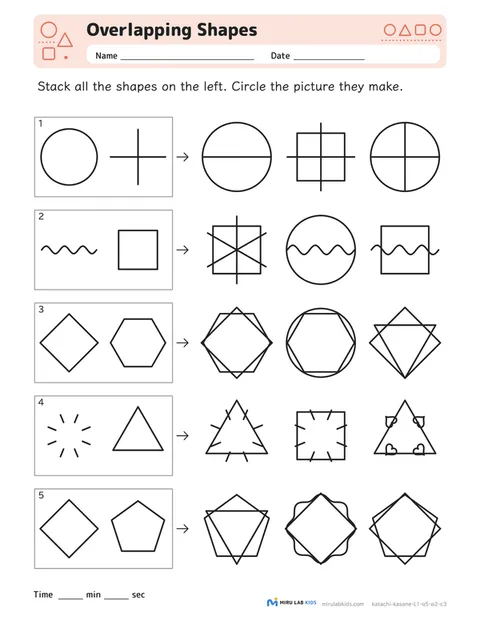
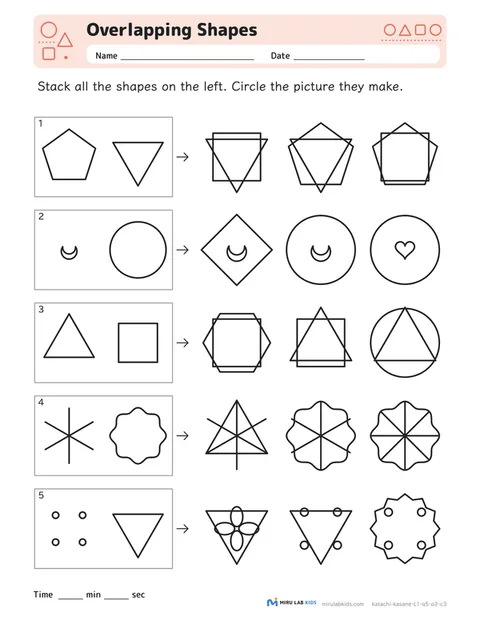
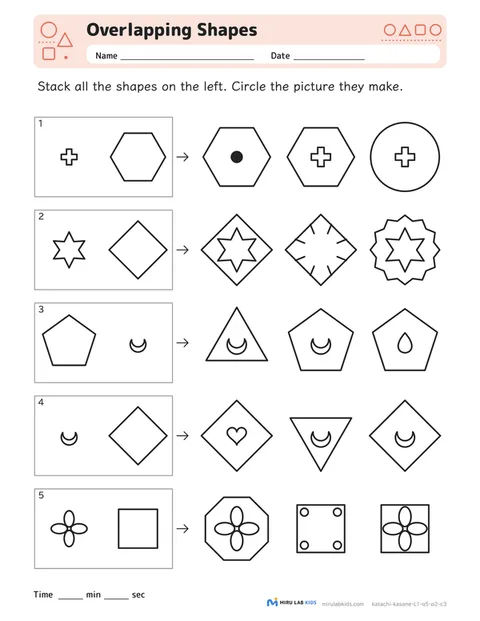
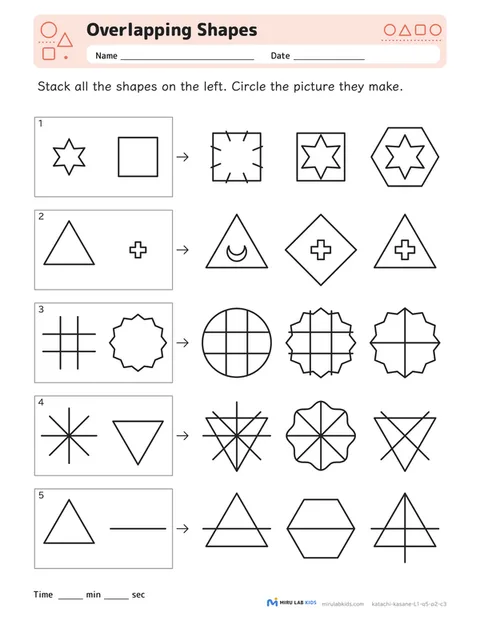
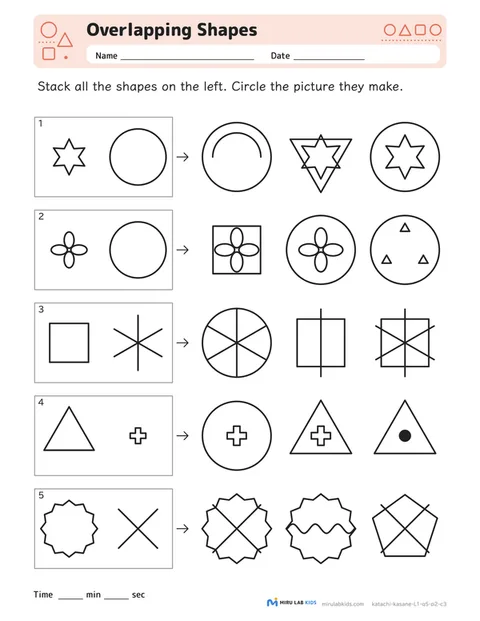
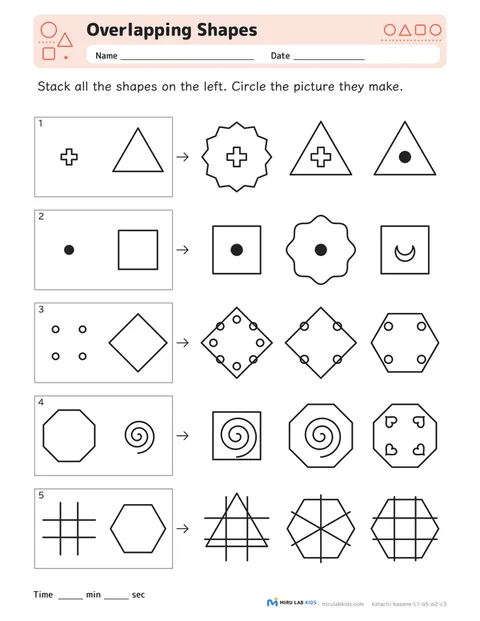
Level 2Three parts. 3 choices; in the wrong pictures a part is swapped for a look-alike.
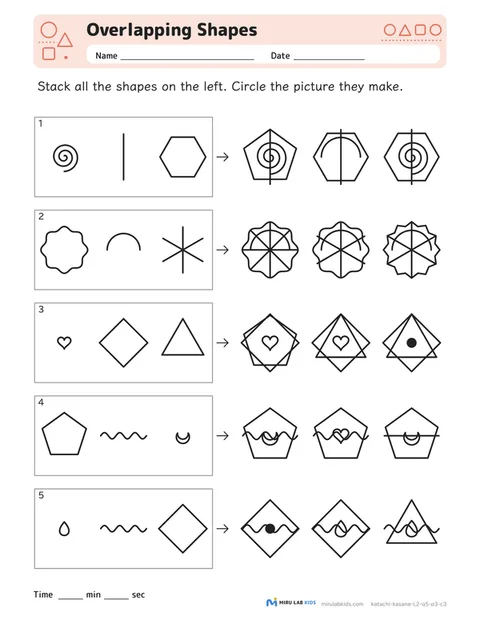
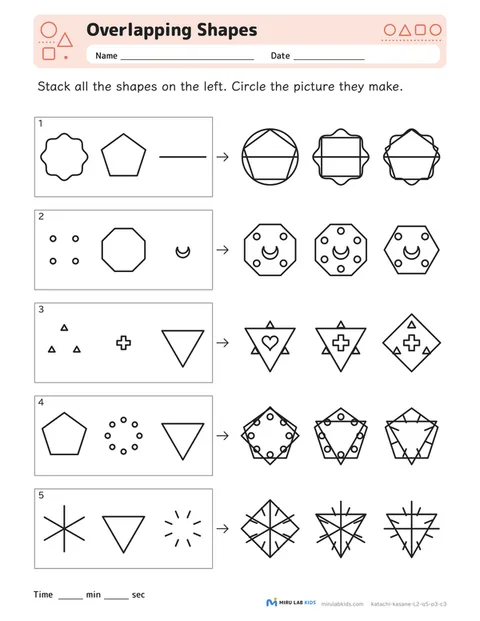
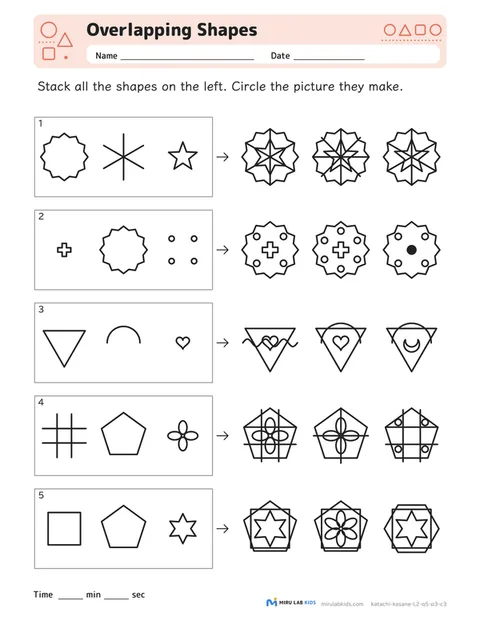
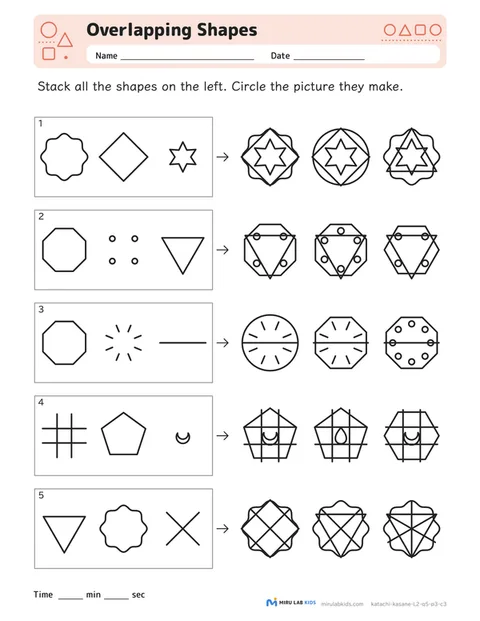
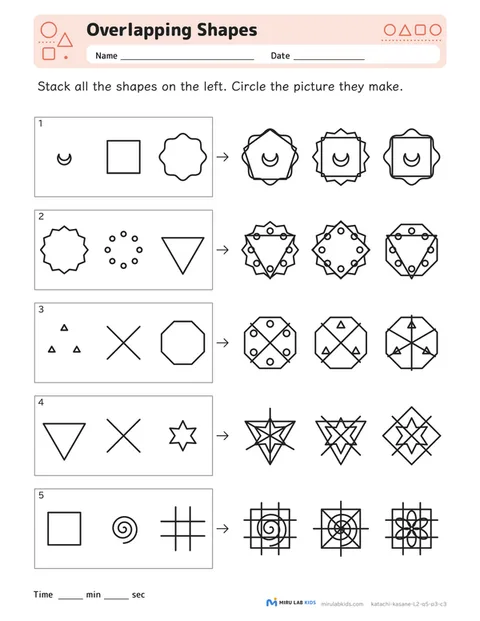
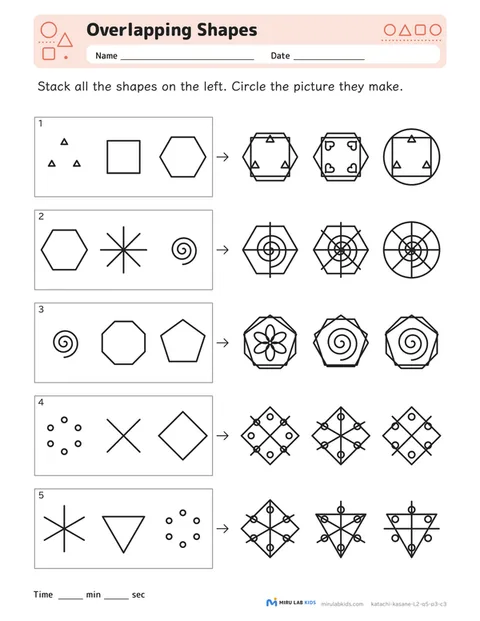
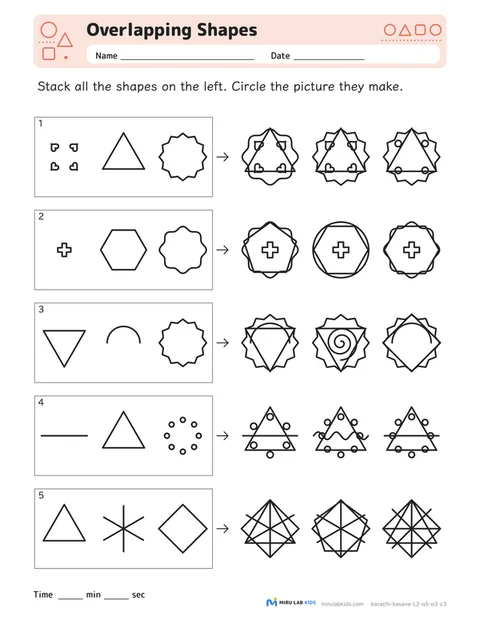
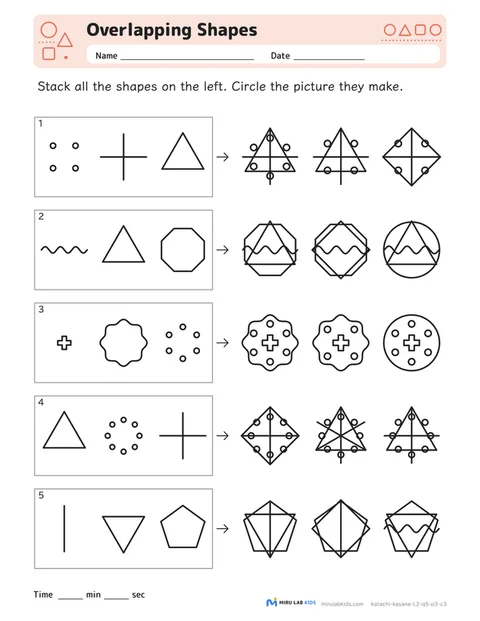
Level 3Three parts. 4 choices, including pictures that differ only in how the parts face each other.
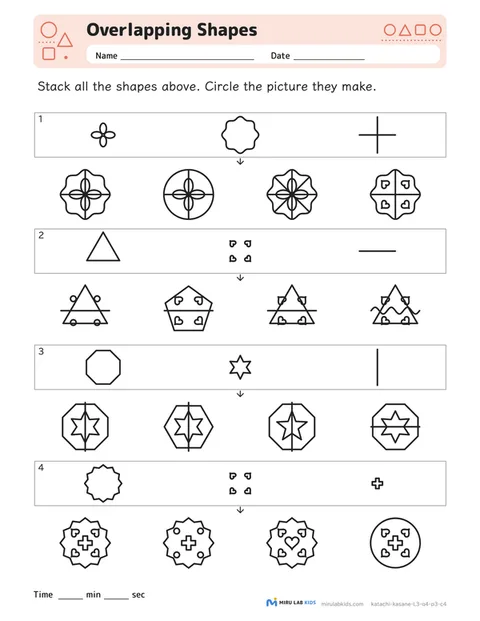
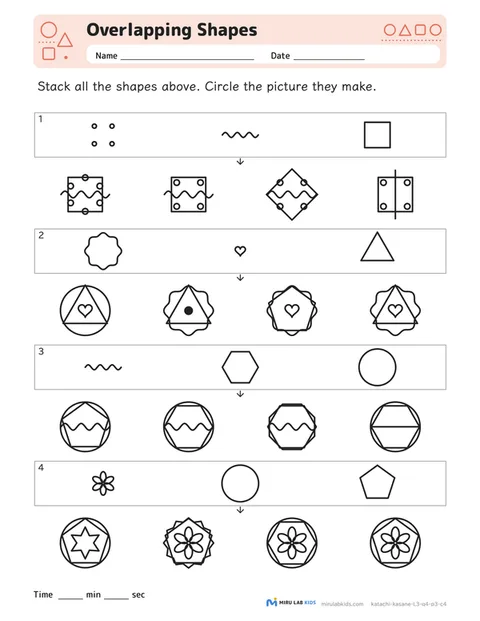
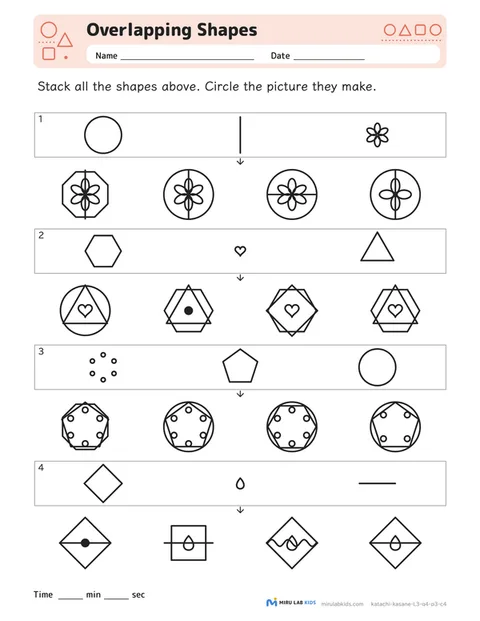
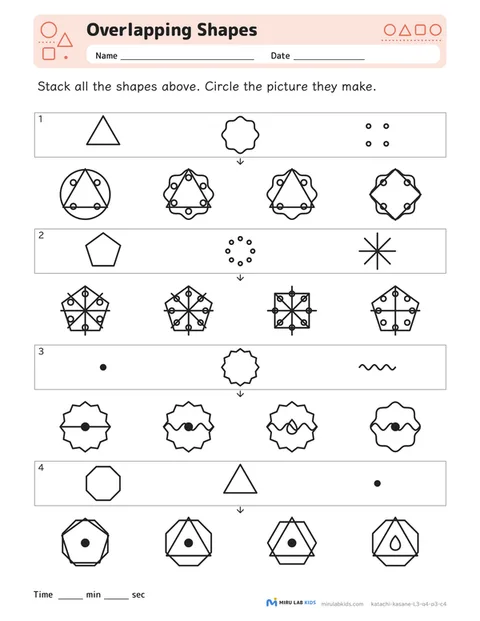
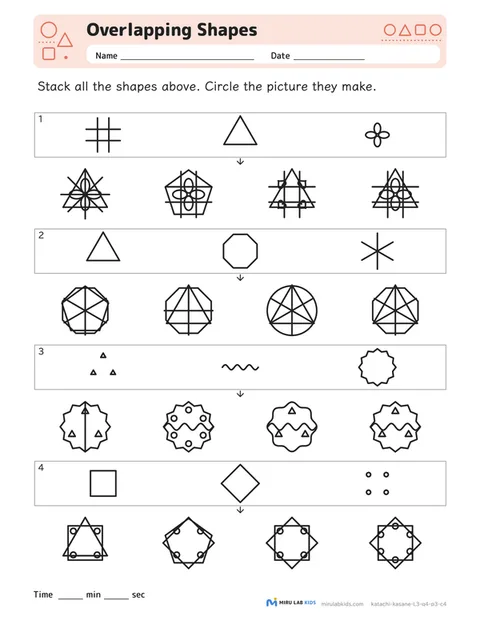
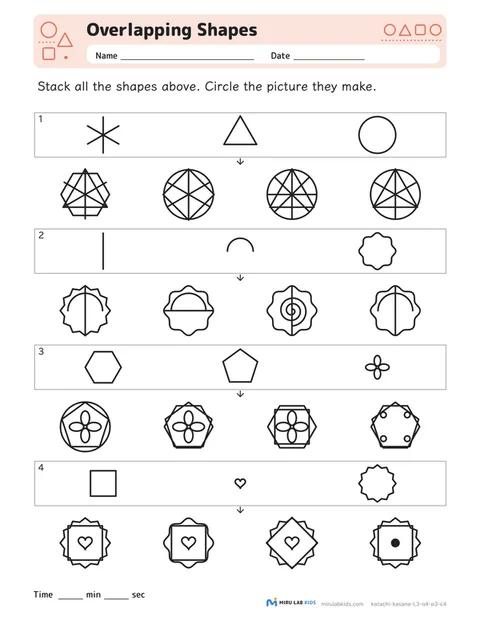
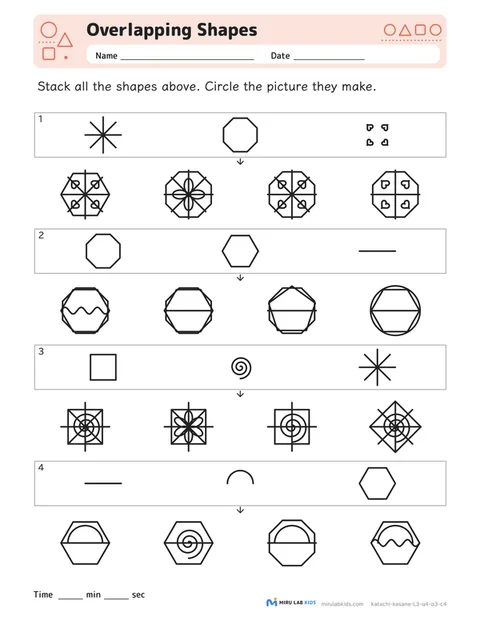
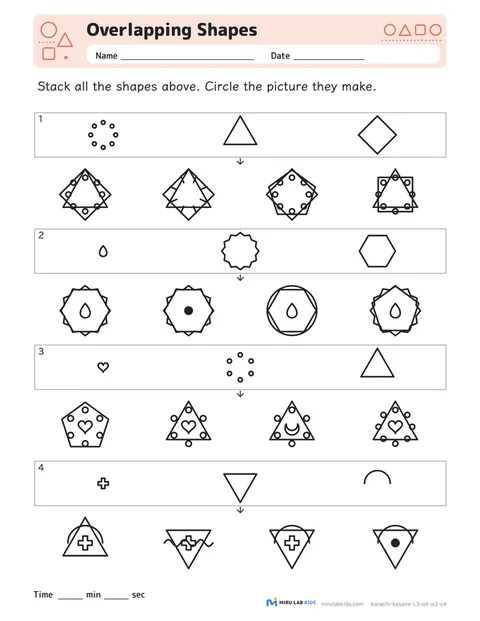
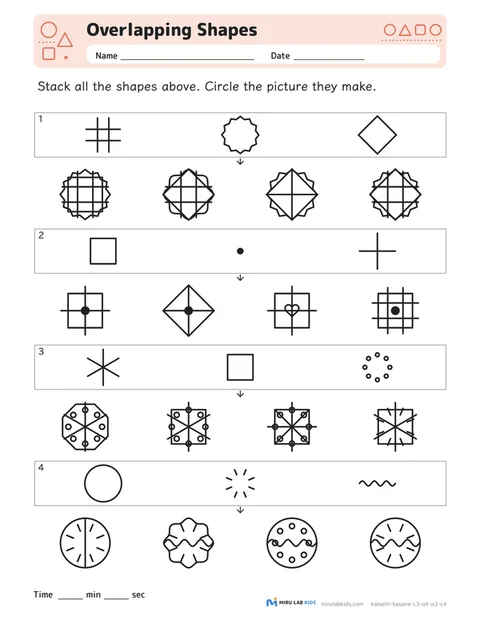
Level 4Four parts. 4 choices, each picture tilted.
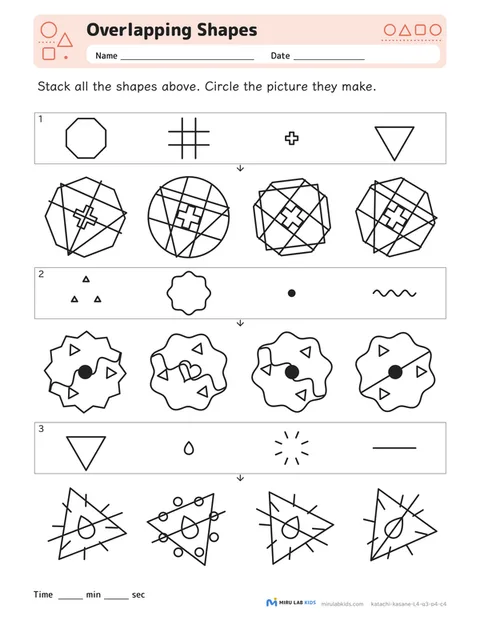
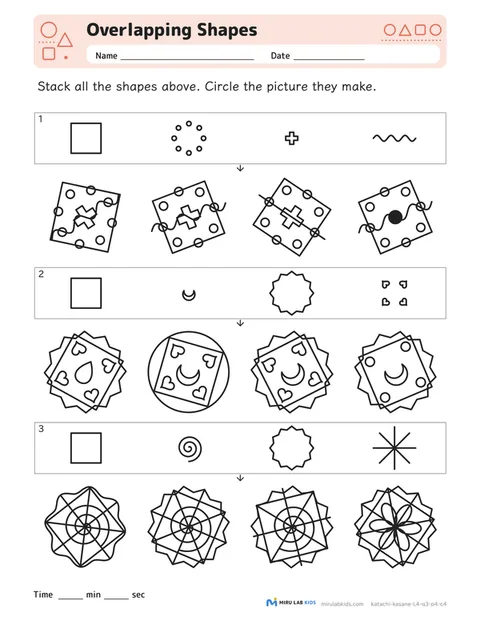
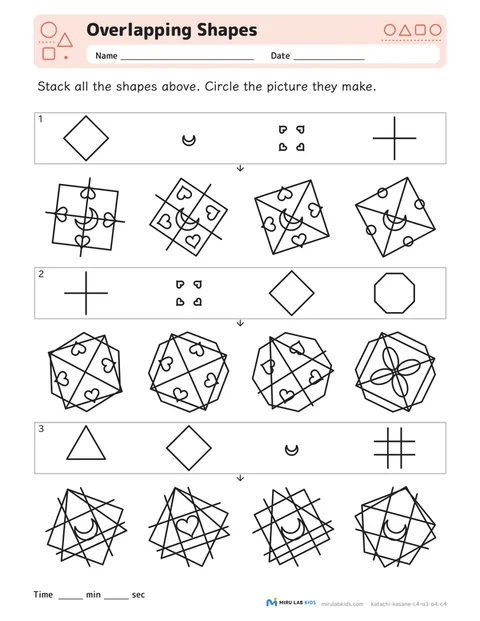
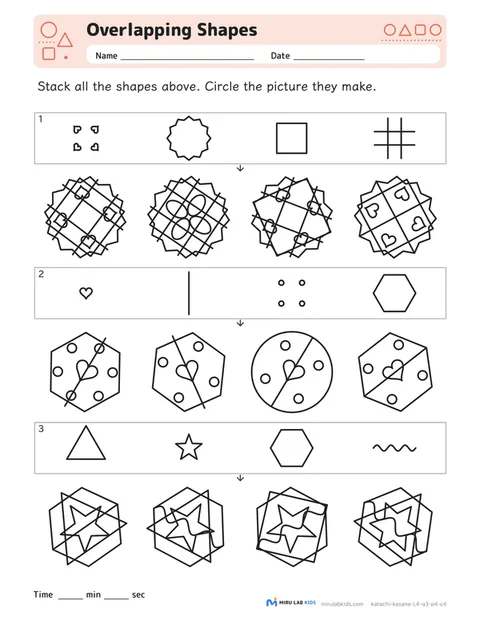
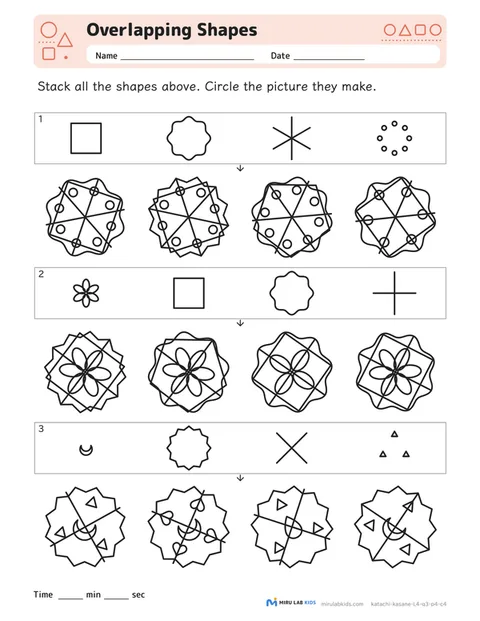
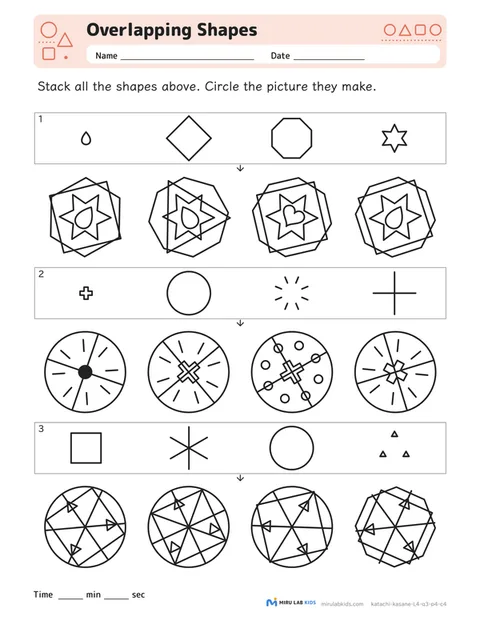
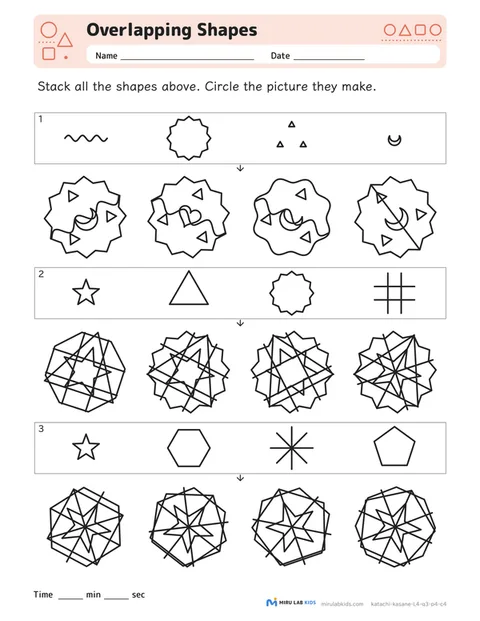
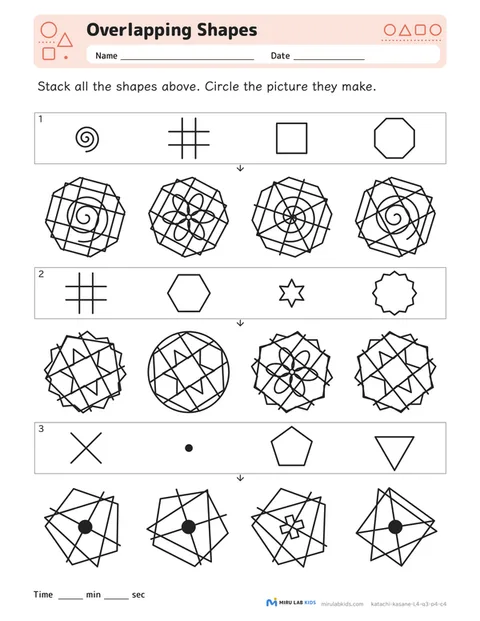
Level 5Five parts. 4 tilted choices. With many lines, checking each part takes patience.
Overlapping Shapes: a guide for grown-ups
Who it is for
- Lost when shapes overlapFor children who have trouble finding shapes in busy pictures or overlapping lines.
- Answers too quicklyPractice checking every choice, part by part, before deciding.
- Mixes up look-alikesPractice noticing small differences such as the number of corners or dots.
- Writing is hardYour child only draws a circle, so they can focus on looking.
- Short sessionsEach page has 3 to 5 questions, so it fits into a few spare minutes.
Choosing a level
Checked the parts one by one and chose on their own
- Go up one level.
- After circling, have your child say which part is different in each wrong picture.
Guesses or stops quickly
- Go down one level.
- Point to each part and check the pictures together: "Is this shape here?"
- Have your child put a small × on pictures they have ruled out.
What to watch for
| Checking | Does your child check every part? Or decide after looking at just one? |
|---|---|
| Missed parts | Which is easier to miss — the small parts in the middle (a heart or dots) or the large outer shapes? |
| Mistakes | Which is easier to mix up — look-alike shapes (such as a hexagon and an octagon) or how the parts face each other? |
| Time | Writing the time at the bottom of the page each time makes small changes easier to notice. Copying it onto the Time Log lets you line up results at the same level. |
If something keeps worrying you, it can help to talk with an eye doctor or another specialist rather than deciding on your own.
Things you can say
- Before startingIf we stack all these shapes, which picture do we get?Point to the parts in the box together, one at a time, before starting.
- When unsureWhich picture has this shape?Before saying whether it is right, let your child look for each part in the pictures.
- After choosingWhat was different in the other pictures?Naming the difference shows that every part was checked.
- CheckingAll the shapes are there!On the answer page, check together that every part is in the circled picture.
FAQ
Is there an answer page?
Yes. Page 2 of the PDF is the answer page. The correct picture is circled.
How should we think about tilted pictures?
If every part is there when the whole picture is turned, it is correct. It is fine to turn the paper. How the parts face each other (such as which way a triangle's corner points) does not change when the picture is turned.
How much should we do at a time?
There is no set amount. Each page has 3 to 5 questions. See "Every Day? How Much?" for more.
Articles
- What Is Visual Perception? More Than Good Eyesight
- When a Child's Tracing Slips onto Another Shape: Understanding Figure-Ground Perception
- A Child Who Often Misses Things: Before Saying "Look Carefully," Look at How They Miss
- Can Read Letters but Can't Write Them? Four Ways to See Where Writing Gets Stuck
About the code at the bottom right
The code at the bottom right of each worksheet (for example, katachi-kasane-L1-q5-p2-c3) shows its difficulty settings. Worksheets with the same code have the same difficulty. If you contact us about a worksheet, including this code helps us find it right away.