Spot the DifferenceFree printable worksheets
Aims
- Comparing two pictures in detail and noticing differences in shape, number, and direction (visual discrimination)
- Searching the whole picture in an orderly way without missing anything (visual attention and scanning)
- Remembering a spot in the left picture and comparing it with the same spot on the right (visual memory)
- Moving the eyes quickly and accurately between the two pictures (saccadic eye movements)
- Picking out the things to compare from a detailed picture (figure-ground perception)
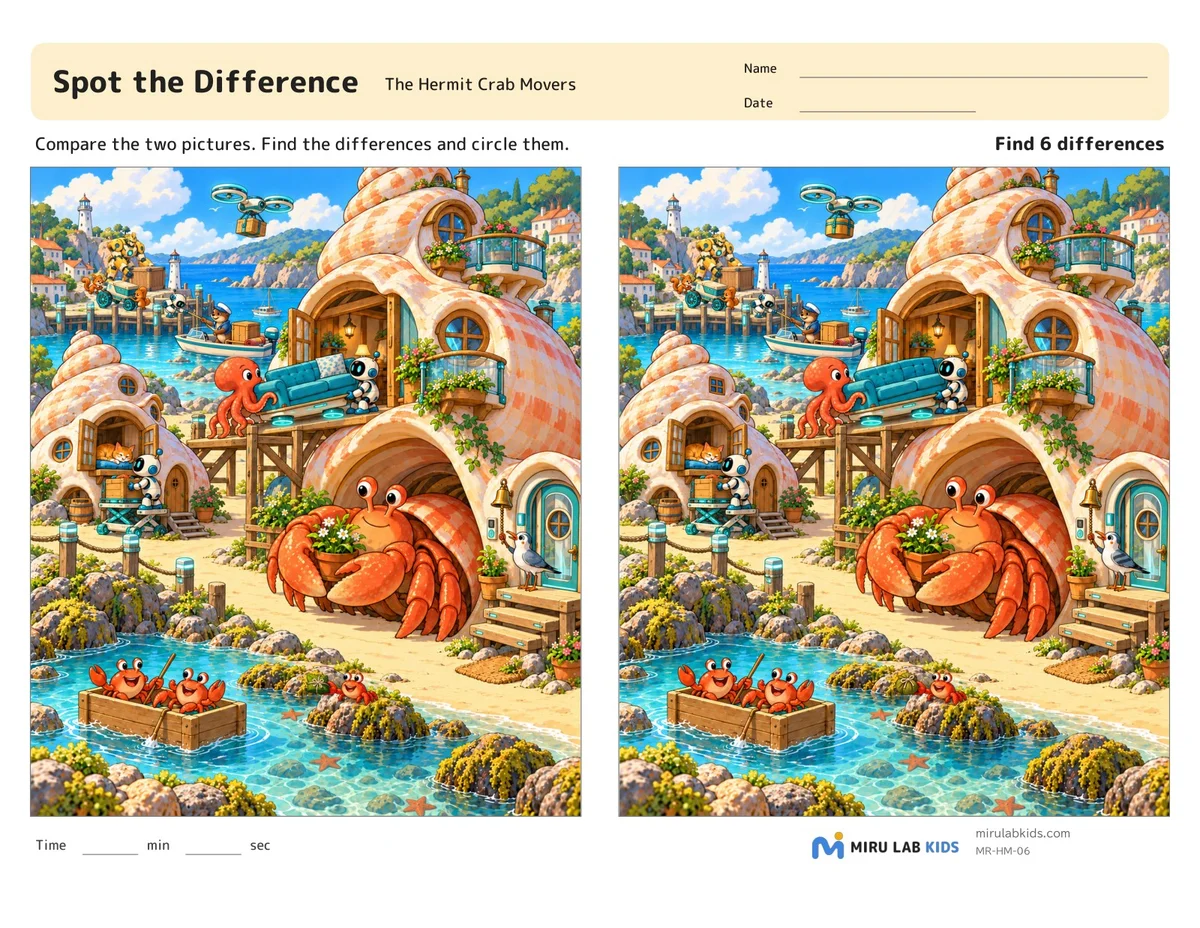
Two pictures sit side by side.Your child looks for the places where they are different and circles them.To find a difference, your child looks at a spot in the left picture, remembers it, moves the eyes to the same spot on the right, and compares, over and over again.At higher levels there are more differences, the pictures are more detailed, the differences spread across the whole picture, and the changes become smaller, such as the shape, number, or direction of a part.The activity aims to use many sides of visual perception inside a fun picture.
Color printing is recommended. To print in black and white, use the black-and-white worksheet on page 3 (no difference is only a change of color).
 Level 3 example ›
Levels
| Level 1 | One large character, with 3 differences. Parts that stand out have a different shape or pattern. | 3 worksheets |
|---|---|---|
| Level 2 | A scene with several characters, with 4 differences. Larger things near the front or around the main character change shape or number. | 3 worksheets |
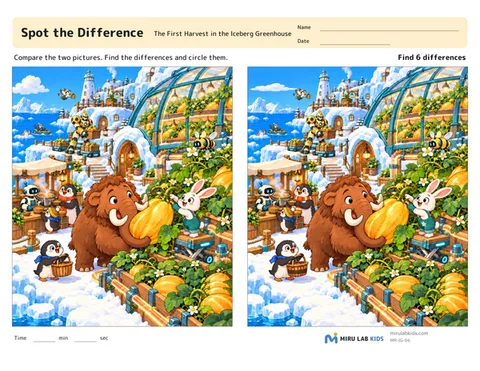
| Level 3 | 6 differences, spread across the front and middle of the picture. A mix of things added or removed, shapes, and large patterns. | 3 worksheets |
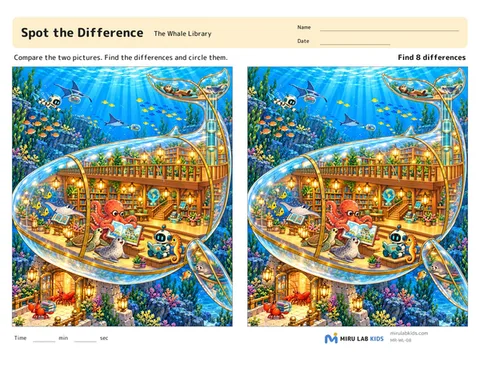
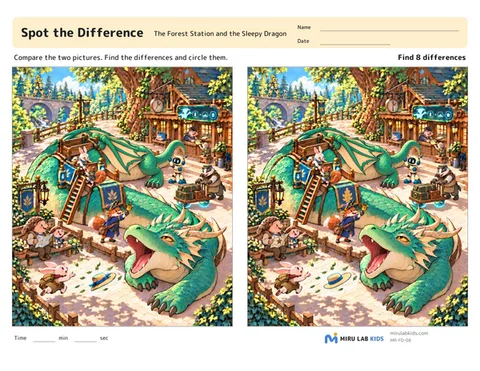
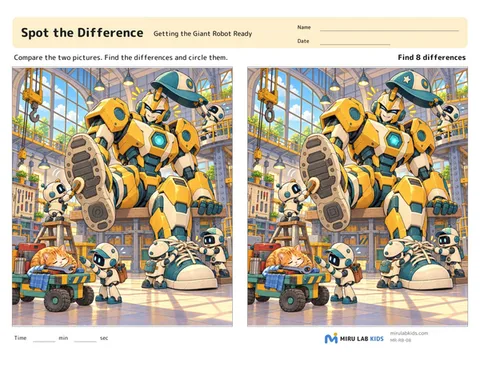
| Level 4 | 8 differences. Look beyond the main character to the side characters and the background. Parts of things change shape or pattern. | 3 worksheets |
| Level 5 | 10 differences. Compare the whole picture carefully. More changes that look alike, such as the shape, number, or direction of a part. | 3 worksheets |
Tips
- Circle each difference on the right-hand picture. The number at the top tells how many there are, so keep looking until you find them all.
- Page 1 is in color and page 3 is in black and white. Page 2 shows the answers with numbered circles.
For what to say, choosing a level and what to do if it is too hard, see Spot the Difference: a guide for grown-ups.
Worksheets
Choose a worksheet to open its printing page.
Print in bulk
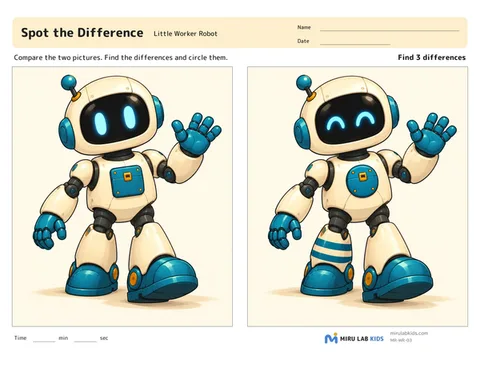
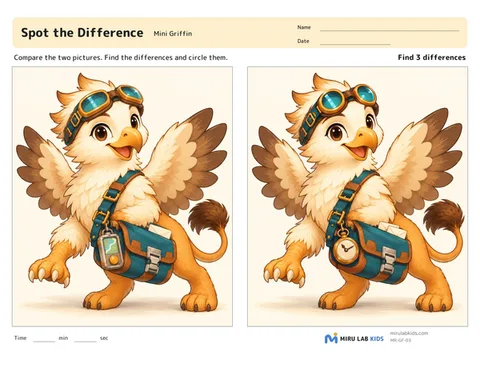
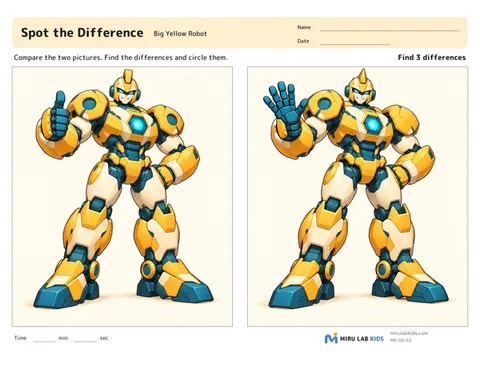
Level 1One large character, with 3 differences. Parts that stand out have a different shape or pattern.
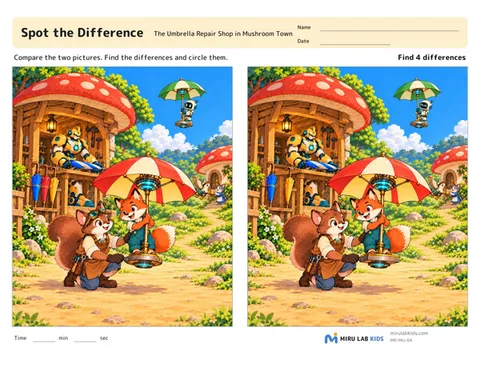
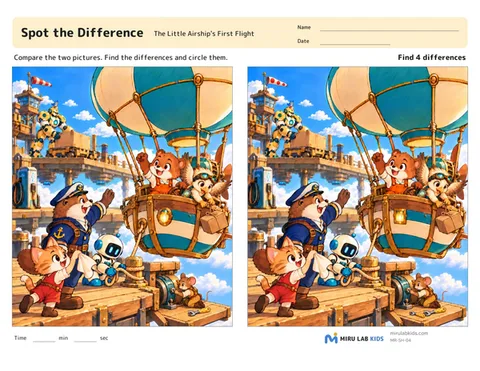
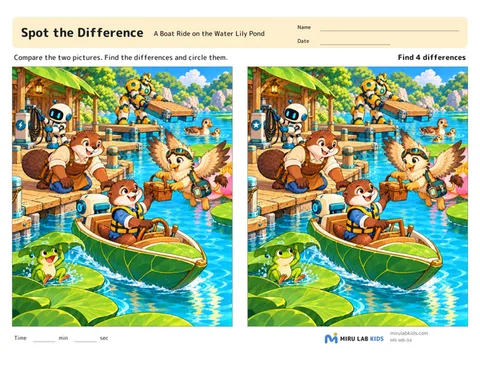
Level 2A scene with several characters, with 4 differences. Larger things near the front or around the main character change shape or number.
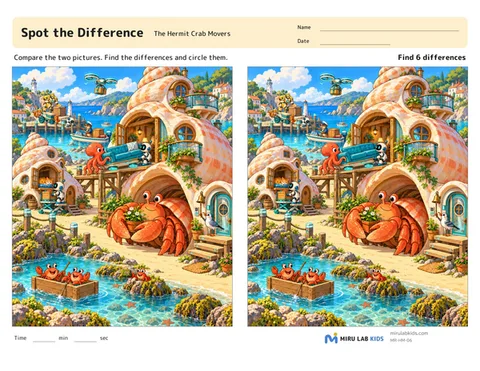
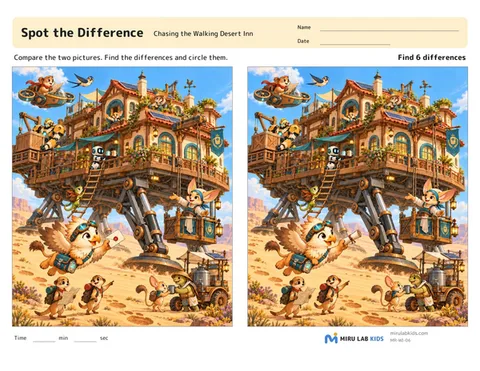
Level 36 differences, spread across the front and middle of the picture. A mix of things added or removed, shapes, and large patterns.
Level 48 differences. Look beyond the main character to the side characters and the background. Parts of things change shape or pattern.
Level 510 differences. Compare the whole picture carefully. More changes that look alike, such as the shape, number, or direction of a part.
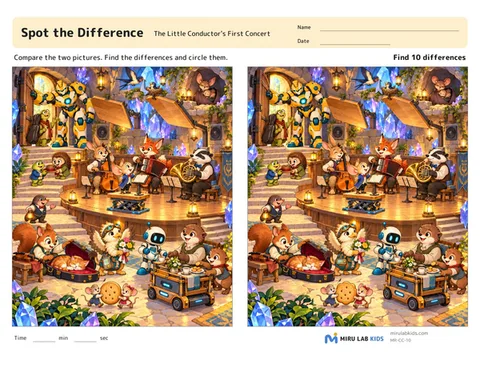
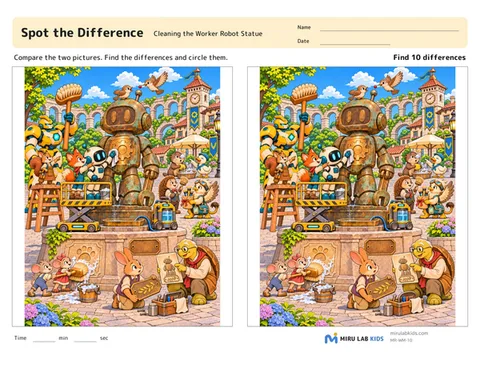
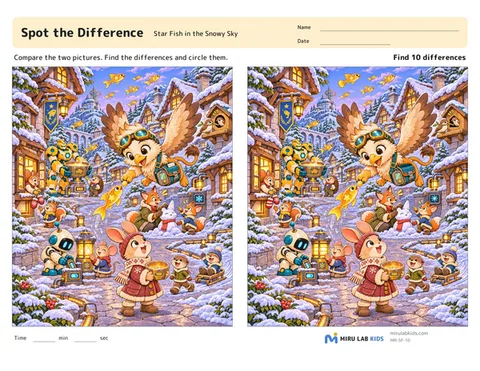
Spot the Difference: a guide for grown-ups
Who it is for
- Often misses thingsPractice looking through a whole picture in order.
- Mistakes when copyingPractice looking, remembering, and moving the eyes to compare.
- Looking at detailsPractice noticing small changes in shape, number, or direction.
- Not keen on worksheetsThe colorful pictures make it feel like a game.
- Loves stories in picturesThe scenes are full of little stories about the characters.
- Group activitiesHand out the same picture and compare how many each child found.
Choosing a level
Found them all happily
- Go up one level.
- Record the time and try another picture at the same level.
- Try the black-and-white worksheet (page 3).
Misses many or stops partway
- Go down one level.
- Give a hint about where the remaining differences are, such as "near the top" or "on the right side."
- Split the picture into top, middle, and bottom, and compare one part at a time.
- It is fine not to find them all at once. Finish the rest another day.
What to watch for
| Search | Does your child look from the top down, or one part at a time? Or jump around only to the things that stand out? |
|---|---|
| Comparing | Does your child go back and forth between the same spot in both pictures? Or stare at only one picture? |
| Missed areas | Does your child miss differences at the edges, in the background, or on small things? |
| Checking | Does your child compare both pictures again before circling? Are any circles on places that are not different? |
| Time | Writing the time at the bottom of the page each time makes small changes easier to notice. Copying it onto the Time Log lets you line up results at the same level. |
If something keeps worrying you, it can help to talk with an eye doctor or another specialist rather than deciding on your own.
Things you can say
- Before startingWhat story do you think this picture tells?Talking about the picture first is a good way to start looking closely.
- When stuckLet's look near the top one more time.Before giving the answer, narrow down where to look just a little.
- On finding oneGreat find! What is different?Putting the difference into words makes clear what your child compared.
- CheckingLet's check with the answers.Put page 2 next to the worksheet and look together for any differences that were missed.
FAQ
Is there an answer page?
Yes. Page 2 of the PDF shows the answers with numbered circles. You can also see the answers on each worksheet's page.
Can we print in black and white?
Yes. Page 3 of the PDF is a black-and-white worksheet. No difference is only a change of color, so all of them can be found in black and white.
How much should we do at a time?
There is no set amount. Levels 4 and 5 are detailed and take longer, so one page at a time is a good guide. See "Every Day? How Much?" for more.
Articles
- What Is Visual Perception? More Than Good Eyesight
- When a Child's Tracing Slips onto Another Shape: Understanding Figure-Ground Perception
- A Child Who Often Misses Things: Before Saying "Look Carefully," Look at How They Miss
- Can Read Letters but Can't Write Them? Four Ways to See Where Writing Gets Stuck
About the code at the bottom right
The code at the bottom right of each worksheet (for example, MR-WR-03) is different for every worksheet. The last number is the number of differences. If you contact us about a worksheet, including this code helps us find it right away.