 Visual Planning
MazesFree printable worksheets
Aims
- Following a path with the eyes and looking ahead (visual tracking, smooth pursuit, and scanning)
- Drawing a line between the walls while watching it (eye-hand coordination)
- Deciding which way to go at each branch (planning)
Your child traces a path through the maze with their eyes and a pencil, from the start to the finish.The correct route winds through at least 70% of the maze, so it covers most of the page.The activity aims to build the ability to follow a path ahead with the eyes, and to draw a line carefully without touching the walls.At higher levels, there are more branches where your child needs to look ahead and choose a direction.
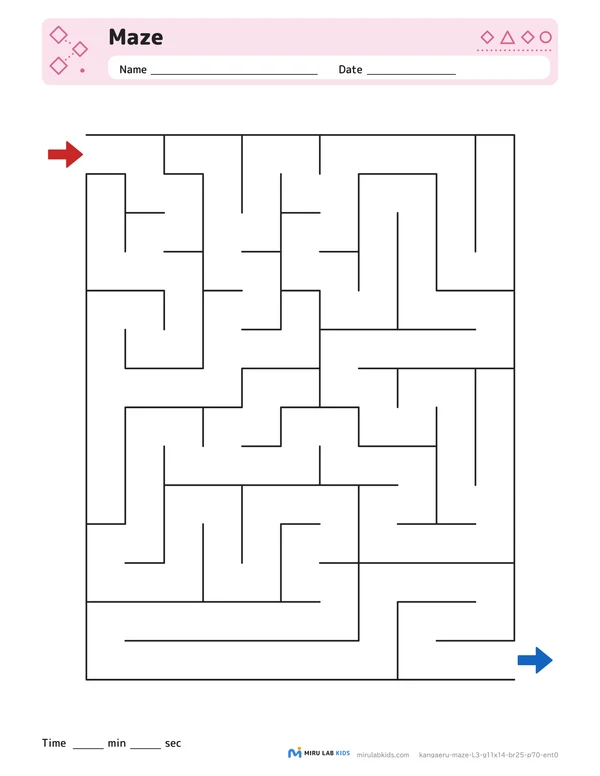 Level 3 example ›
Levels
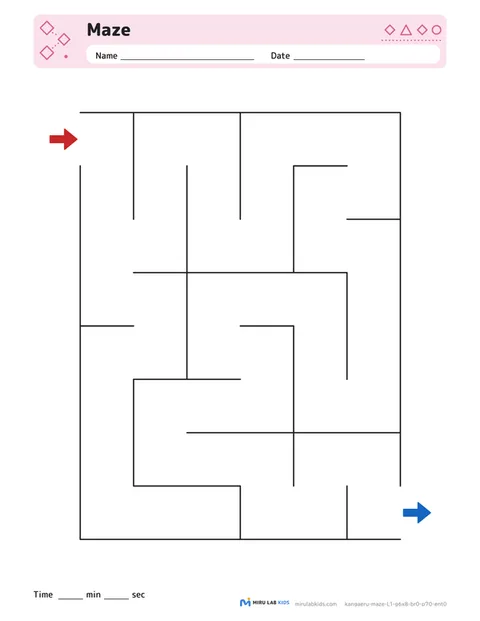
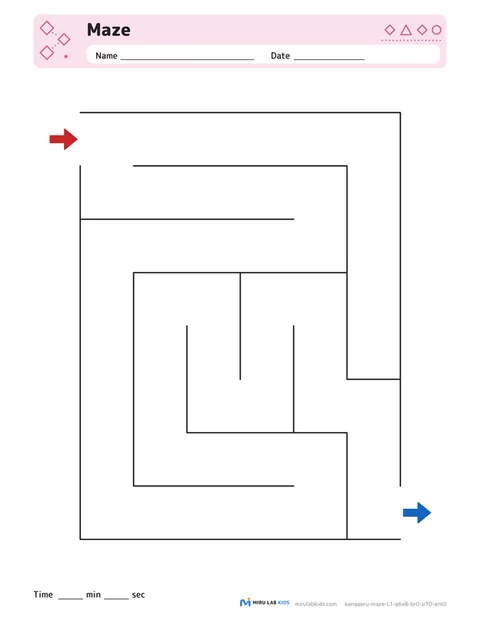
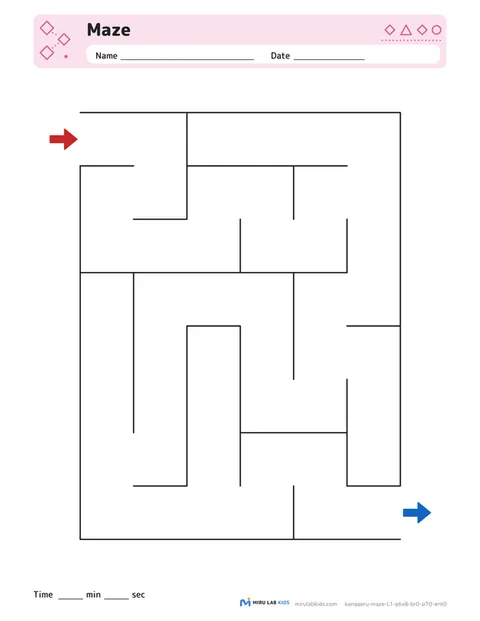
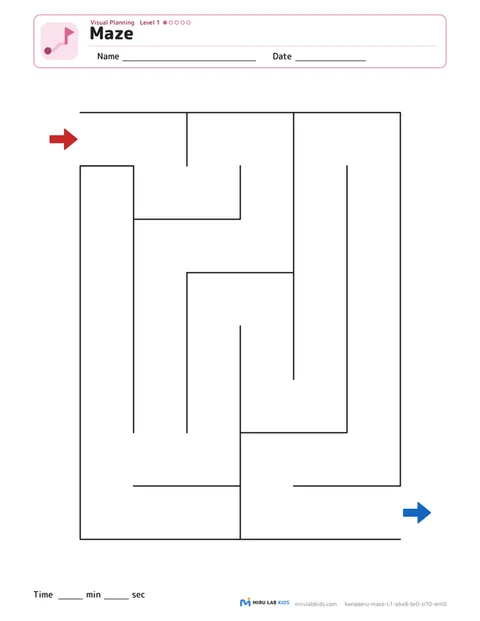
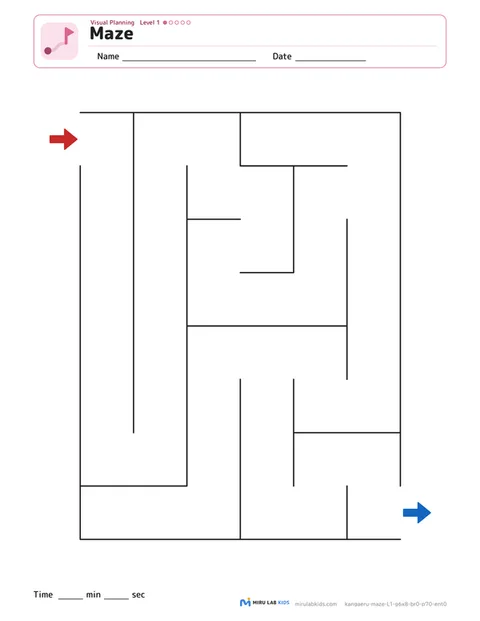
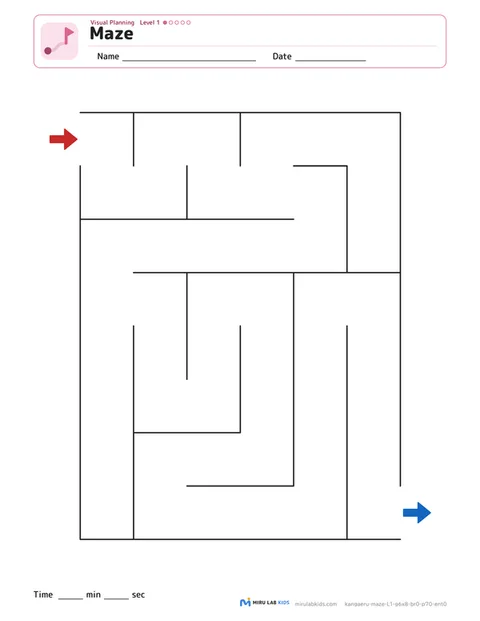
| Level 1 | 6 × 8 squares with wide paths. Very few dead ends. | 10 worksheets |
|---|---|---|
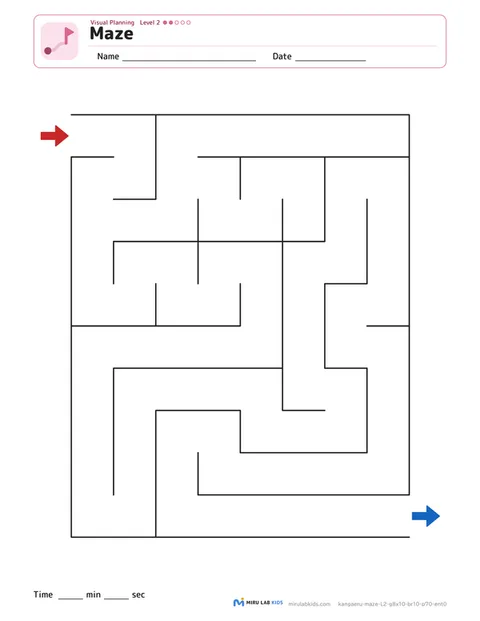
| Level 2 | 8 × 10 squares. A few more dead ends. | 10 worksheets |
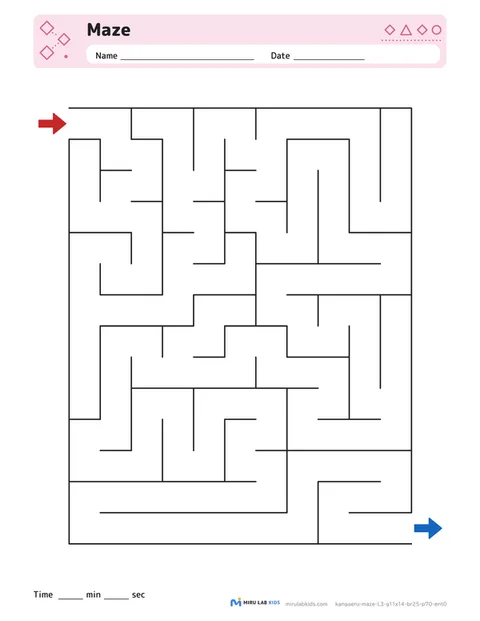
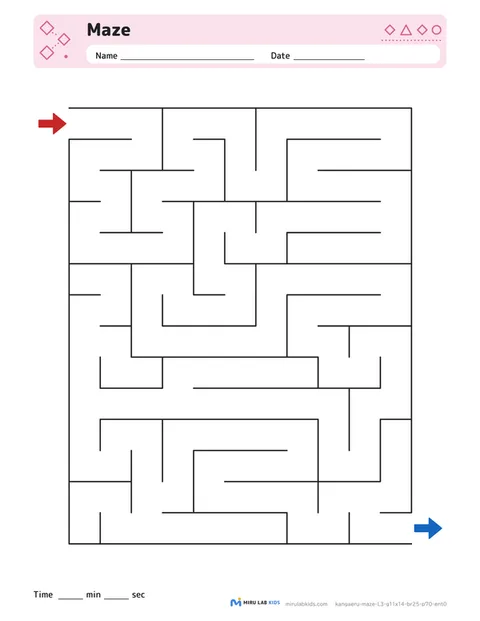
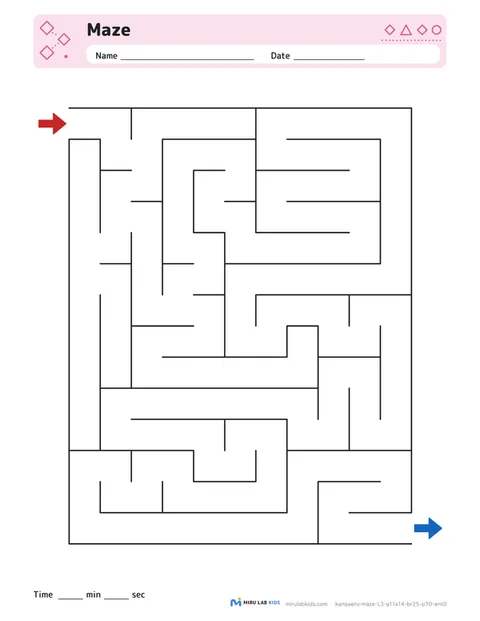
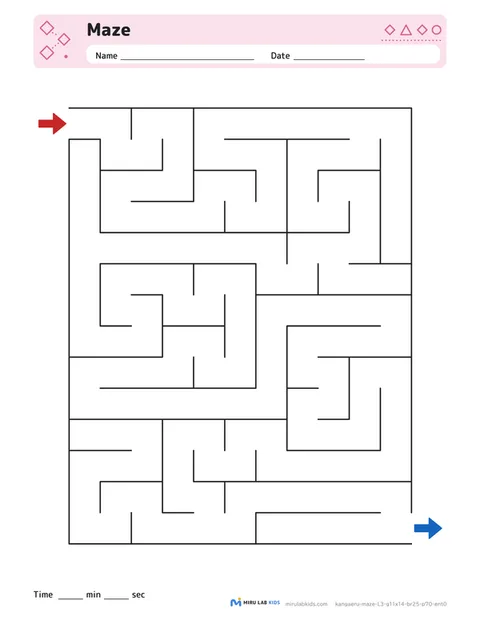
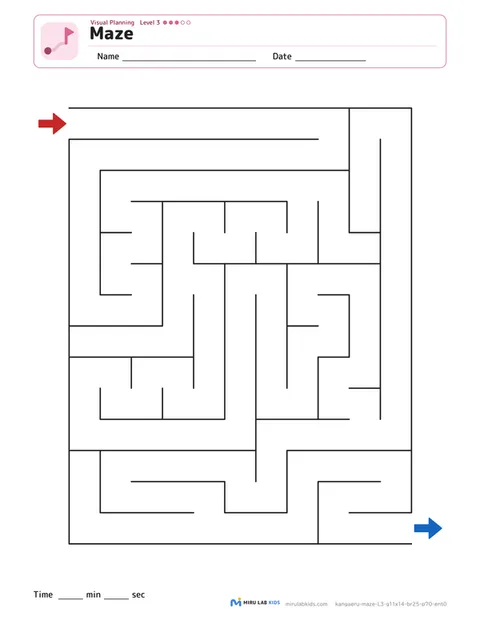
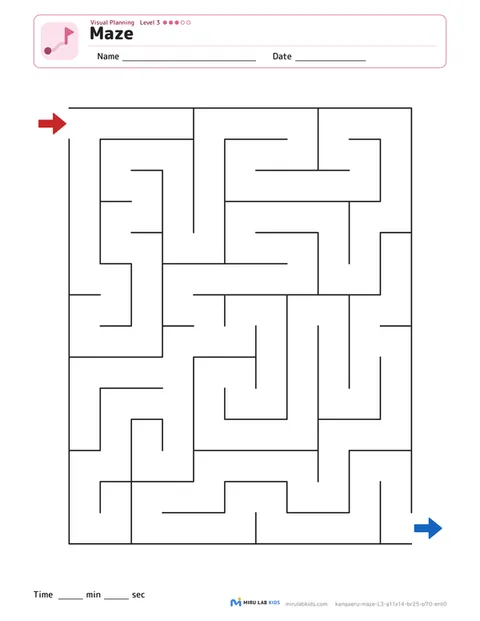
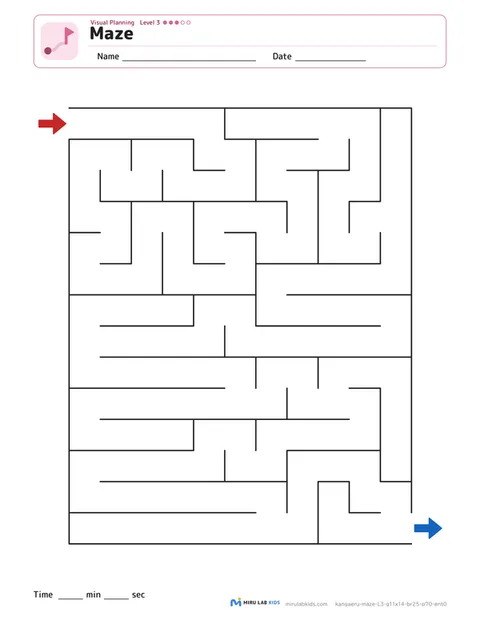
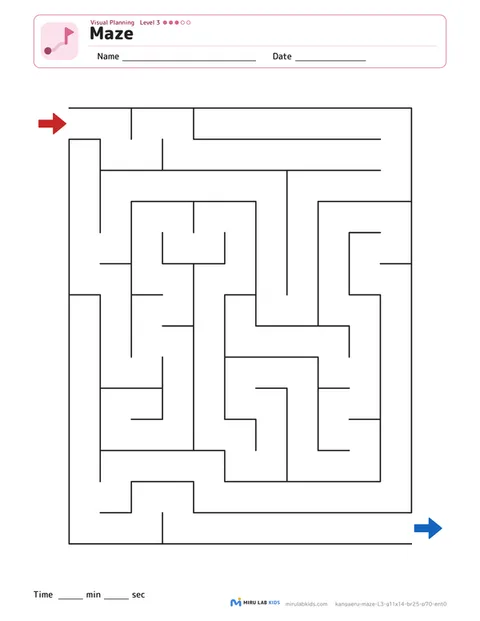
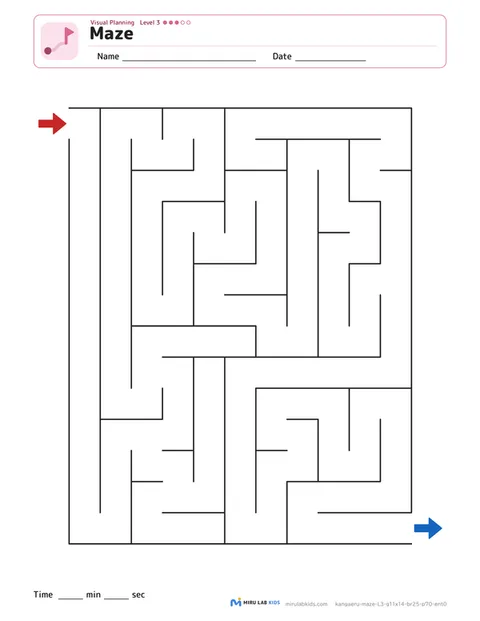
| Level 3 | 11 × 14 squares. Smaller squares and a longer route. | 10 worksheets |
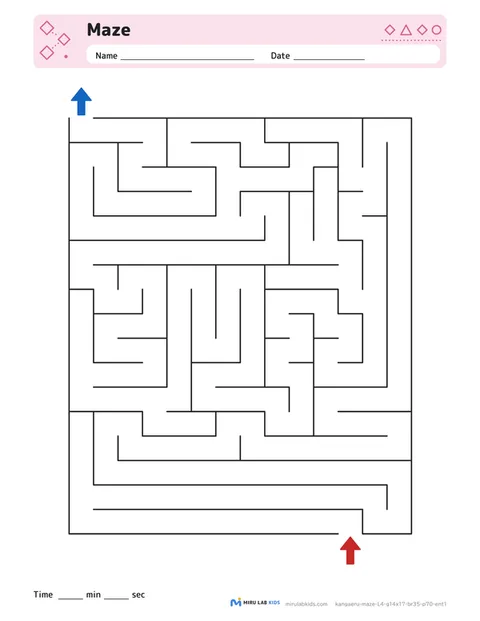
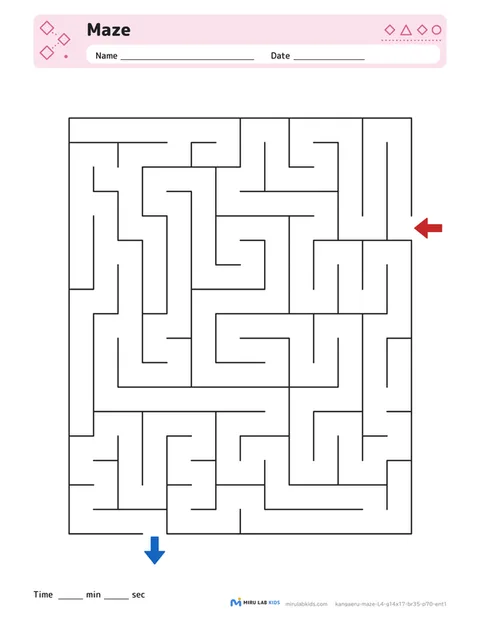
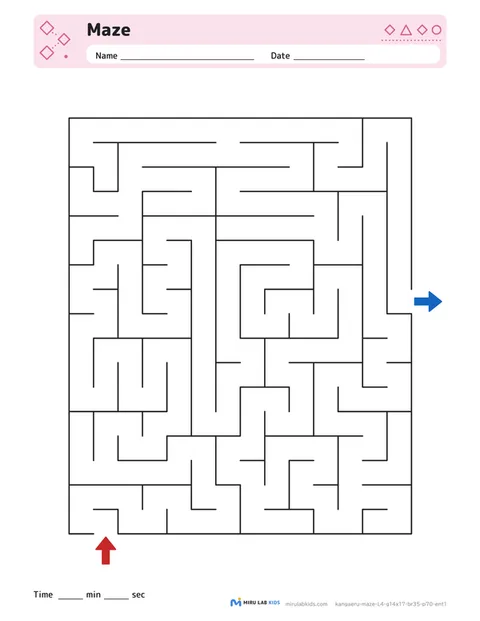
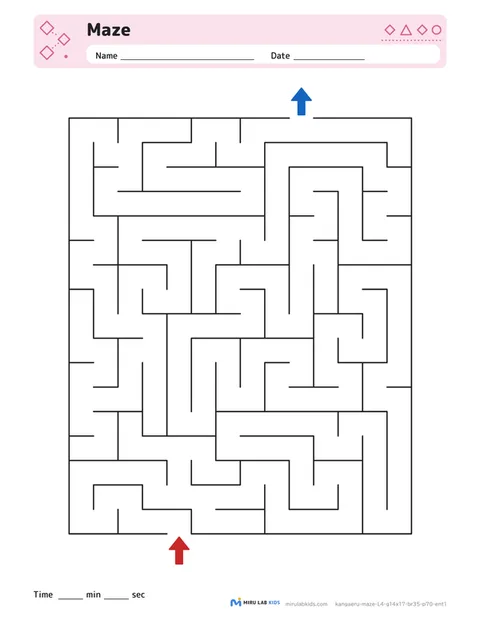
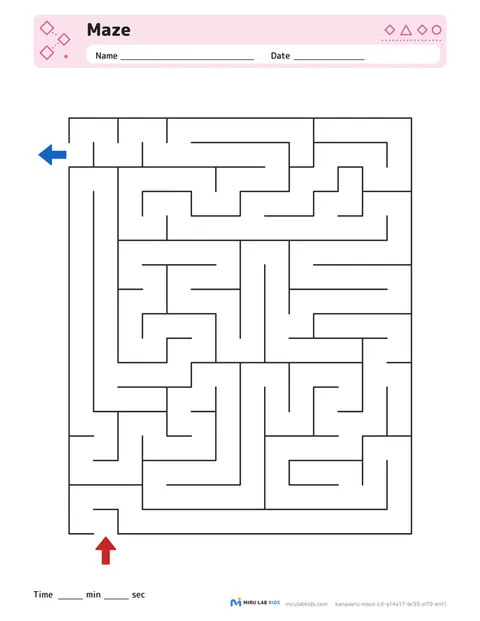
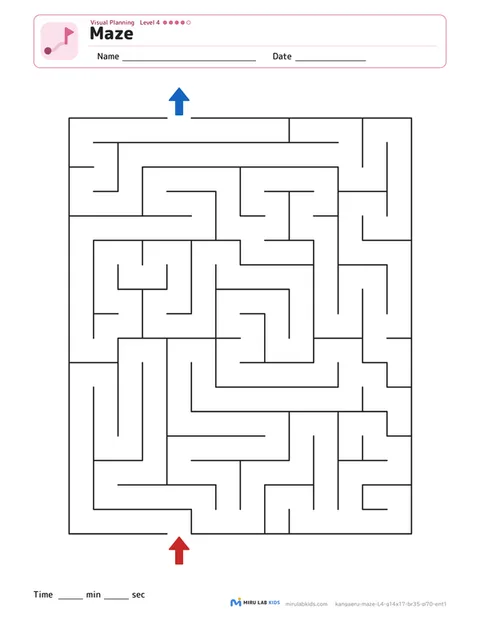
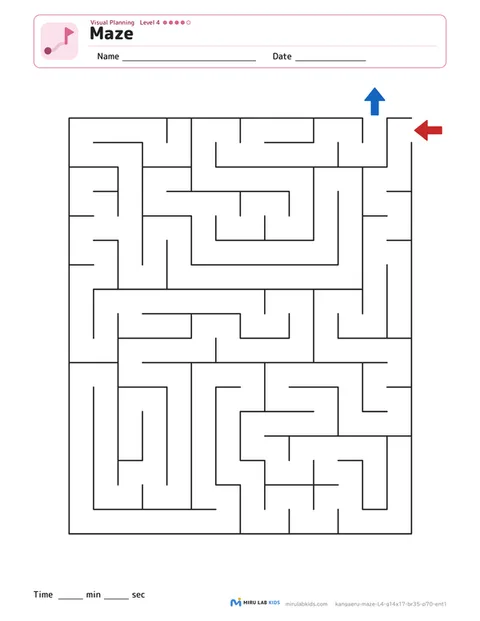
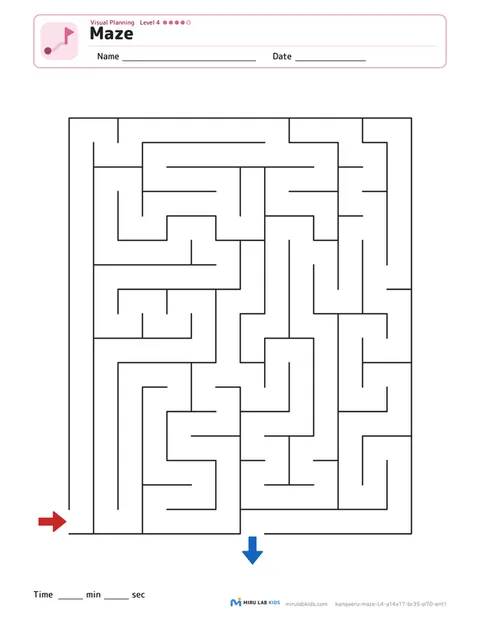
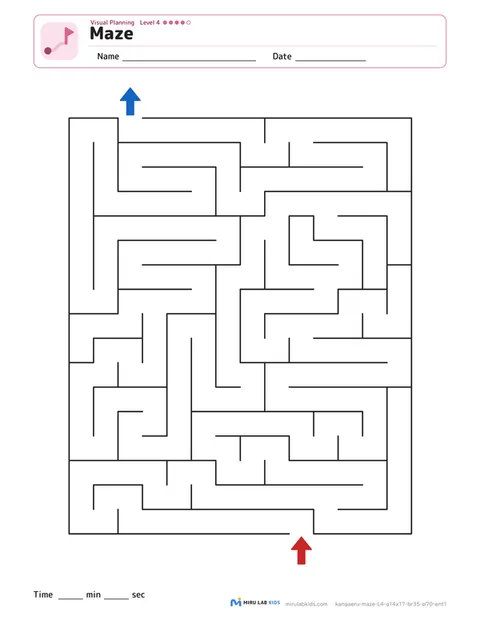
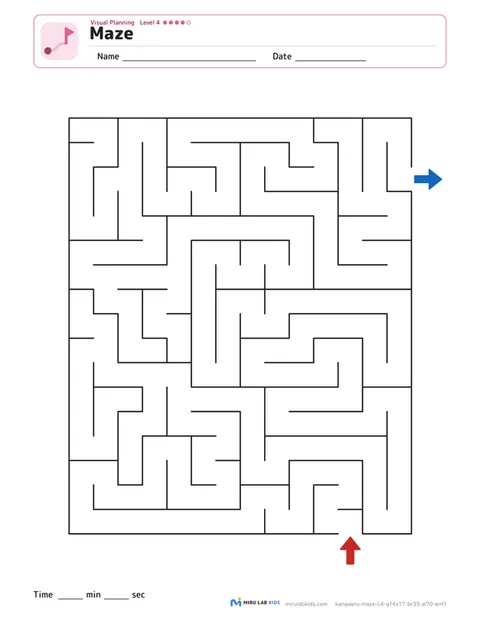
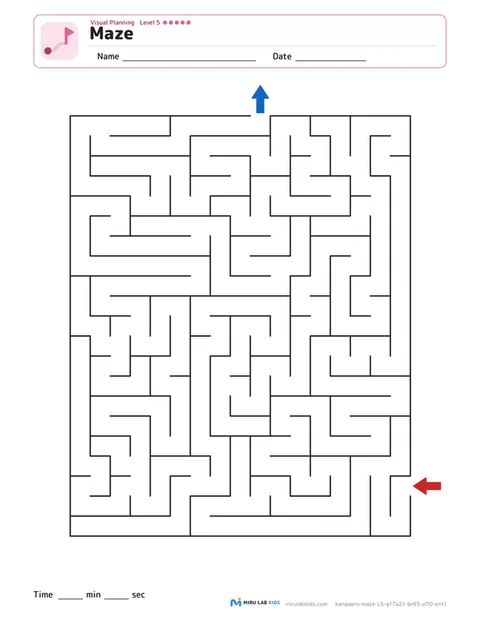
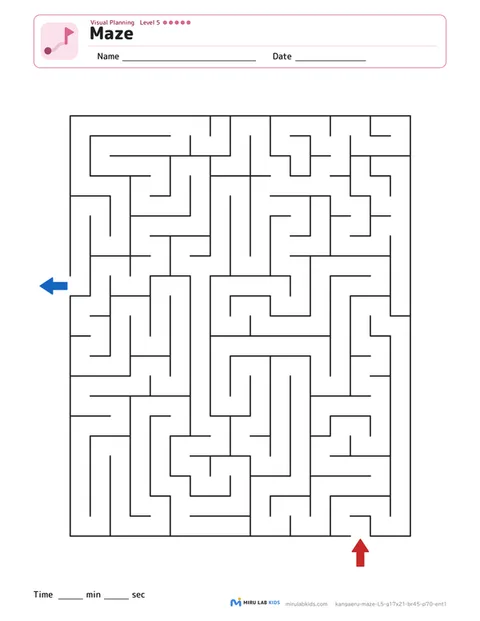
| Level 4 | 14 × 17 squares. More branches, and the entrance and exit move around the edge. | 10 worksheets |
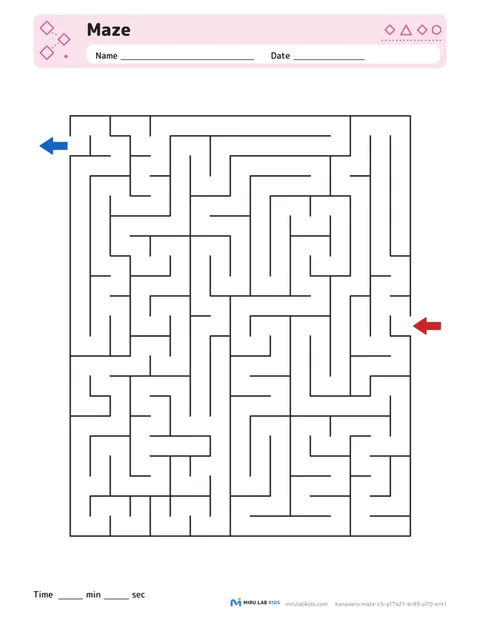
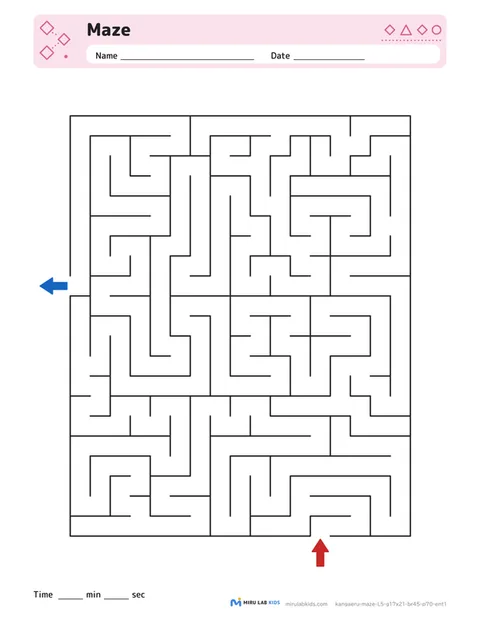
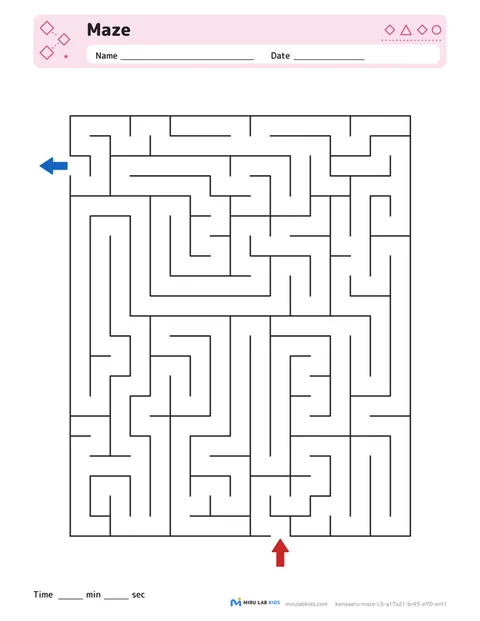
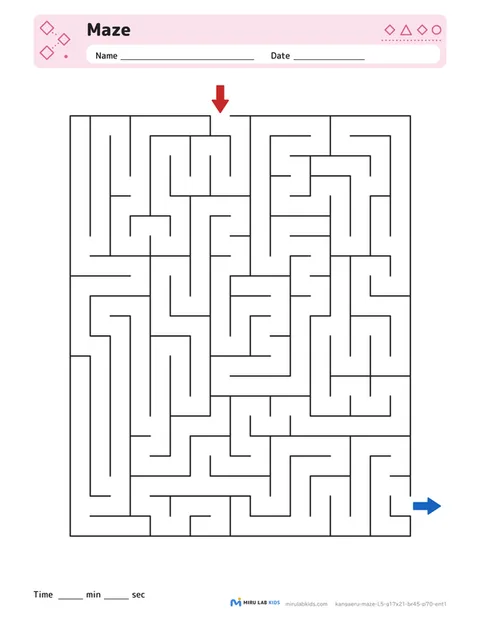
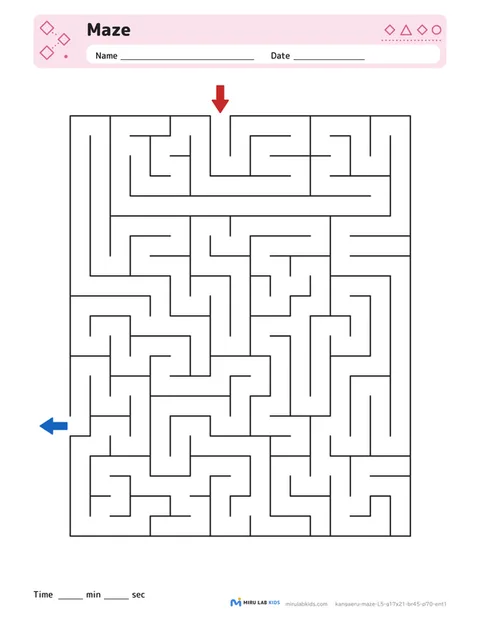
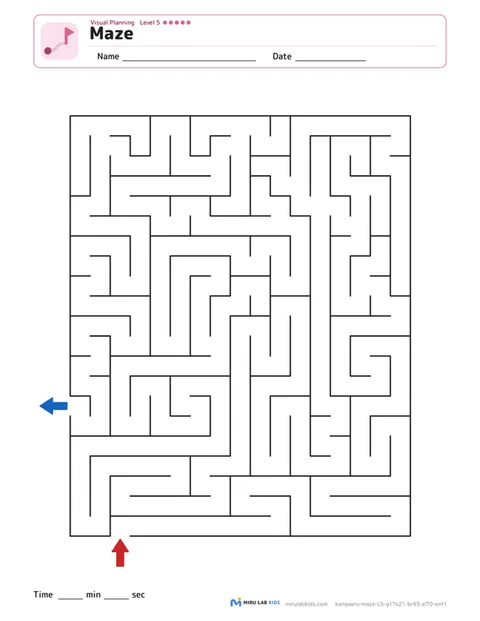
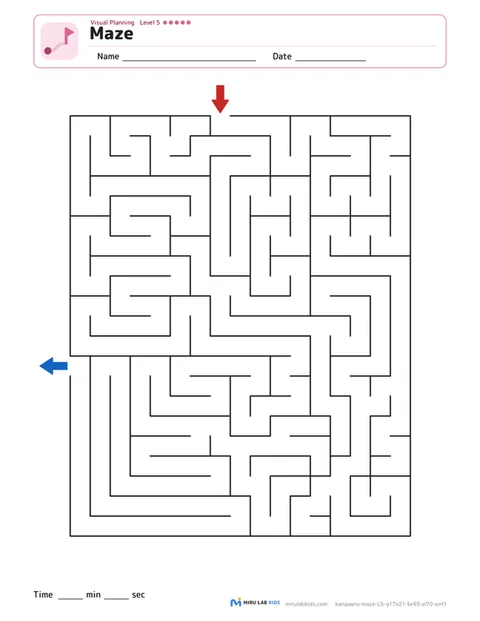
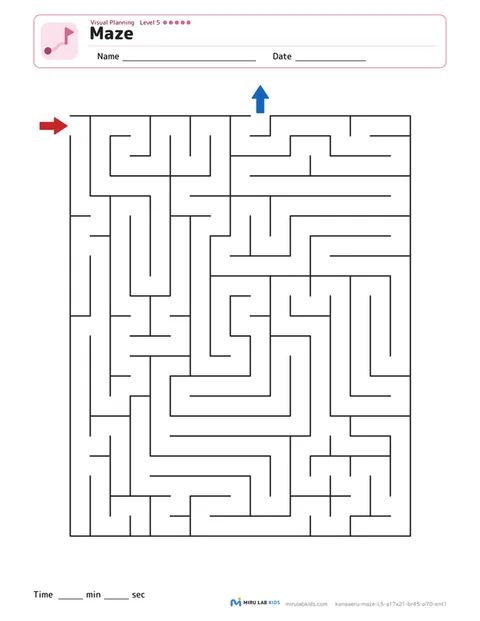
| Level 5 | 17 × 21 squares with narrow paths. The longest route and the most branches. | 10 worksheets |
Tips
- Draw a line with a pencil from the red arrow (start) to the blue arrow (finish), without touching the walls.
For what to say, choosing a level and what to do if it is too hard, see Mazes: a guide for grown-ups.
Worksheets
Choose a worksheet to open its printing page.
Print in bulk
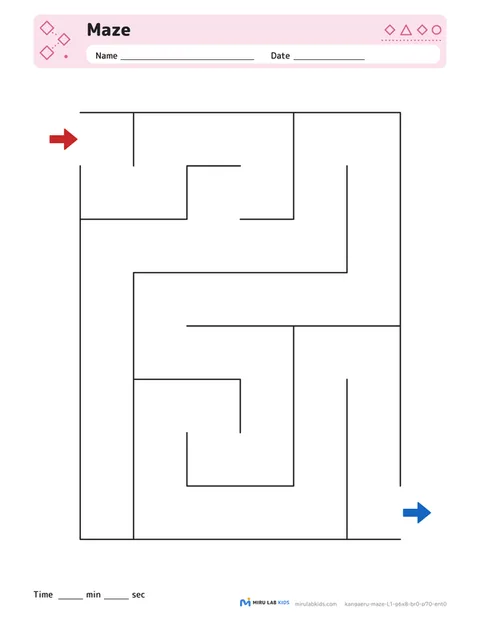
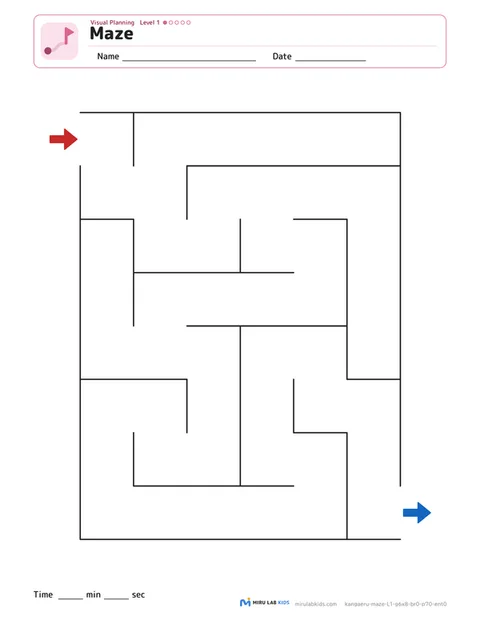
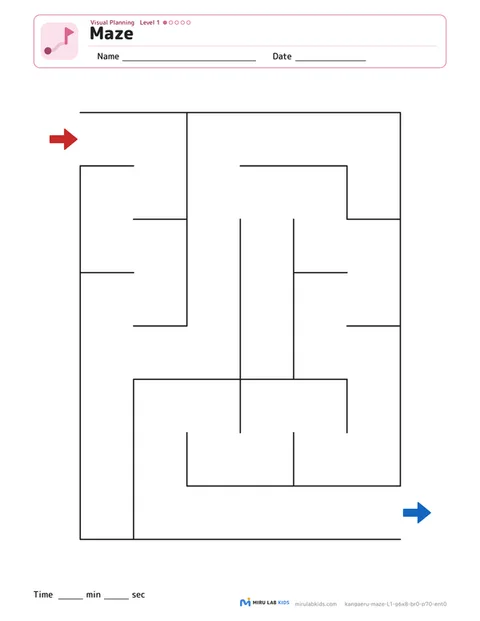
Level 16 × 8 squares with wide paths. Very few dead ends.
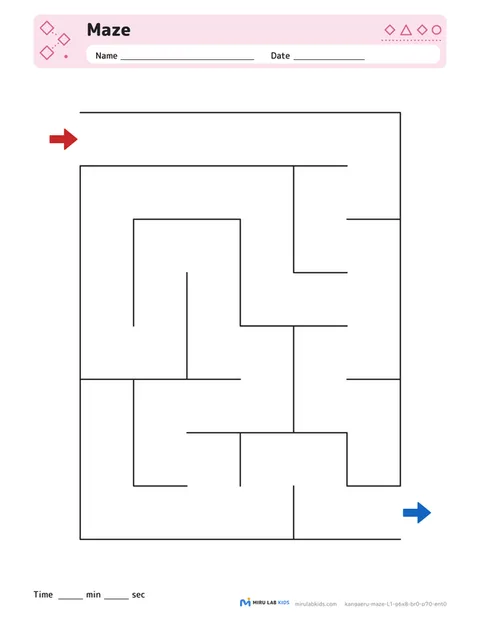
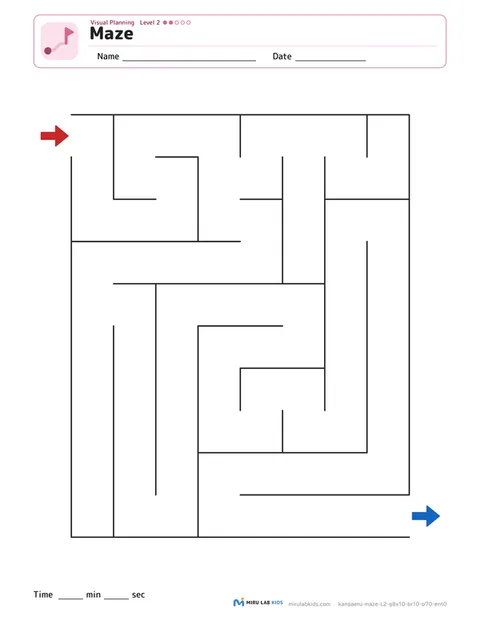
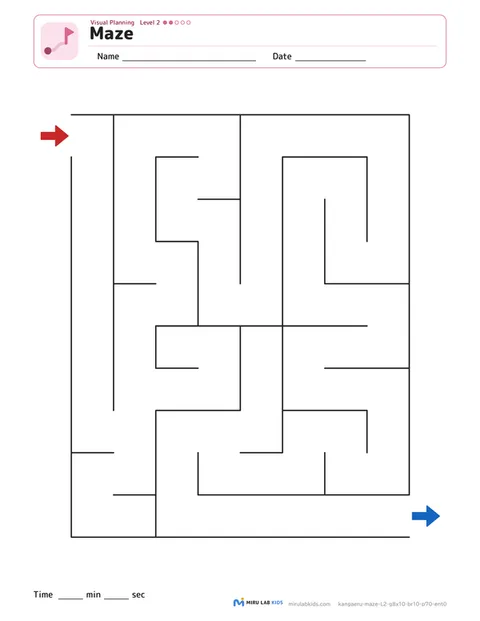
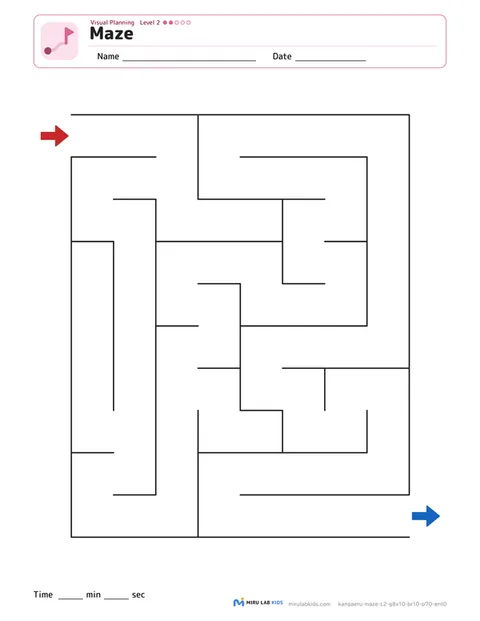
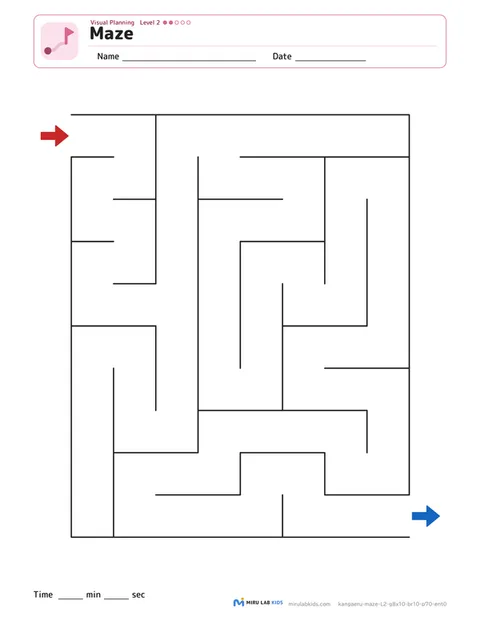
Level 28 × 10 squares. A few more dead ends.
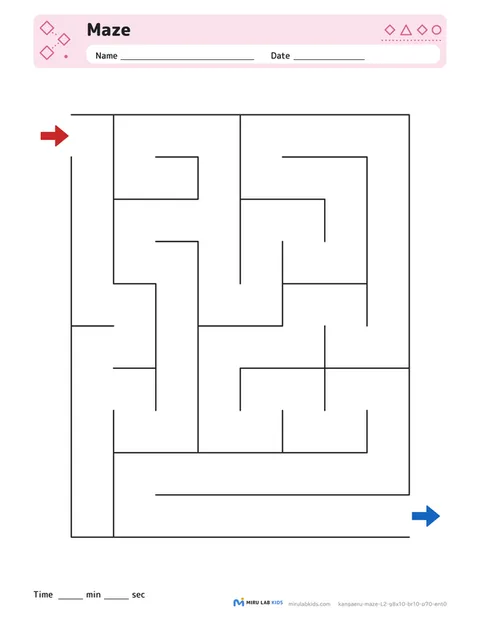
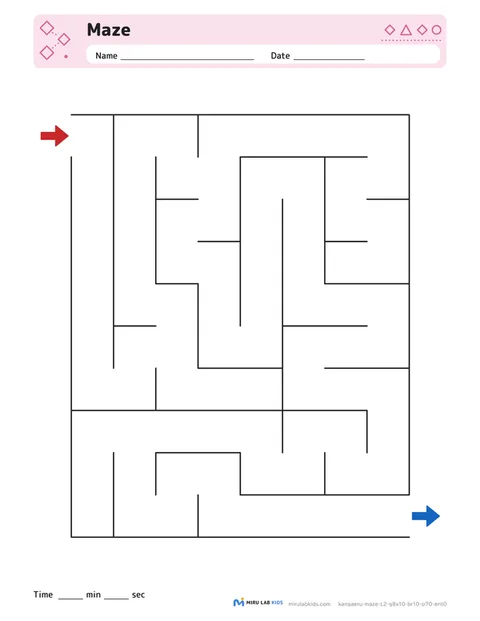
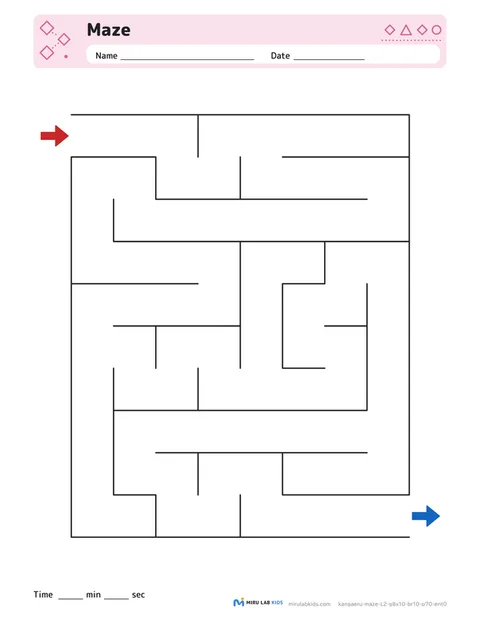
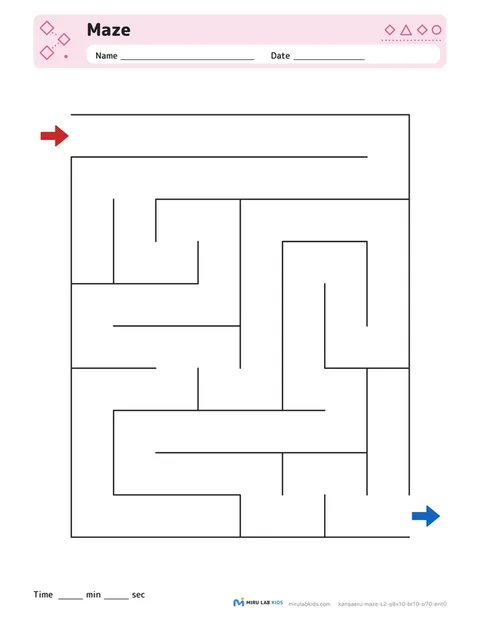
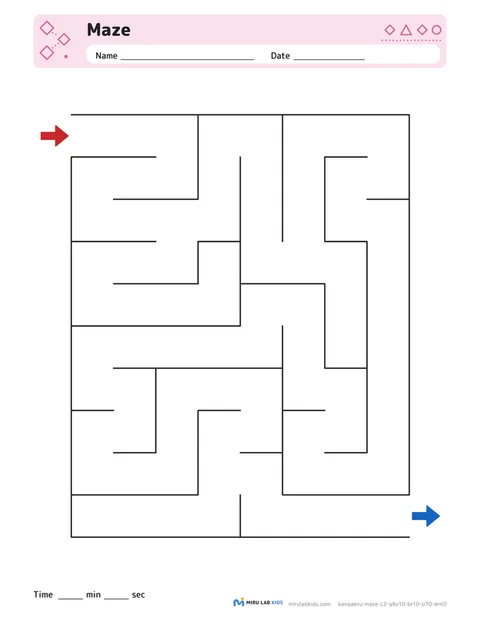
Level 311 × 14 squares. Smaller squares and a longer route.
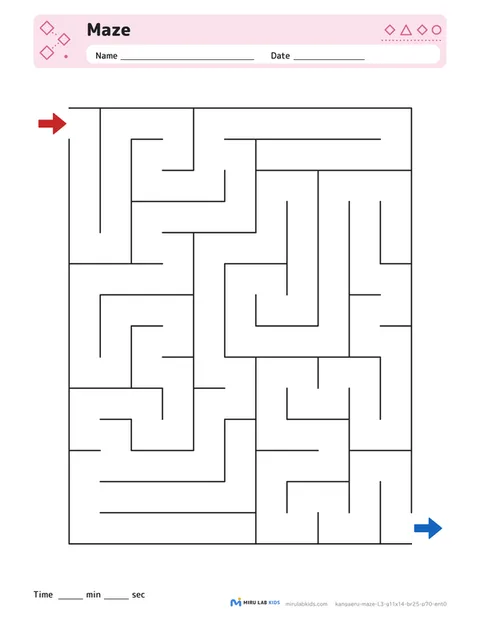
Level 414 × 17 squares. More branches, and the entrance and exit move around the edge.
Level 517 × 21 squares with narrow paths. The longest route and the most branches.
Mazes: a guide for grown-ups
Who it is for
- Staying inside the lines is hardPractice moving the hand while looking, so the line stays on the path.
- Following with the eyes is hardPractice following the path ahead with the eyes. Also for children who skip lines when reading.
- Rushes ahead without planningPractice looking ahead at a branch and choosing which way to go.
- Not writing letters yetIt is only drawing a line, so children who do not write letters yet can try it.
- Loves mazesA favorite game that uses looking and hand skills together.
- Therapy and classroom sessionsAll you need is one sheet of paper and a pencil.
Choosing a level
Reached the finish happily, inside the path
- Go up one level.
- Try Levels 4 and 5, where the entrance and exit change position.
Keeps going into dead ends or the line goes over the walls
- Go down one level (fewer, wider paths).
- Let your child trace the route with a finger before drawing.
What to watch for
| Looking ahead | Does your child look ahead along the path before moving the pencil? Or just go wherever the pencil leads? |
|---|---|
| Branches | Does your child stop and think at a branch? Can they find their way back from a dead end on their own? |
| Lines | Does the line stay off the walls? Does it go over at the corners? |
| Pencil grip | Is your child gripping the pencil too hard? Is the other hand holding the paper? |
| Head and body | Does the whole head move a lot when following the path? Is the face very close to the page? |
| Time | Writing the time at the bottom of the page each time makes small changes easier to notice. Copying it onto the Time Log lets you line up results at the same level. |
If something keeps worrying you, it can help to talk with an eye doctor or another specialist rather than deciding on your own.
Things you can say
- Before startingWhere is the red arrow? And the blue one?Pointing to the start and finish together makes it easier to begin.
- At a branchWhich way gets to the finish?Do not give the answer right away. Let your child look ahead and choose.
- At a dead endLet's go back and try another way.Going into a dead end is not a failure. Going back and trying again is fine.
- When finishedYou made it to the finish!Even if the line went over a little, first praise your child for reaching the end.
- Next timeYou didn't touch the walls today!Notice changes in care, not just speed.
FAQ
Is there an answer page?
Yes. Page 2 of the PDF is the answer page. Worksheet-only and answers-only PDFs are also available.
Can I print in black and white?
The start is a red arrow and the finish is a blue arrow. If you print in black and white, point to the start and finish together before beginning.
Why is the route so long?
Each maze is made so the correct route goes through at least 70% of the maze. Following most of the page is good practice for following a path with the eyes.
Are there mazes shaped like numbers?
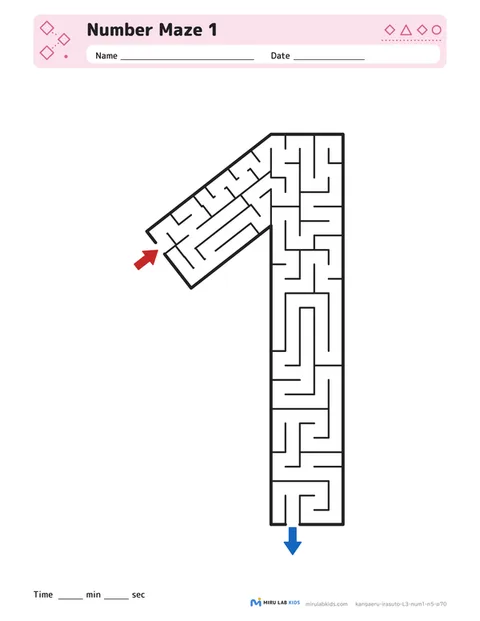
Yes. In "Number Mazes," the mazes are shaped like the numbers 1 to 9. Solving one means tracing the shape of the number.
How much should we do at a time?
There is no set amount. One or two mazes at a time is a good guide, and it is best to stop while your child still wants a little more. See "Every Day? How Much?" for more.
Articles
- What Is Visual Perception? More Than Good Eyesight
- Why Does My Child Put Clothes On Backwards or Inside Out? Getting Dressed Uses More Visual Skills Than You Think
- When a Child Has Trouble Catching a Ball: Breaking It Down from "Tracking" to "Reaching"
- When a Child's Tracing Slips onto Another Shape: Understanding Figure-Ground Perception
About the code at the bottom right
The code at the bottom right of each worksheet (for example, kangaeru-maze-L1-g6x8-br0-p70-ent0) shows its difficulty settings. Worksheets with the same code have the same difficulty. If you contact us about a worksheet, including this code helps us find it right away.
 Shape Recognition
 Spatial Relations
 Visual Scanning
 Visual Memory
 Visual-Motor Skills