Pattern Maze: PicturesFree printable worksheets
Aims
- Finding the next picture among the nearby squares (visual search)
- Telling similar pictures apart (visual discrimination)
- Keeping the pattern in mind while moving (working memory)
- Looking ahead at a branch to choose the way (planning)
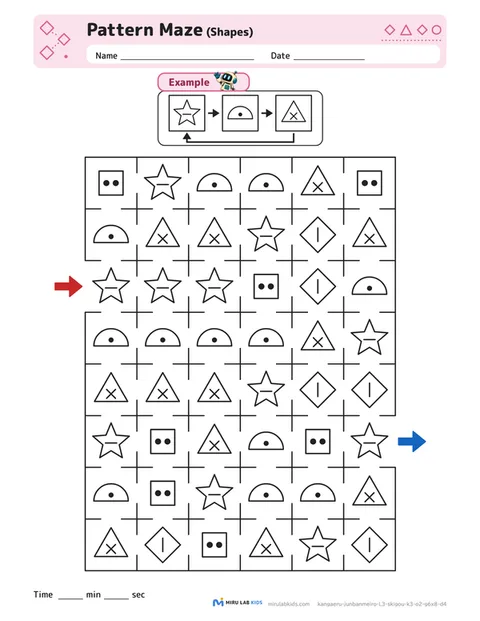
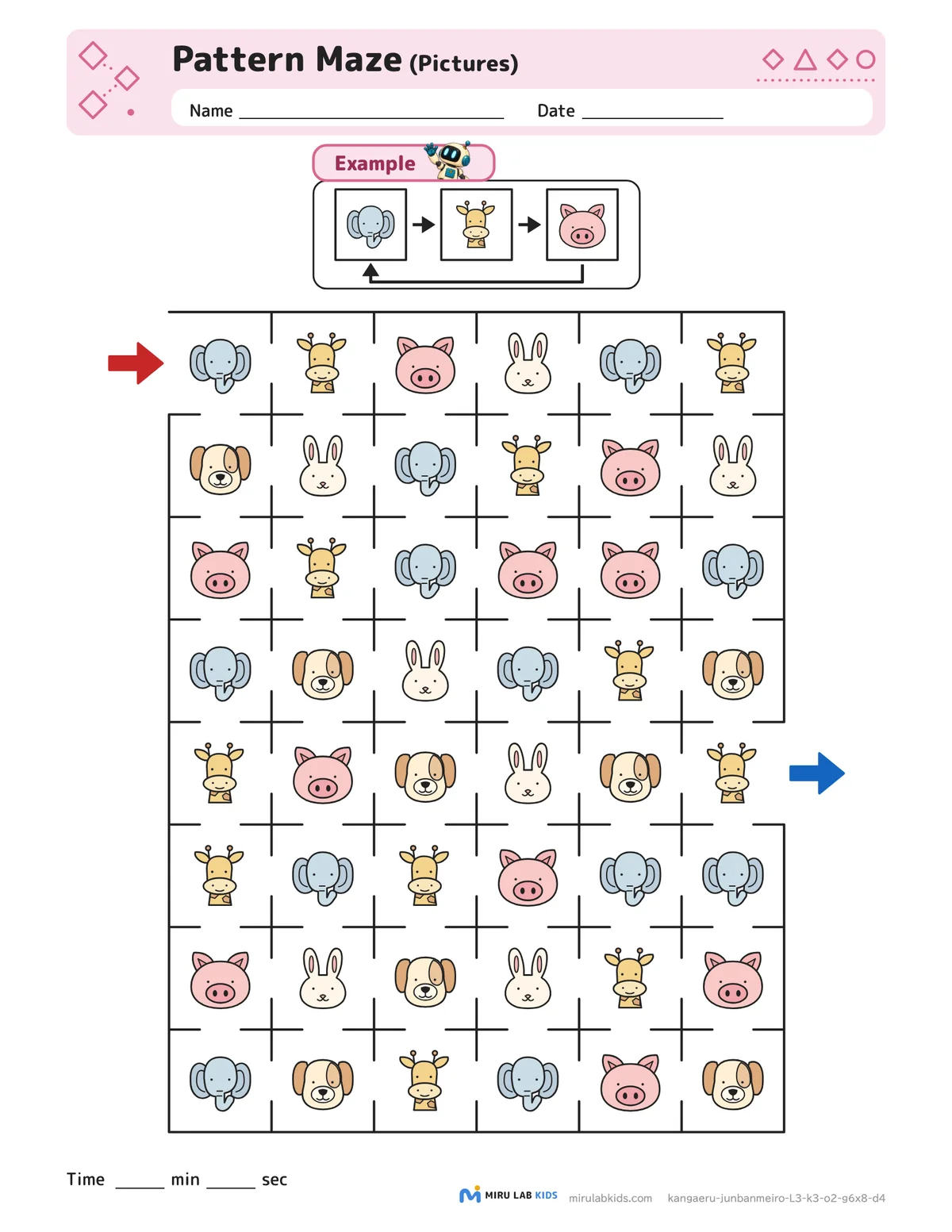
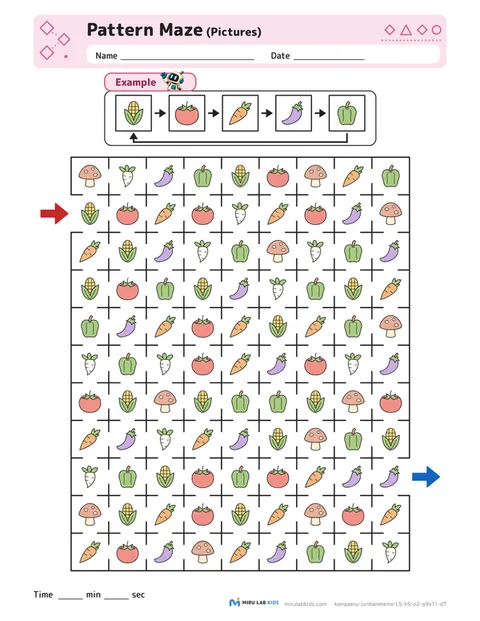
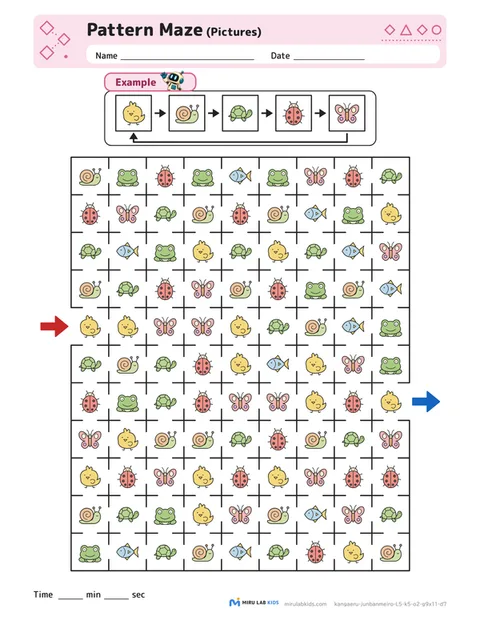
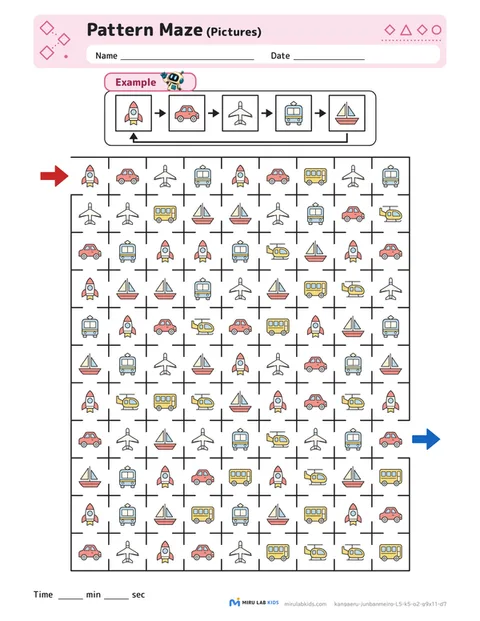
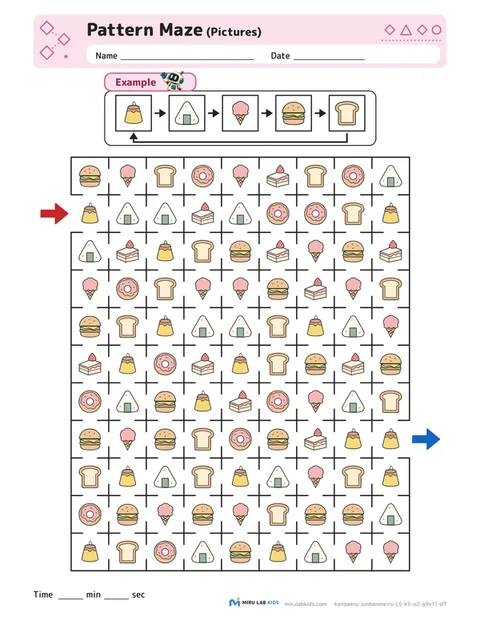
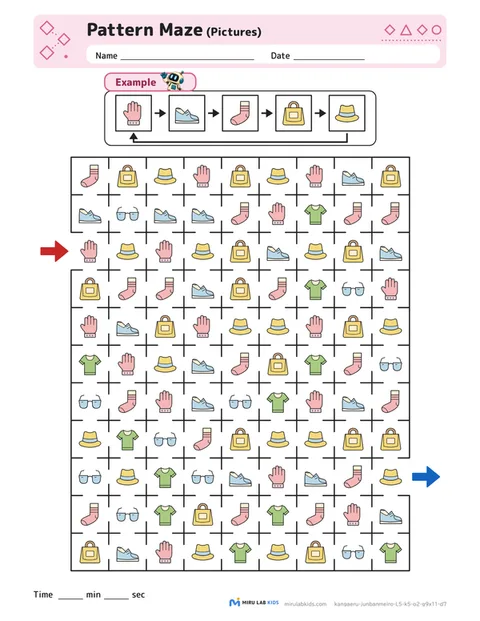
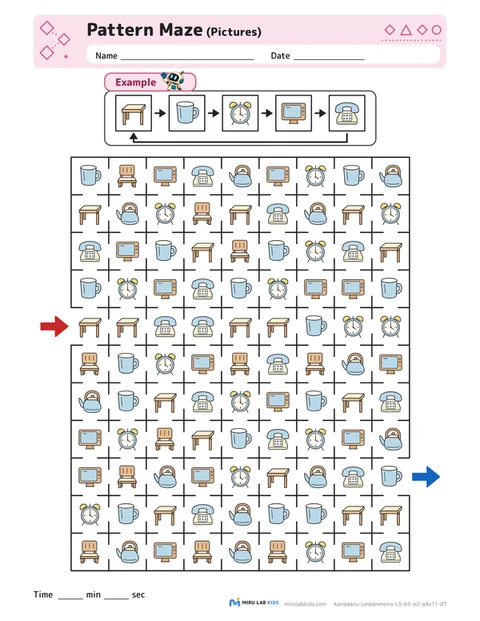
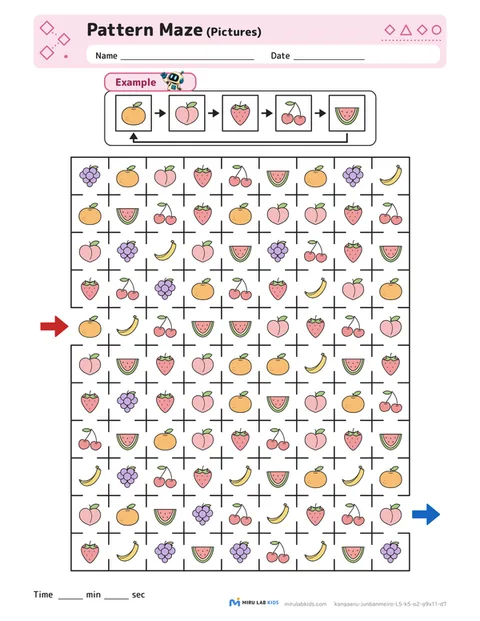
Your child follows the pictures in the order shown at the top of the page (after the last picture, the pattern starts again from the first), moving from the start to the finish.Moves go only up, down, left, or right to the next square, and there is always exactly one correct route.The activity aims to build the ability to keep the pattern in mind, find and tell apart the next picture among the nearby squares, and look ahead at branches.All the pictures on one page belong to the same group (fruit, vehicles, and so on), so your child can also say the names out loud while working.When your child is ready, "Pattern Maze: Shapes" is the next step up, using symbols instead of pictures.
 Level 3 example ›
Levels
| Level 1 | 4 × 5 squares, a pattern of 2 pictures. One dead-end branch. | 10 worksheets |
|---|---|---|
| Level 2 | 5 × 6 squares, a pattern of 3 pictures. Two dead-end branches. | 10 worksheets |
| Level 3 | 6 × 8 squares, a pattern of 3 pictures. More branches and a longer route. | 10 worksheets |
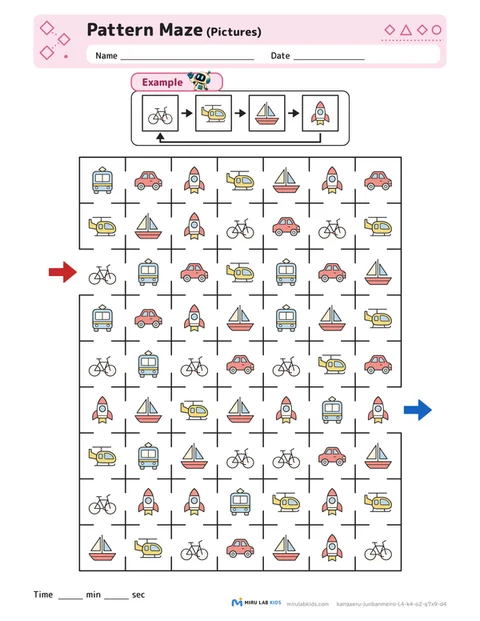
| Level 4 | 7 × 9 squares, a pattern of 4 pictures. A longer pattern to keep in mind. | 10 worksheets |
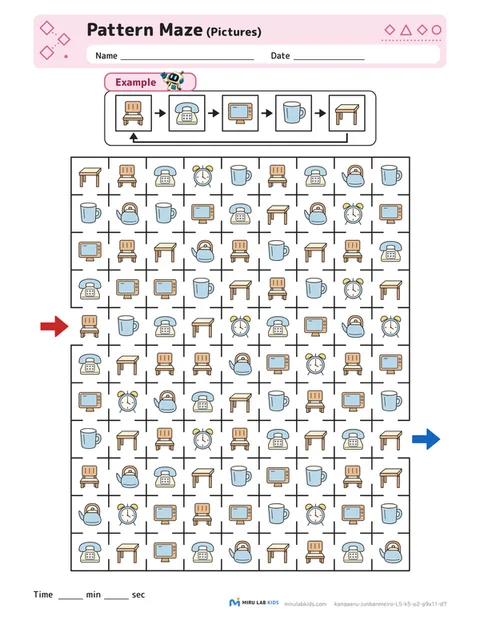
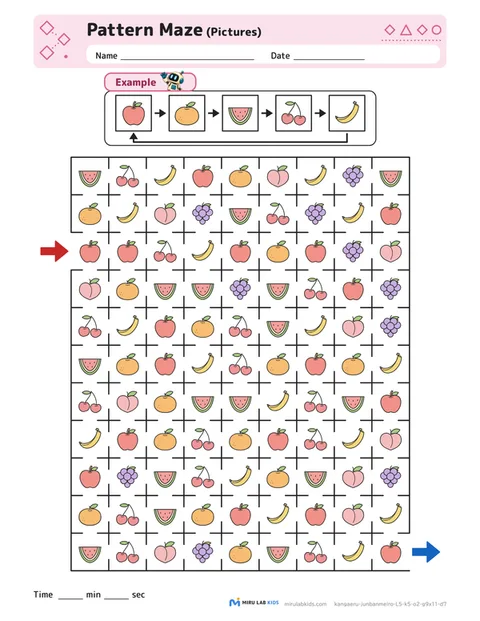
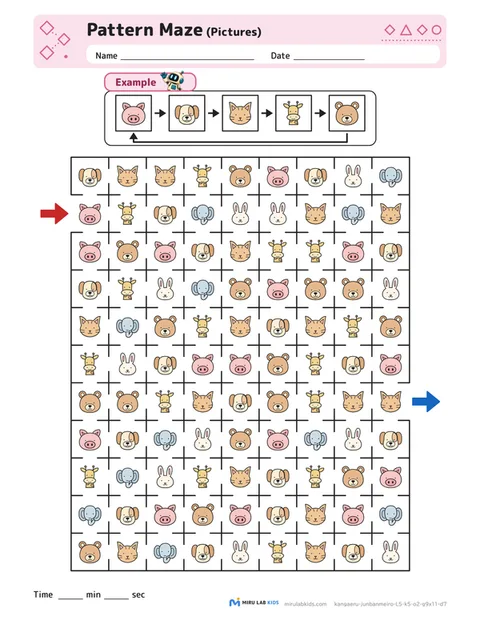
| Level 5 | 9 × 11 squares, a pattern of 5 pictures. Pictures that look alike are mixed in. | 10 worksheets |
Tips
- Check the order of the pictures at the top. After the picture on the right, go back to the picture on the left.
- From the square at the red arrow (start), draw a line with a pencil to the next square up, down, left, or right, following the pattern. No diagonal moves.
- The maze is done when the line reaches the blue arrow (finish).
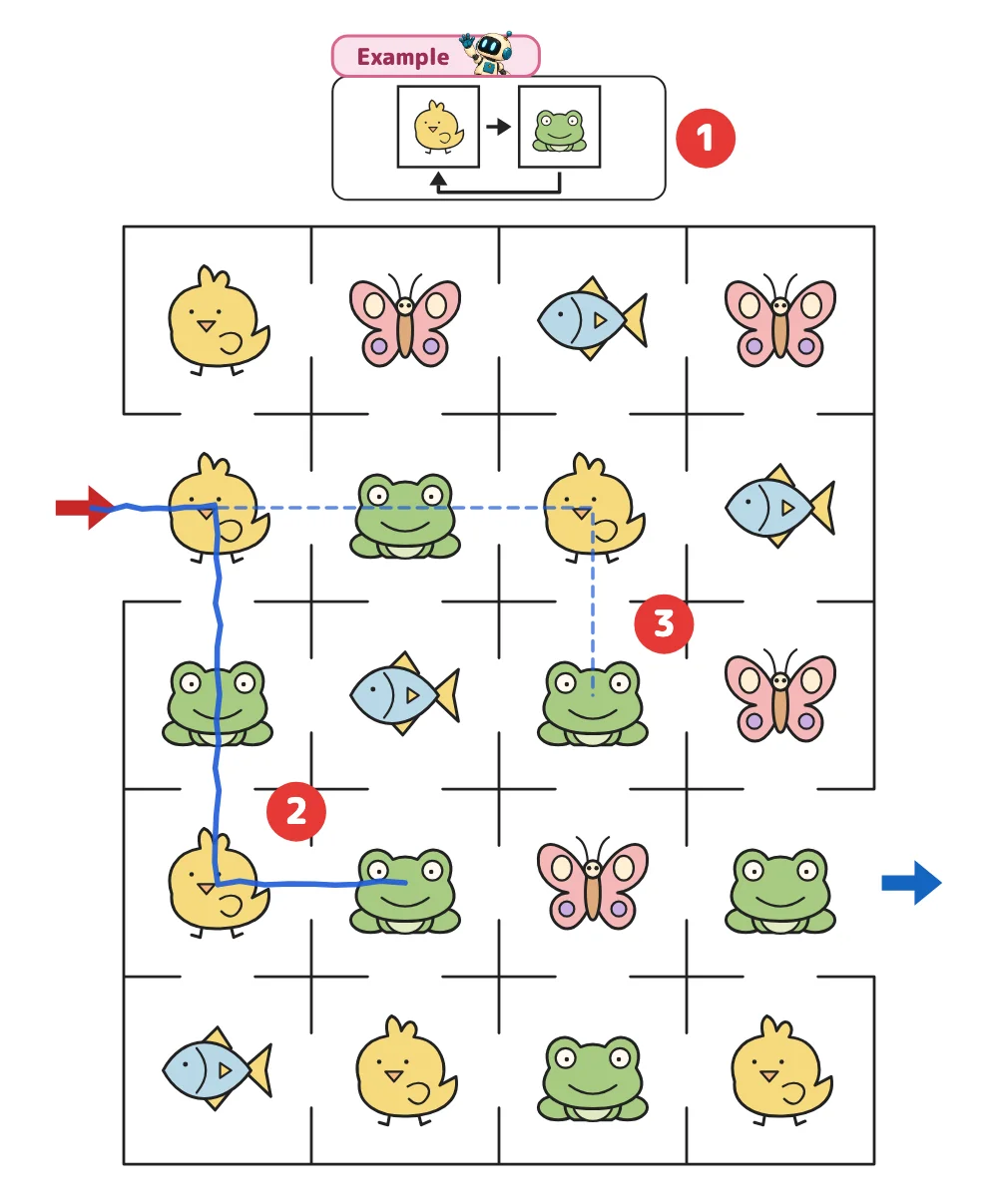
- Follow the patternChick → frog → chick → frog … After the last picture, start again from the first.
- Up, down, left, or right onlyThe corners of each square are closed, so no diagonal moves.
- At a dead end, go backWhere the next picture is in two neighboring squares, the path branches. Going into a dead end is fine. Just go back and look for another way.
For what to say, choosing a level and what to do if it is too hard, see Pattern Maze: Pictures: a guide for grown-ups.
Worksheets
Choose a worksheet to open its printing page.
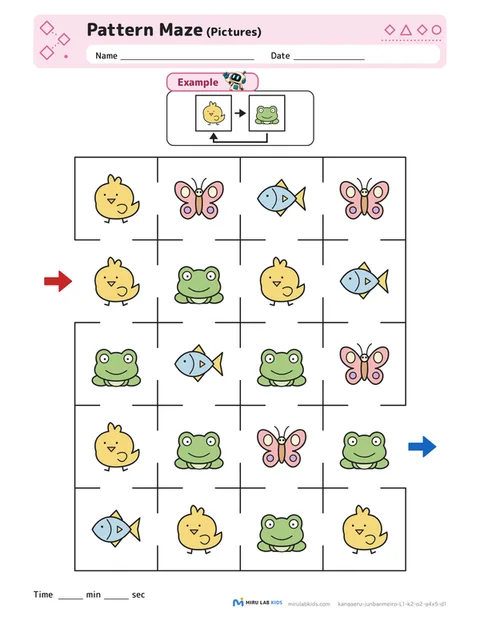
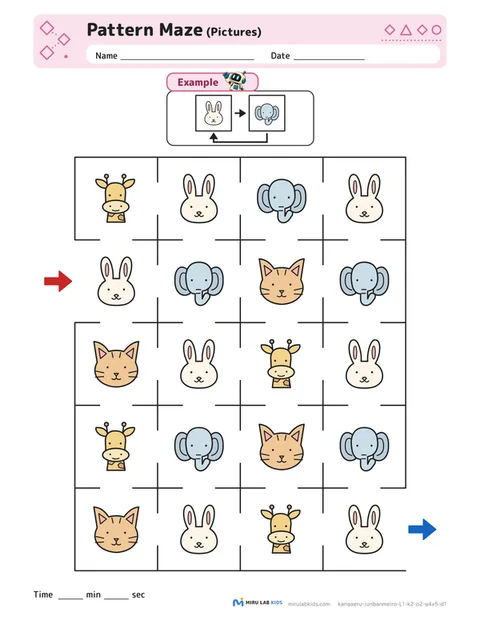
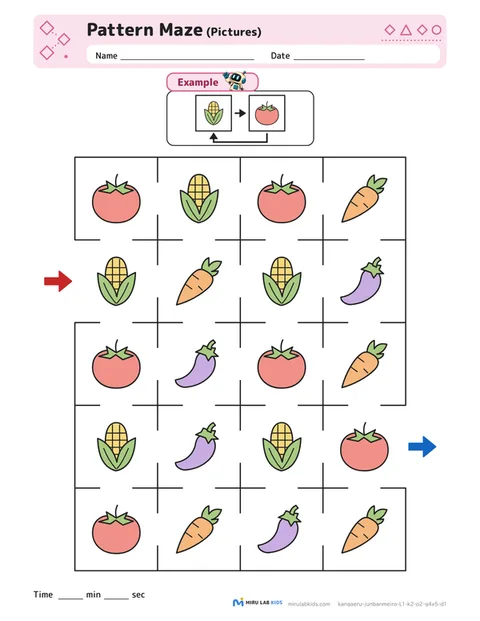
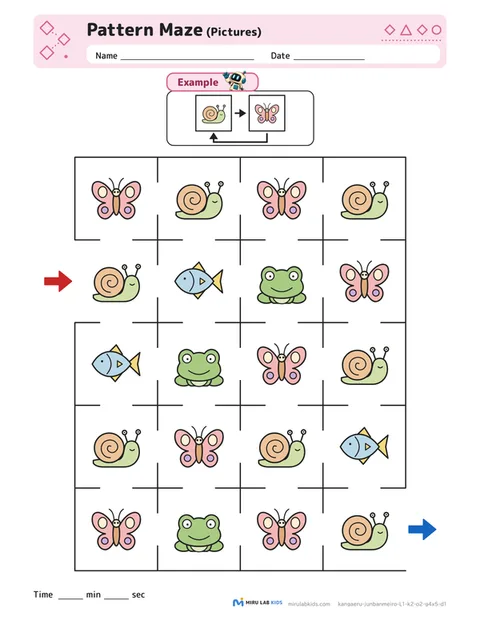
Level 14 × 5 squares, a pattern of 2 pictures. One dead-end branch.
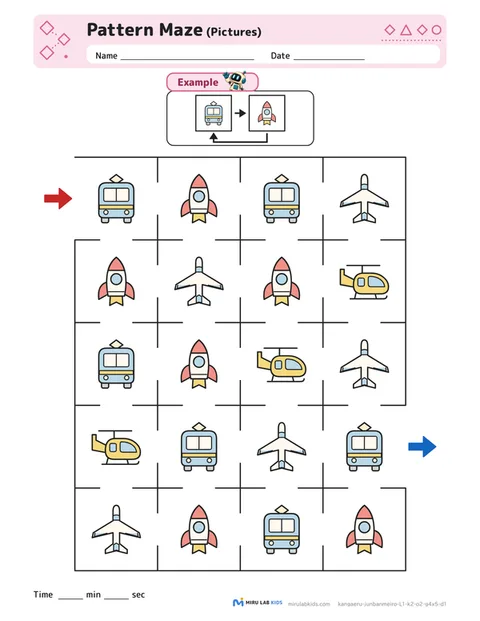
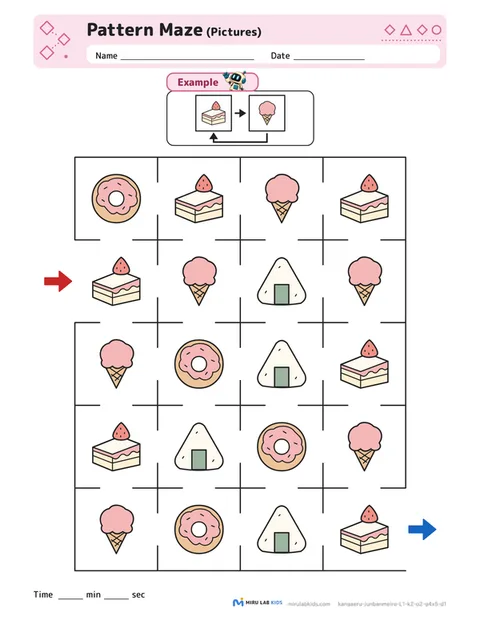
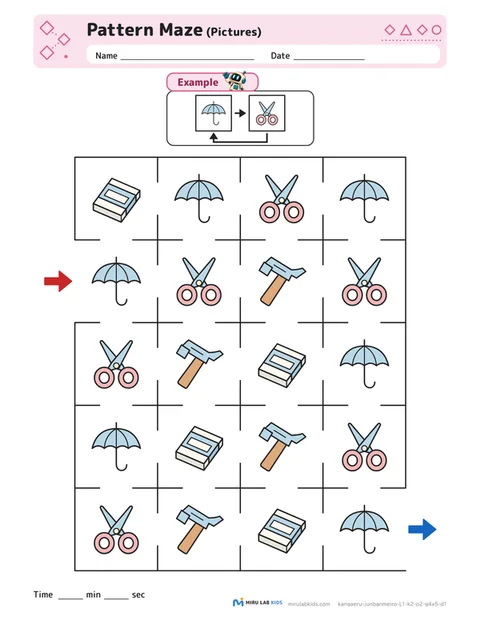
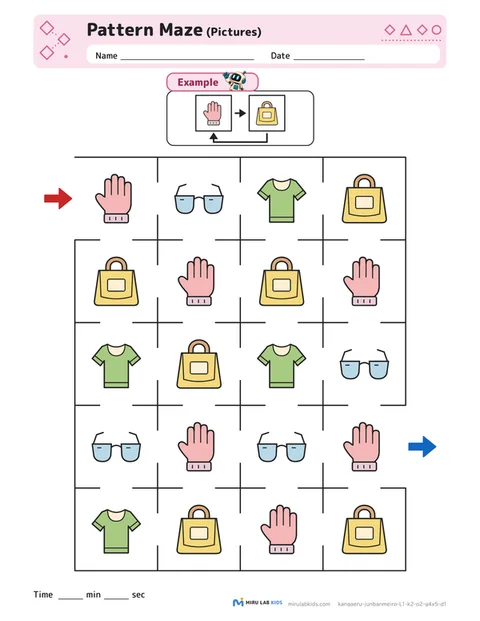
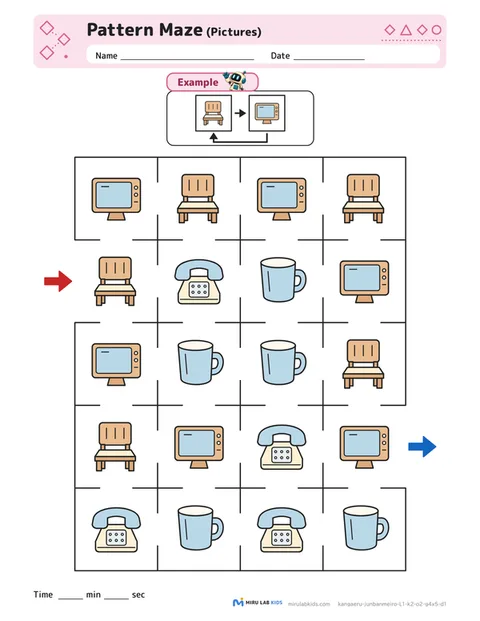
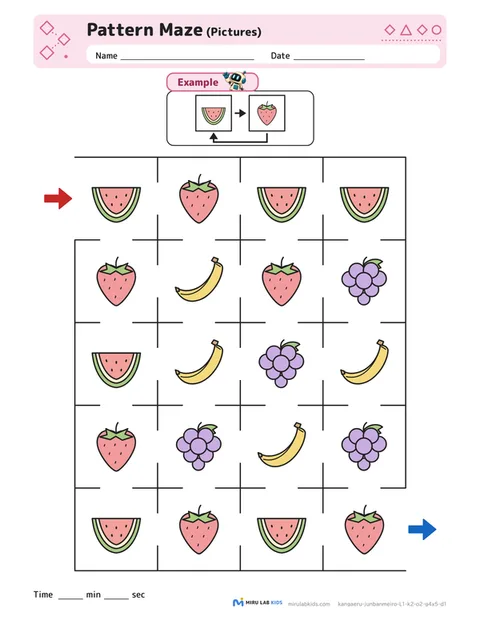
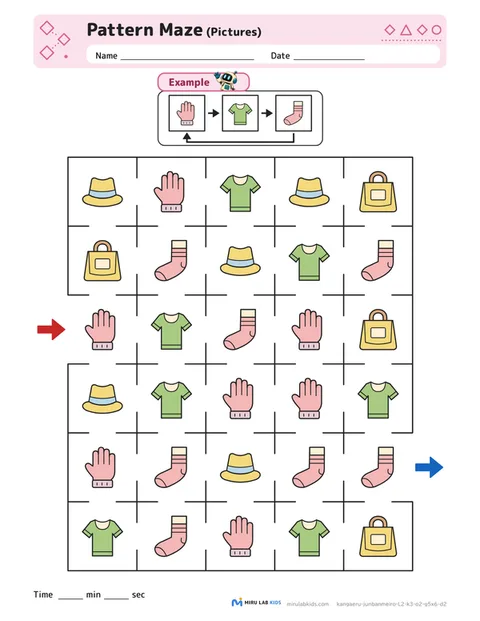
Level 25 × 6 squares, a pattern of 3 pictures. Two dead-end branches.
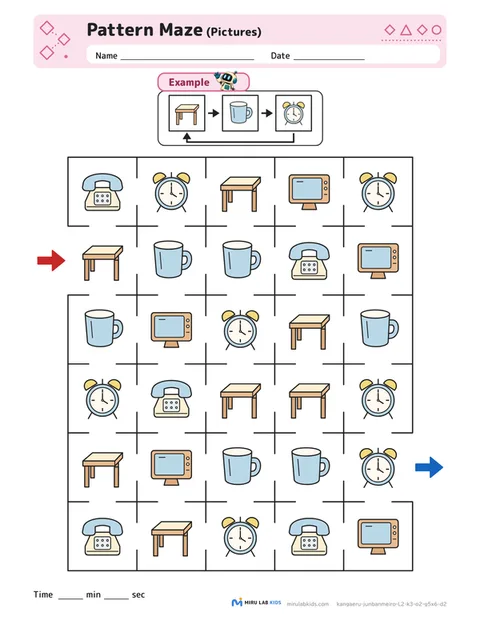
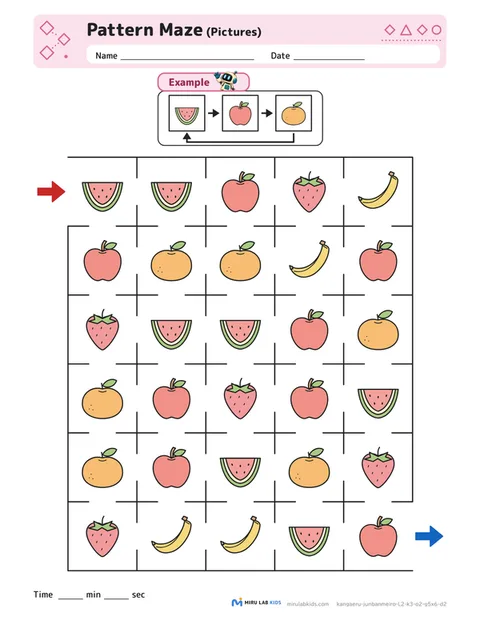
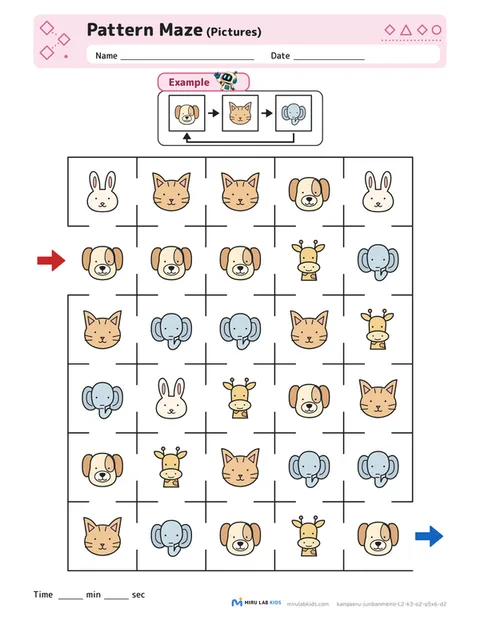
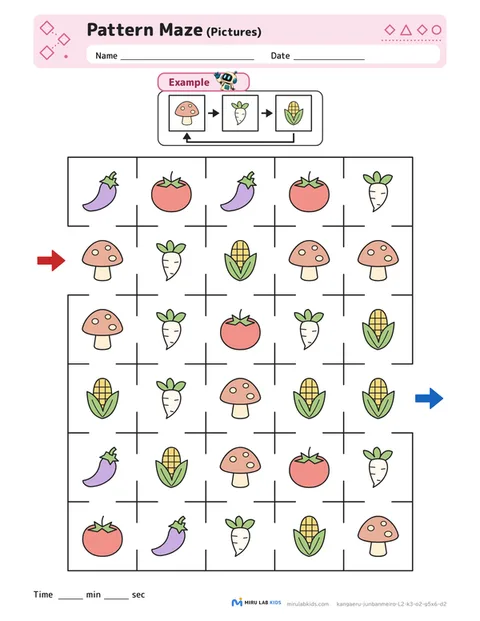
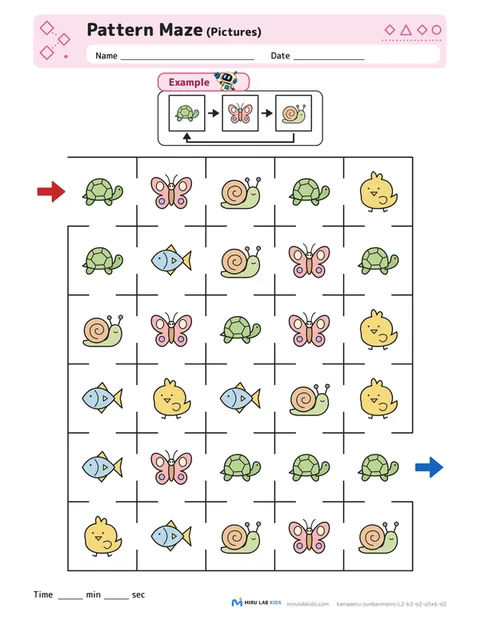
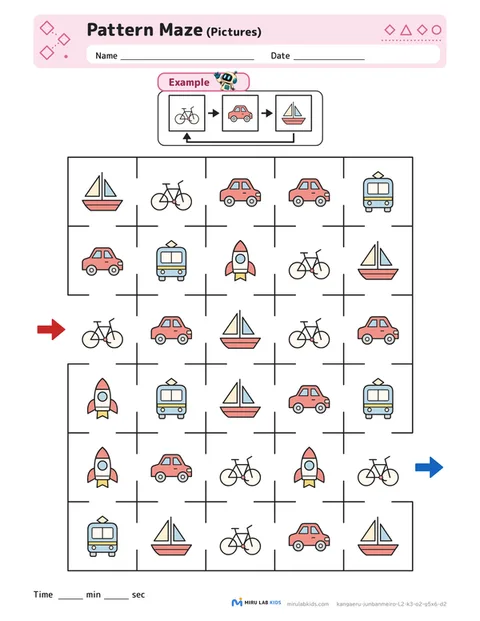
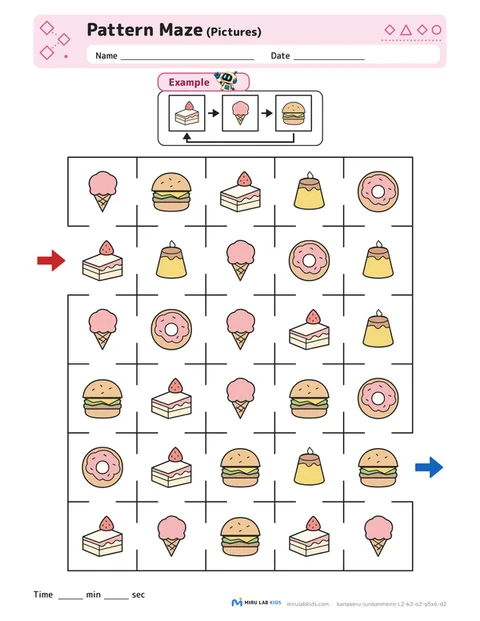
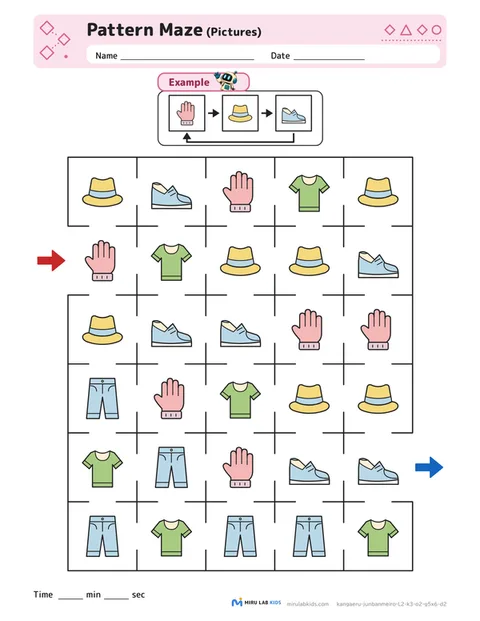
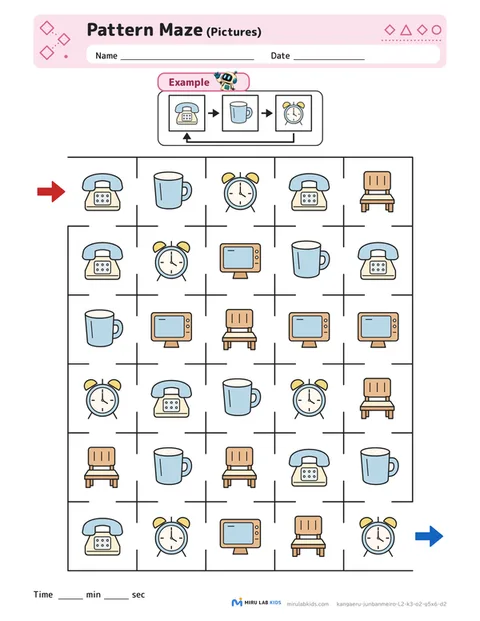
Level 36 × 8 squares, a pattern of 3 pictures. More branches and a longer route.
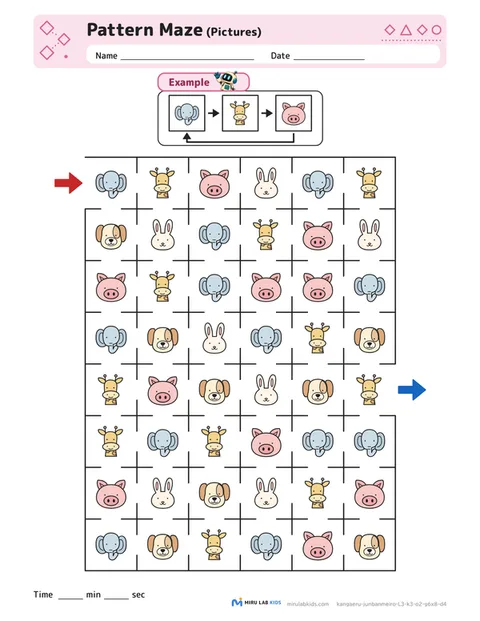
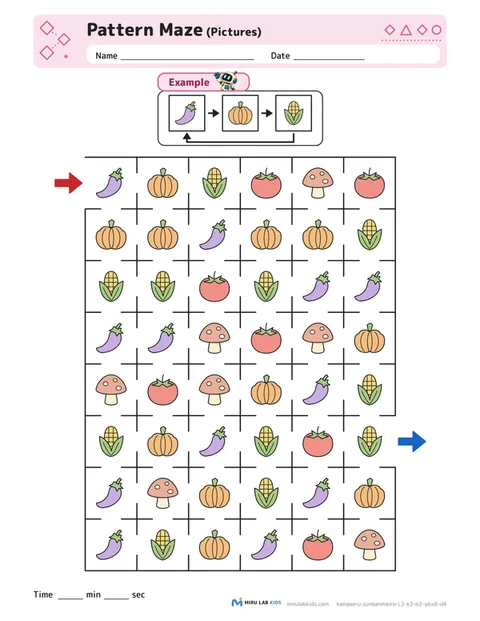
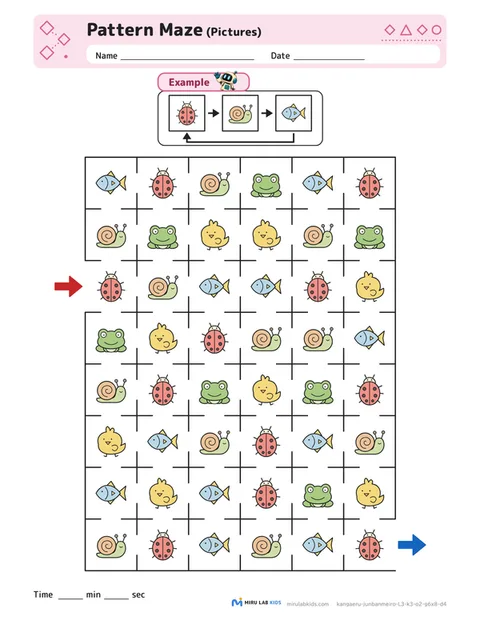
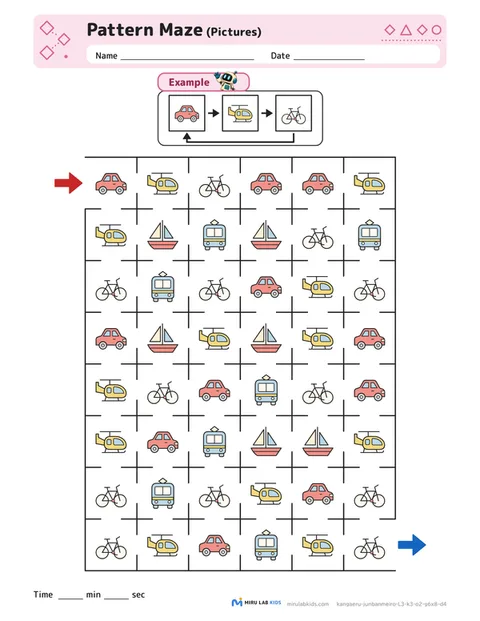
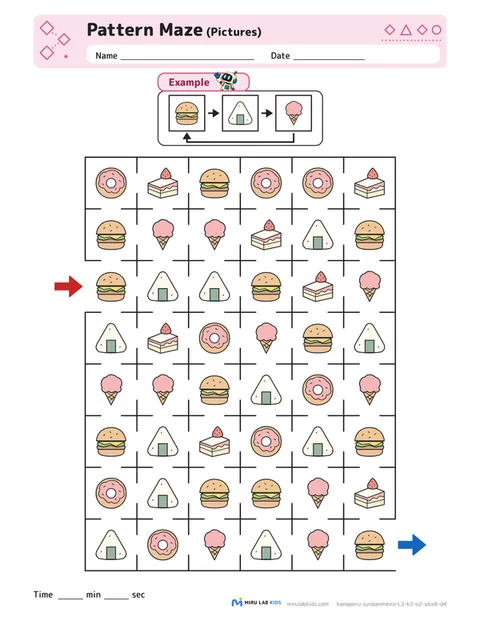
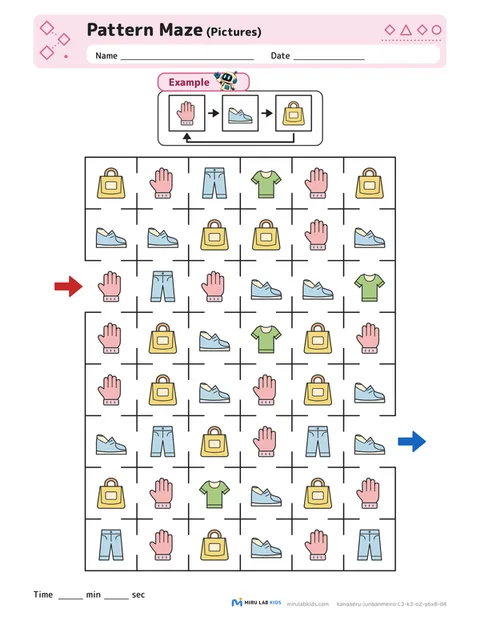
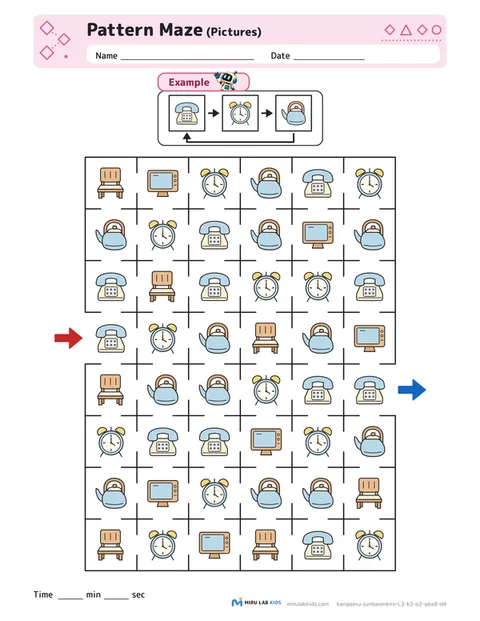
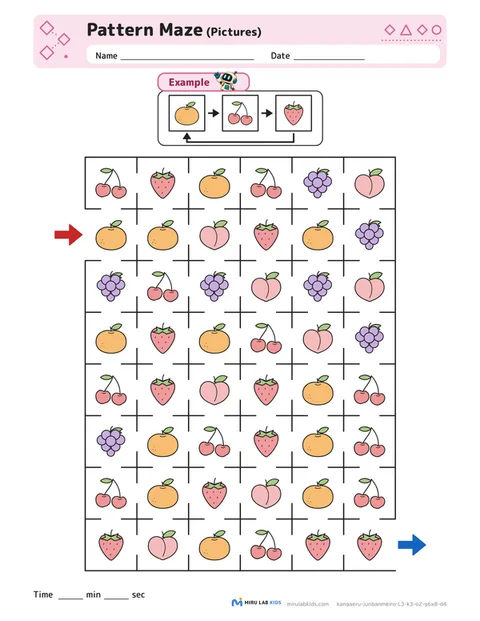
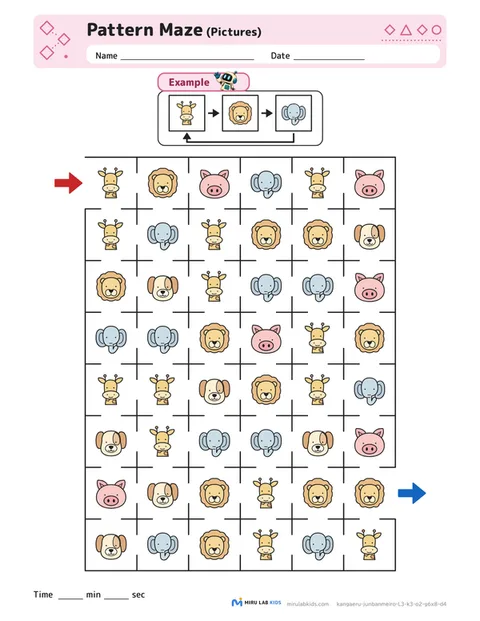
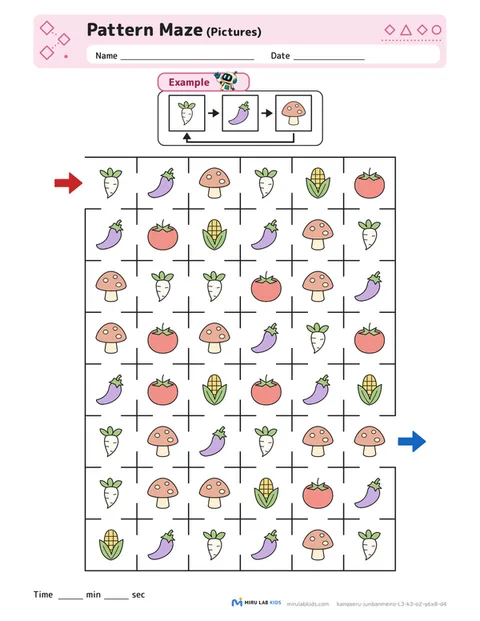
Level 47 × 9 squares, a pattern of 4 pictures. A longer pattern to keep in mind.
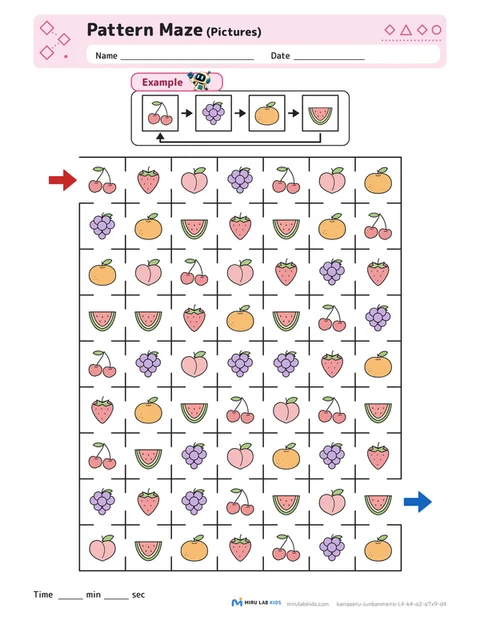
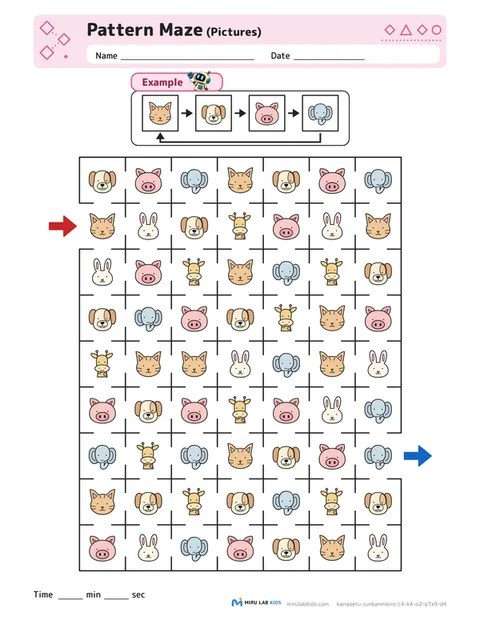
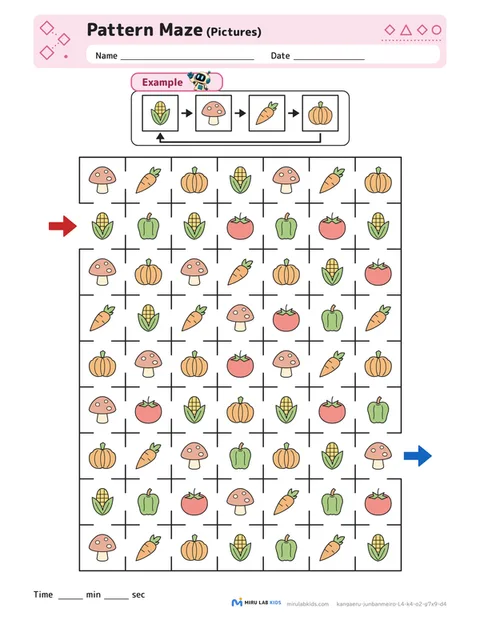
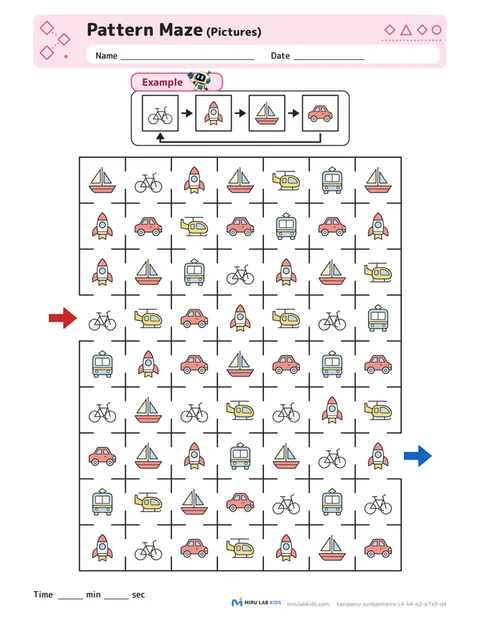
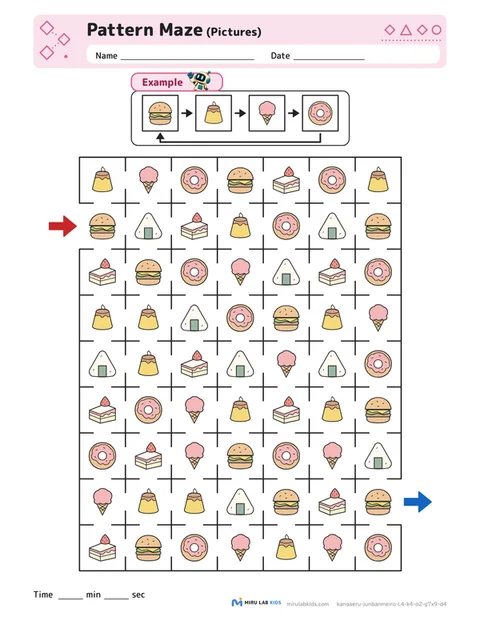
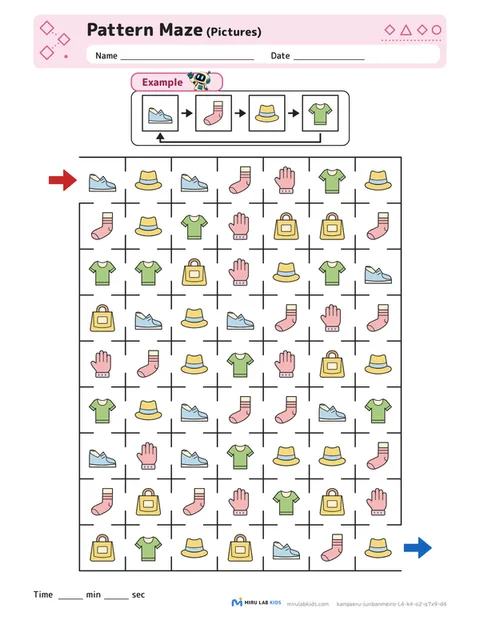
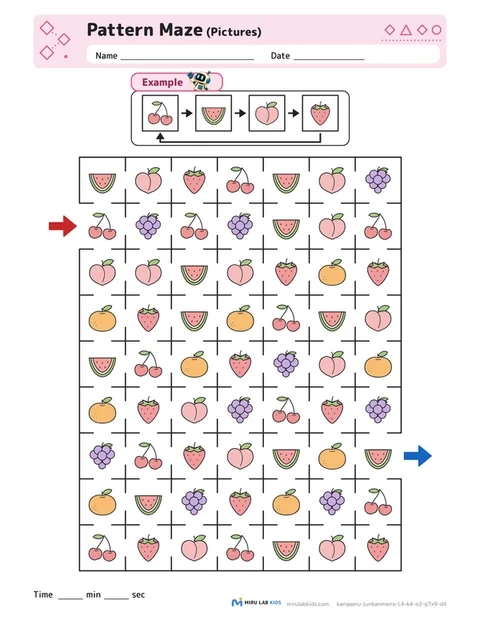
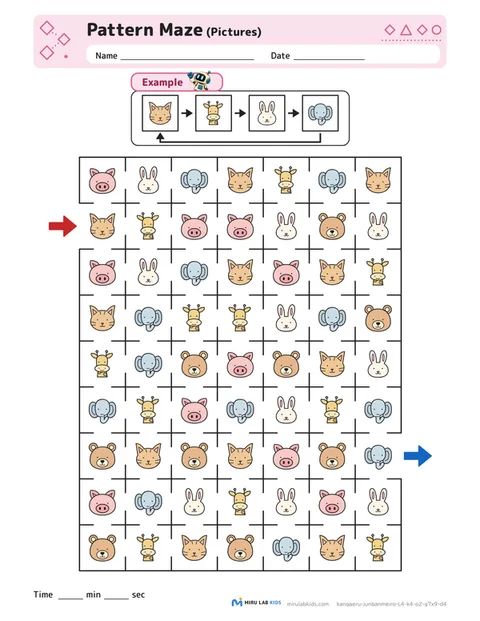
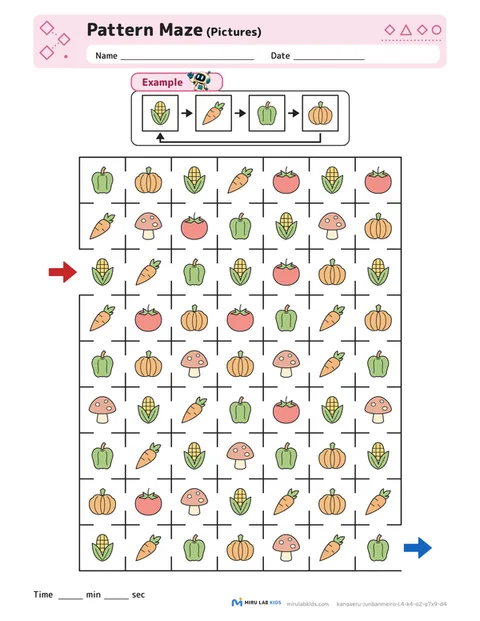
Level 59 × 11 squares, a pattern of 5 pictures. Pictures that look alike are mixed in.
Pattern Maze: Pictures: a guide for grown-ups
Who it is for
- Keeping an order in mind is hardPractice remembering "what comes next?" while moving. The pattern starts with just 2 pictures.
- Telling similar pictures apart is hardPractice finding and telling apart the next picture among the nearby squares.
- Rushes ahead without planningPractice looking ahead at a branch and choosing which way to go.
- Not writing letters yetIt is only pictures and a line, so children who do not write letters yet can try it.
- Loves mazes and puzzlesA maze with a rule, different from a regular maze.
- Therapy and classroom sessionsAll you need is one sheet of paper and a pencil. Naming the pictures also gives a chance to talk together.
Choosing a level
Reached the finish following the pattern, without getting lost
- Go up one level.
- After Level 5, try "Pattern Maze: Shapes," which uses symbols.
- Before drawing, try following the route to the finish with the eyes only.
Loses track of the pattern or cannot find the way back from a dead end
- Go down one level (a shorter pattern and fewer squares).
- Point to the pictures at the top and say the pattern out loud while moving ("chick, frog, chick...").
What to watch for
| Pattern | Does your child keep looking back at the top? Do they lose track of "which picture comes next"? |
|---|---|
| Searching | Before moving, does your child check the squares up, down, left, and right? Do they try to move diagonally? |
| Branches | Where the next picture is in two neighboring squares, does your child stop and think? Can they find their way back from a dead end on their own? |
| Lines | Does the line go through the middle of each square? |
| Time | Writing the time at the bottom of the page each time makes small changes easier to notice. Copying it onto the Time Log lets you line up results at the same level. |
If something keeps worrying you, it can help to talk with an eye doctor or another specialist rather than deciding on your own.
Things you can say
- Before startingLet's say the pattern together.Point to the pictures at the top and say them out loud, including going back from the last picture to the first.
- When stuckWhat is this picture? What comes next?Once your child can name the next picture, let them look for it in the nearby squares.
- At a branchWhich way gets to the finish?Do not give the answer right away. Let your child look ahead and choose.
- At a dead endLet's go back and try another way.Going into a dead end is not a failure. Going back and trying again is fine.
- When finishedYou followed the pattern all the way!Notice that your child kept to the pattern, not just how fast they were.
FAQ
Is there an answer page?
Yes. Page 2 of the PDF is the answer page. Worksheet-only and answers-only PDFs are also available.
Can I print in black and white?
Yes. The pictures have clear outlines, so they can be told apart by shape in black and white. Color printing adds color as a clue and makes it a little easier. In black and white, point to the start and finish arrows before beginning.
Is there only one correct route?
Yes. Every maze is made so there is exactly one route from the start to the finish that follows the pattern, and every possible route is checked.
Are there regular mazes?
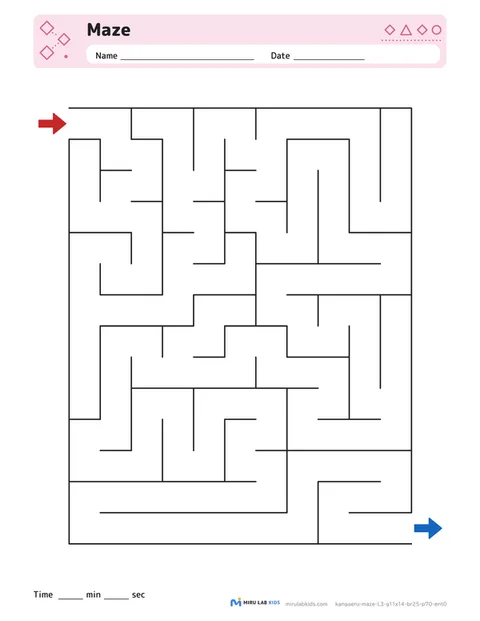
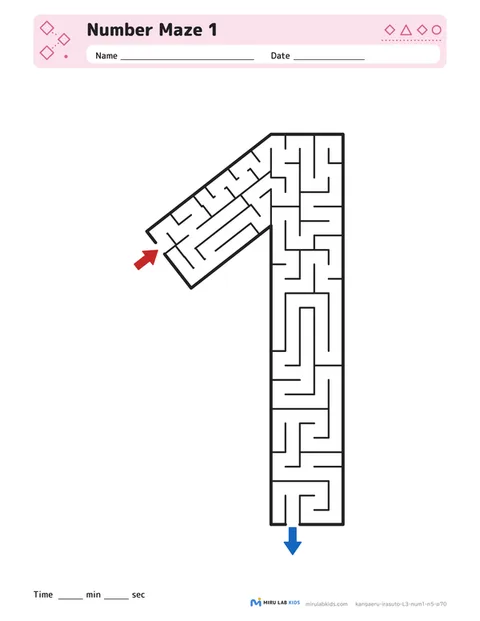
Yes. "Mazes" are square mazes with walls, and in "Number Mazes," the mazes are shaped like the numbers 1 to 9.
How much should we do at a time?
There is no set amount. One or two mazes at a time is a good guide, and it is best to stop while your child still wants a little more. See "Every Day? How Much?" for more.
Articles
About the code at the bottom right
The code at the bottom right of each worksheet (for example, kangaeru-junbanmeiro-L1-k2-o2-g4x5-d1) shows its difficulty settings. Worksheets with the same code have the same difficulty. If you contact us about a worksheet, including this code helps us find it right away.