Incomplete ShapesFree printable worksheets
Aims
- Seeing a whole shape even when only part of it is visible (visual closure)
- Extending the remaining lines to picture missing corners and points (shape completion)
- Telling apart look-alike shapes, such as stars with a different number of points or upside-down shapes (visual discrimination)
- Comparing the position and size of two shapes carefully (spatial relations and careful comparison)
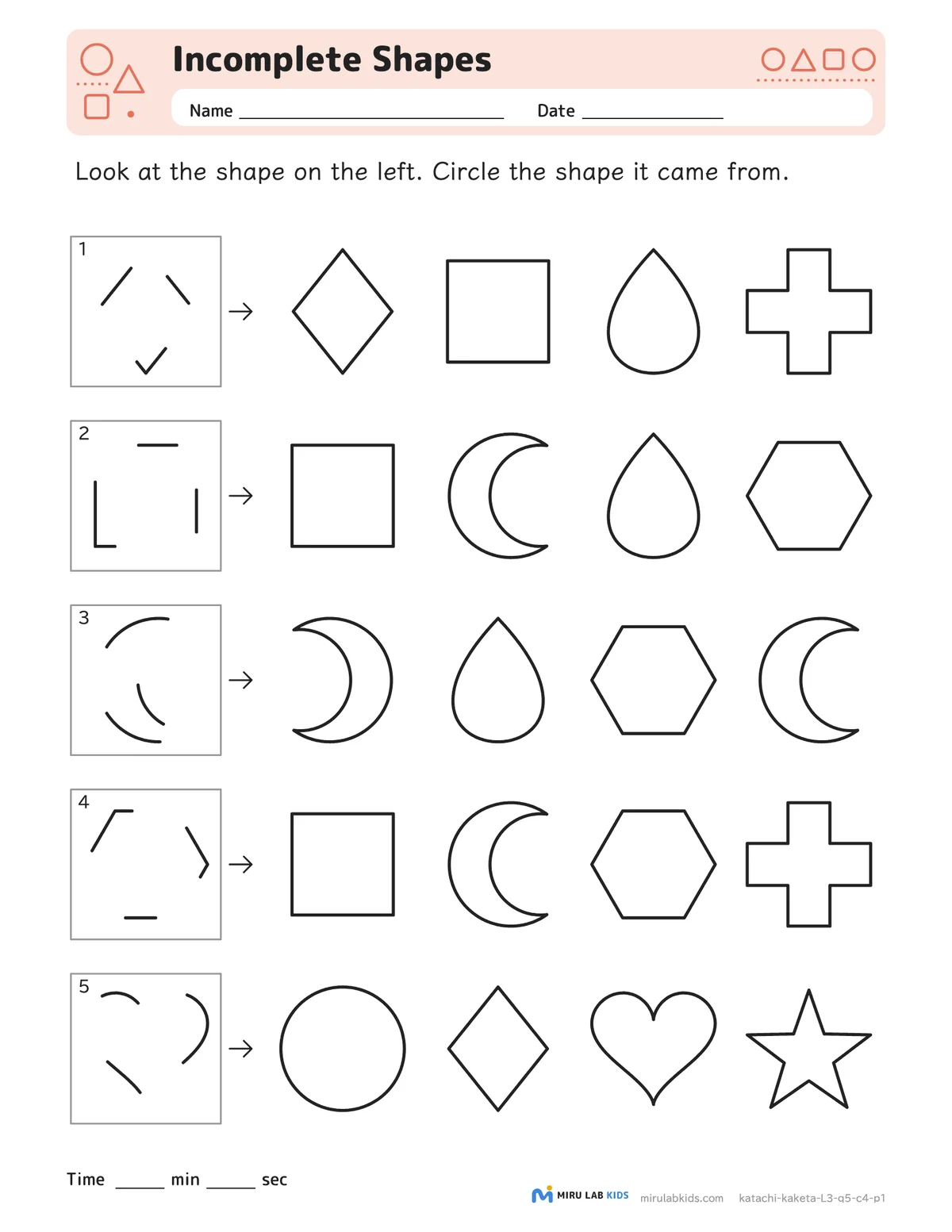
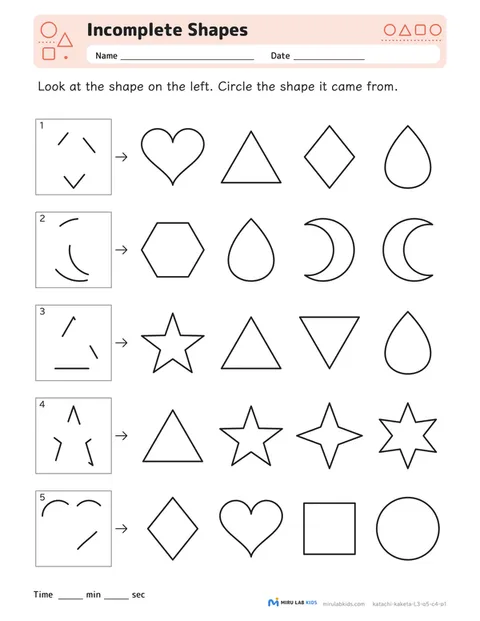
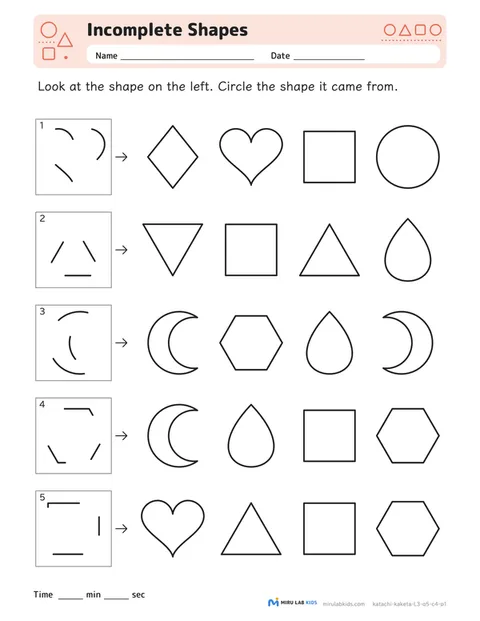
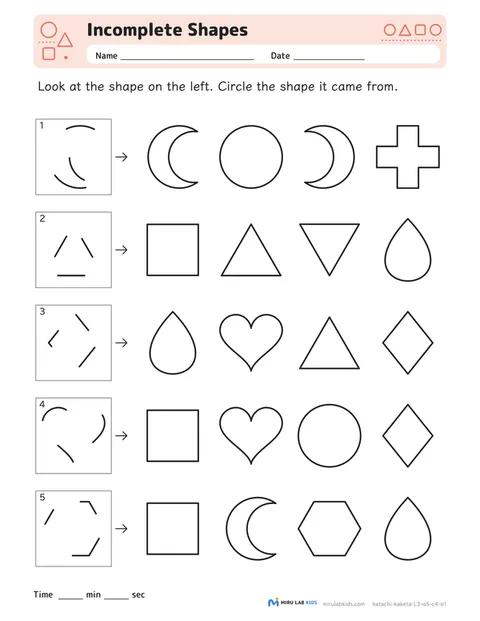
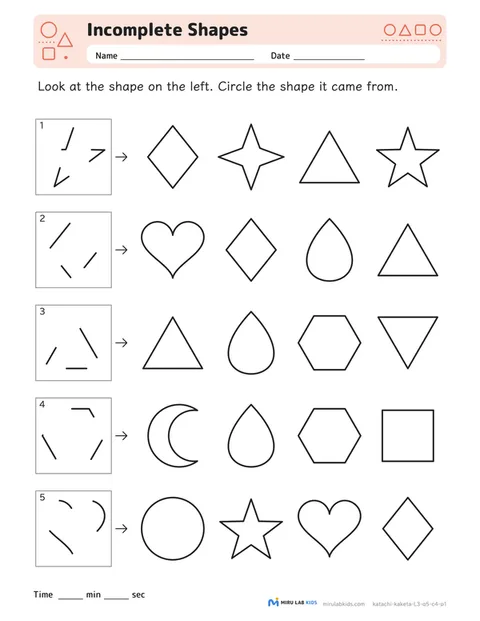
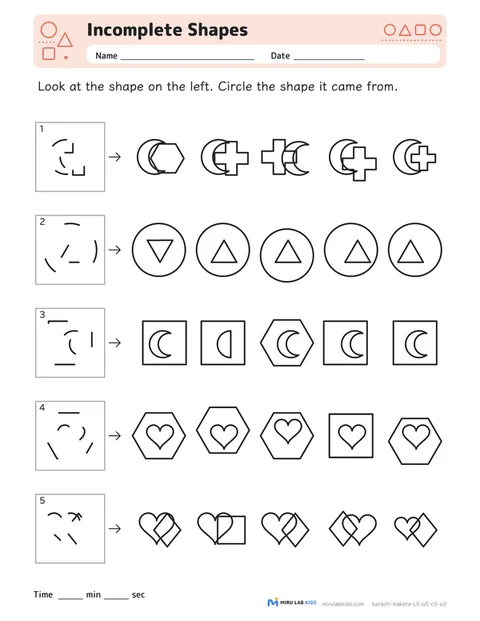
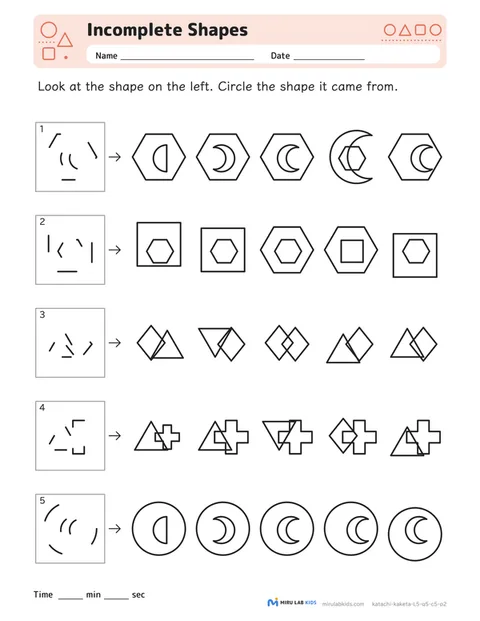
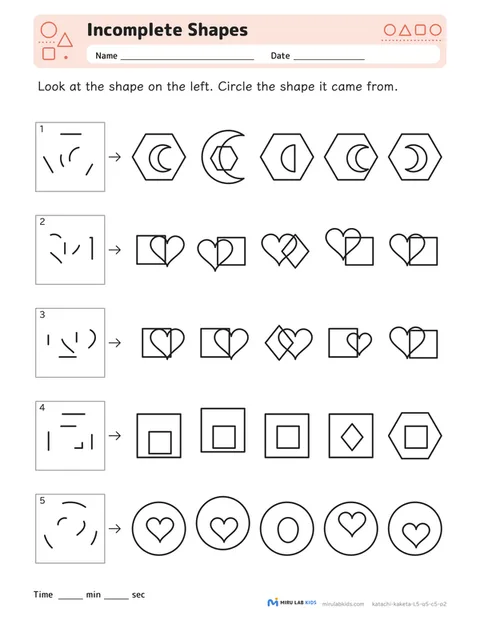
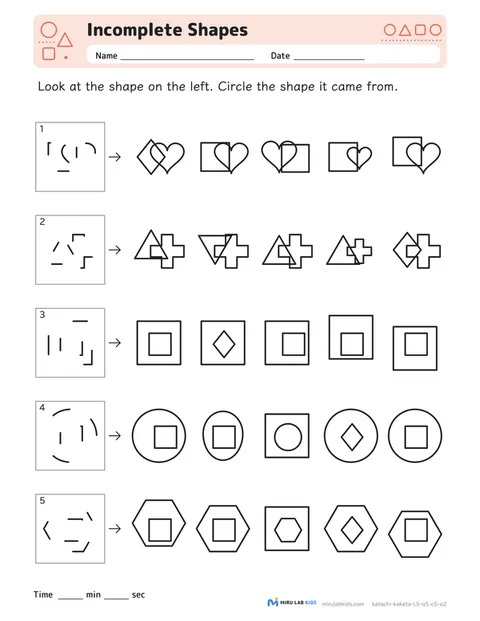
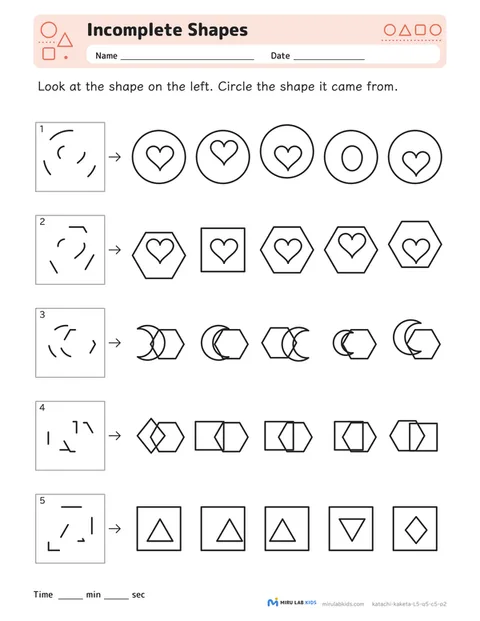
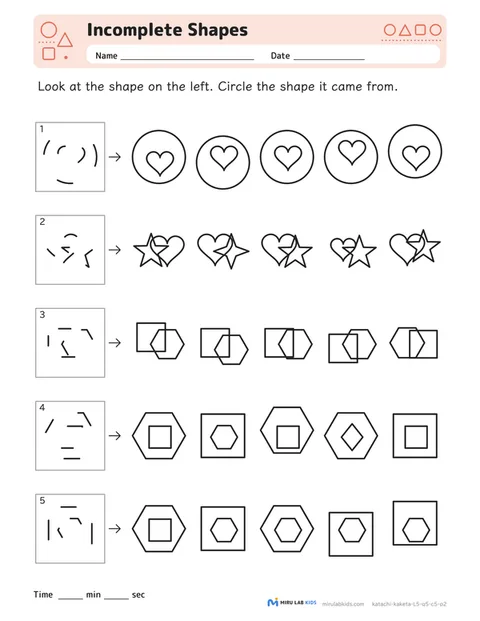
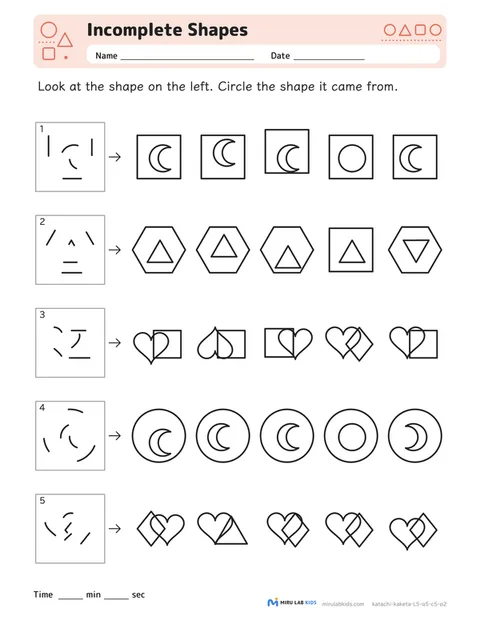
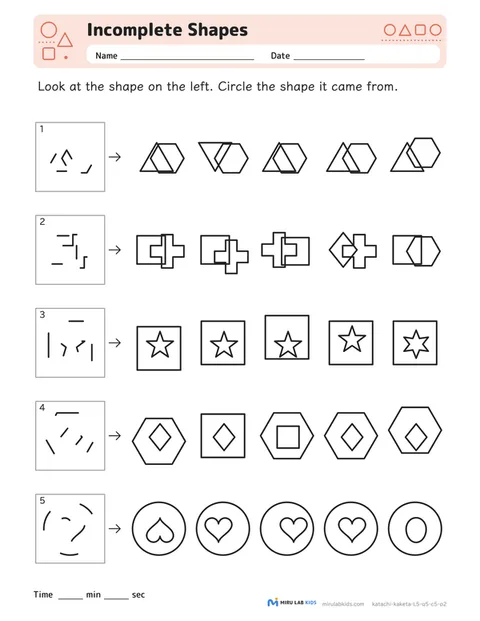
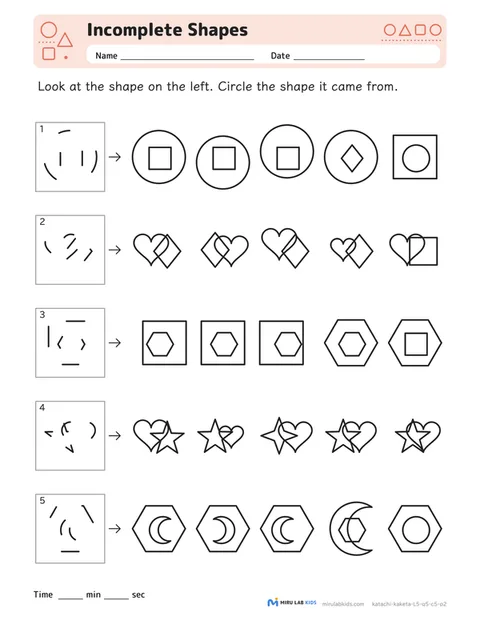
Your child looks at an "incomplete shape" with parts of its outline missing and circles the shape it came from on the right.Using the lines that remain as clues, your child connects the missing parts in their mind and pictures the whole shape.At higher levels fewer lines remain, the corners and points that give a shape its character disappear, and the choices include look-alike shapes.At Levels 4 and 5 two shapes are combined, so your child checks not only which shapes they are but also their position and size.The activity aims to build the ability to see a whole shape from a part of it.
The worksheet prints fine in black and white. On the answer page the missing lines are added in red, so color printing is recommended for it.
 Level 3 example ›
Levels
| Level 1 | One shape. Most of the outline remains, with 3 choices that are all different shapes. | 10 worksheets |
|---|---|---|
| Level 2 | One shape. About 60% of the outline remains and a few corners are missing. 4 choices, including look-alikes and upside-down shapes. | 10 worksheets |
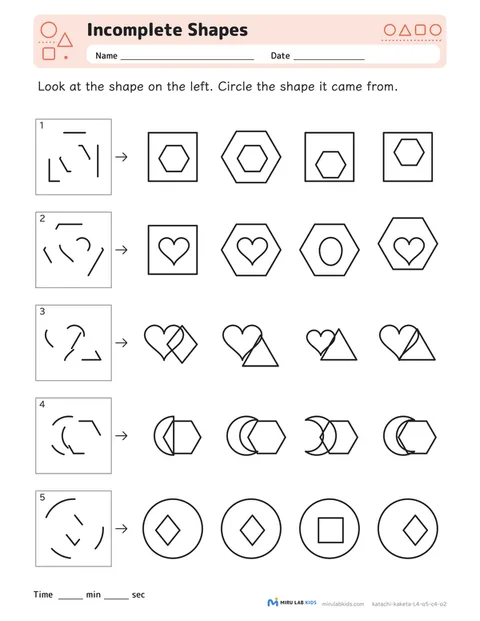
| Level 3 | One shape. About 40% of the outline remains and most corners are missing. Your child extends the remaining lines. | 10 worksheets |
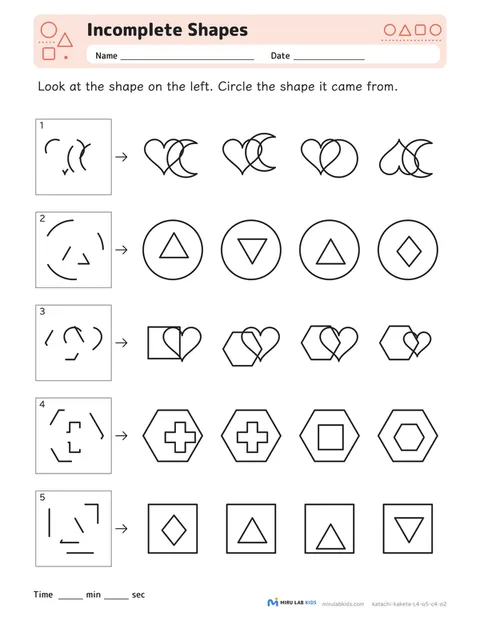
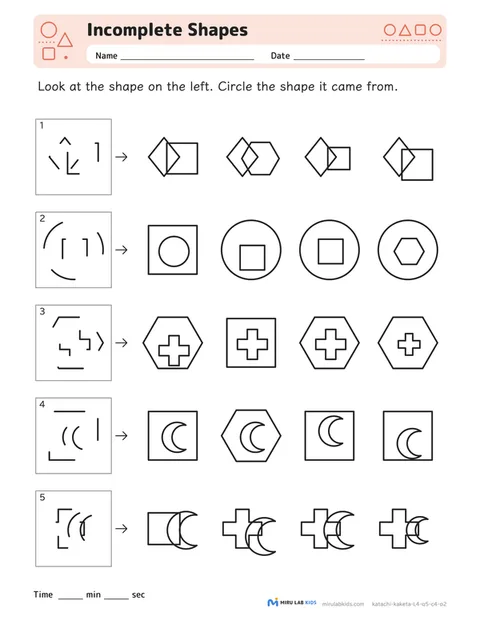
| Level 4 | Two shapes combined. 4 choices that differ in the kind, position, or size of one shape. | 10 worksheets |
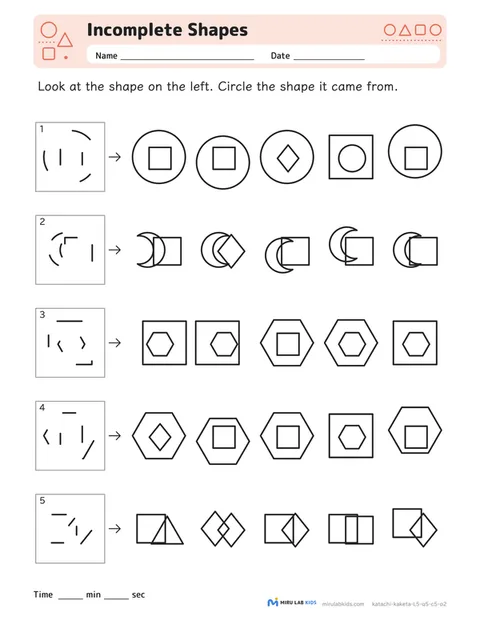
| Level 5 | Two shapes. About a third of the outline remains and almost all corners are missing. 5 choices that need careful comparison. | 10 worksheets |
Tips
- Look at the incomplete shape on the left and circle the choice it came from. When unsure, compare the remaining lines with each choice one at a time.
For what to say, choosing a level and what to do if it is too hard, see Incomplete Shapes: a guide for grown-ups.
Worksheets
Choose a worksheet to open its printing page.
Level 1One shape. Most of the outline remains, with 3 choices that are all different shapes.
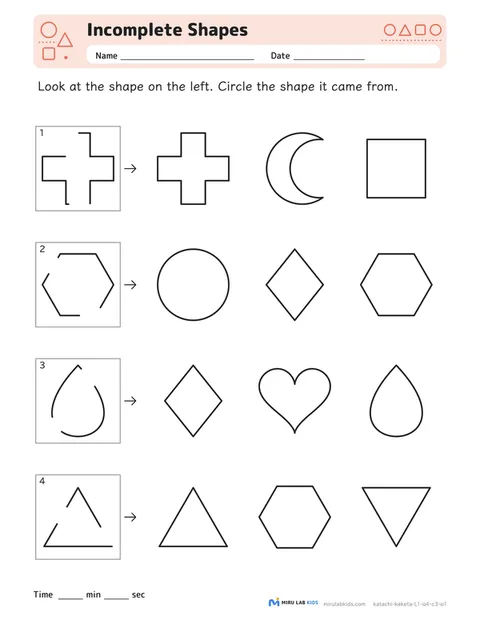
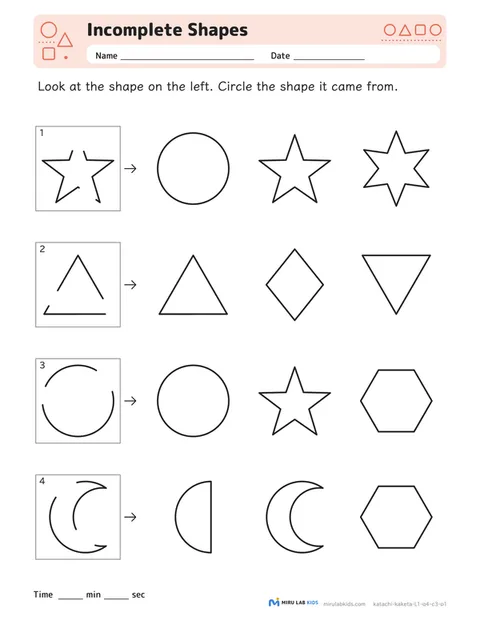
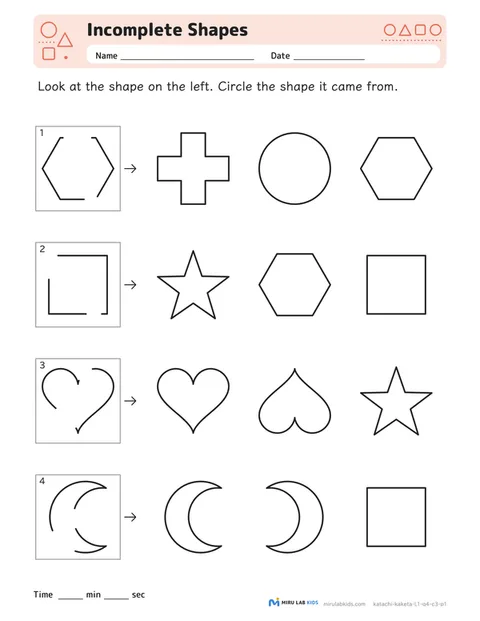
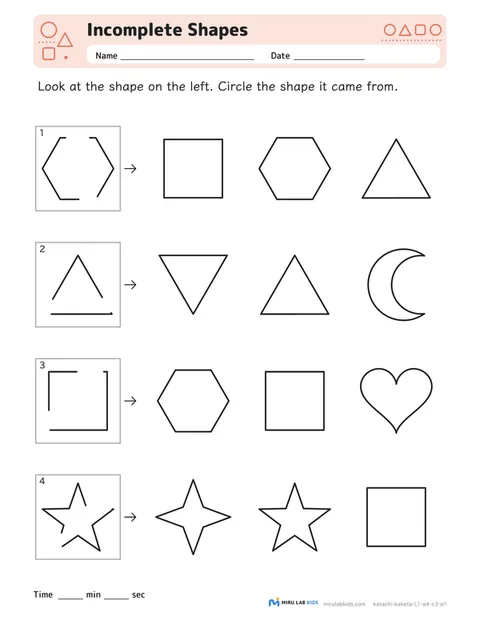
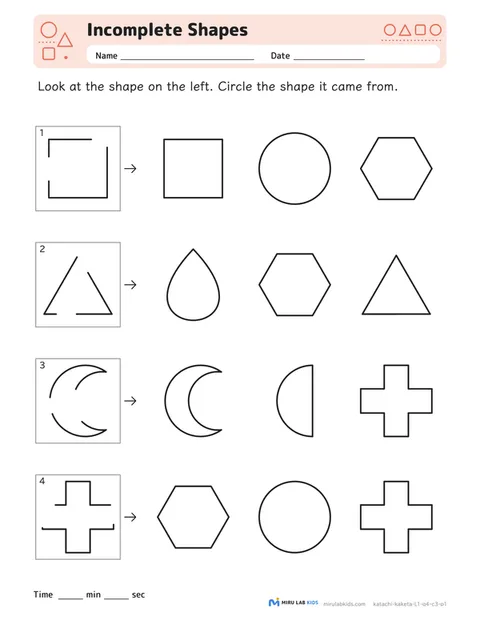
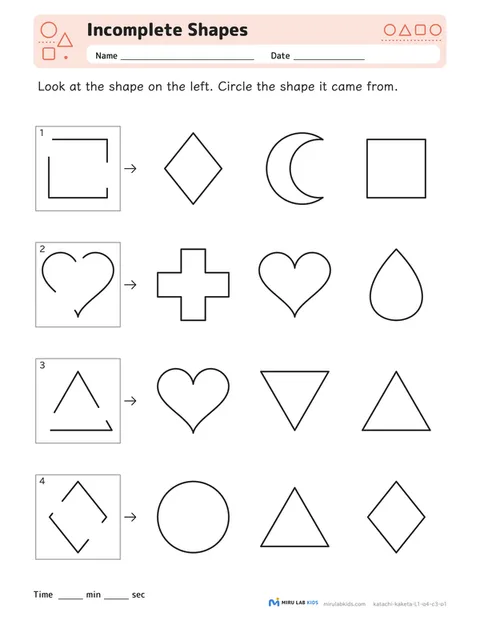
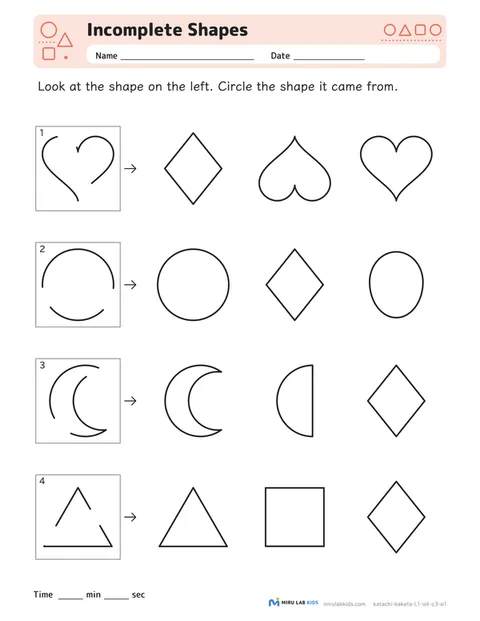
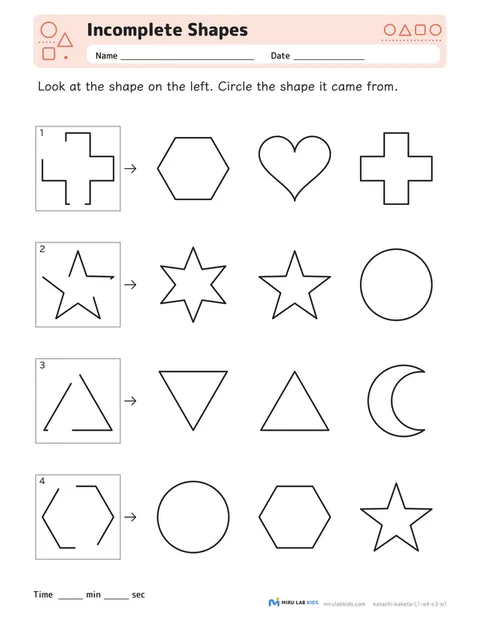
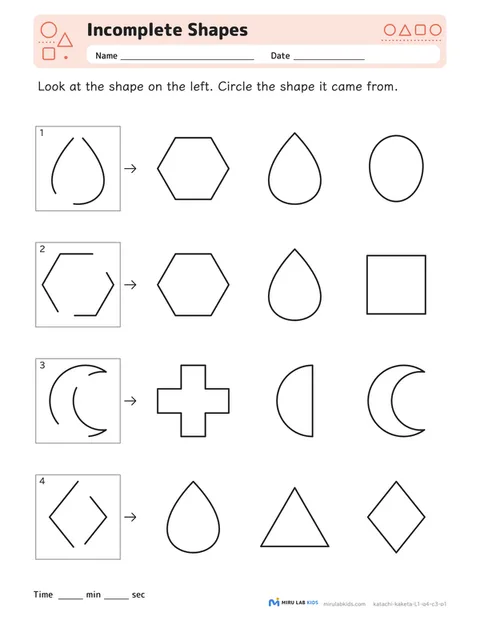
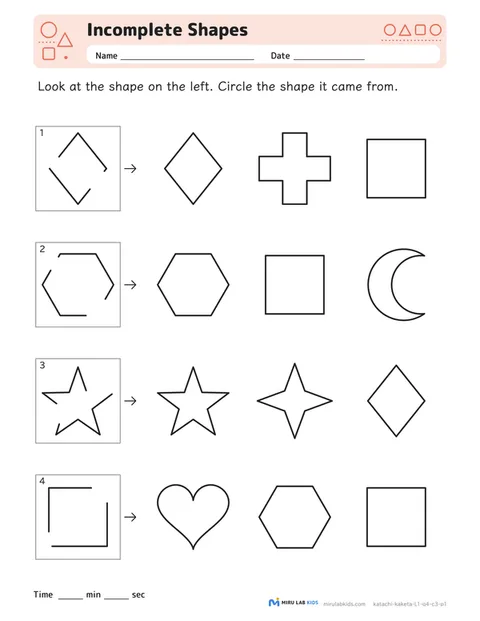
Level 2One shape. About 60% of the outline remains and a few corners are missing. 4 choices, including look-alikes and upside-down shapes.
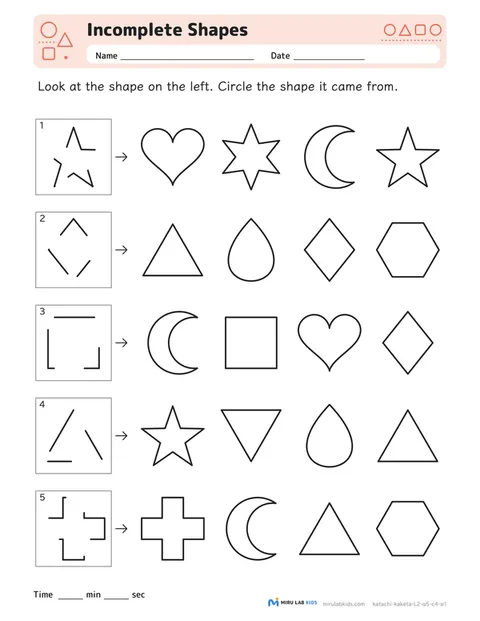
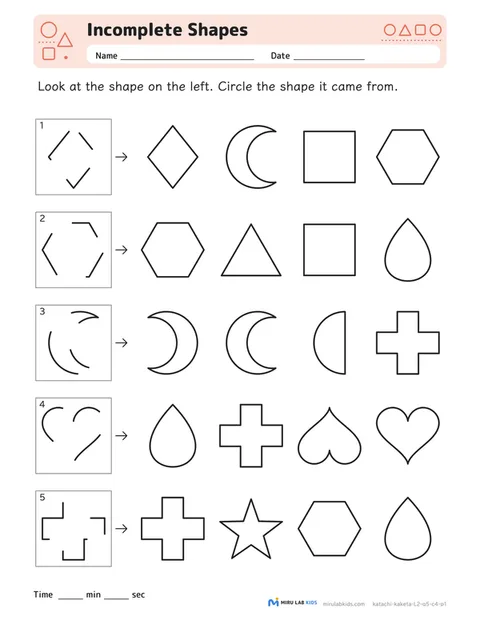
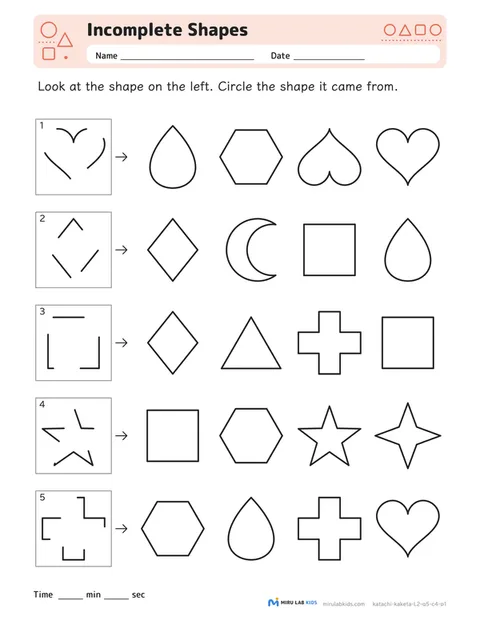
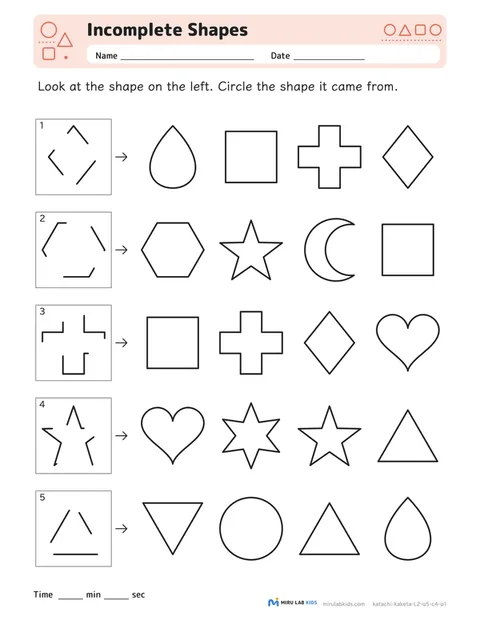
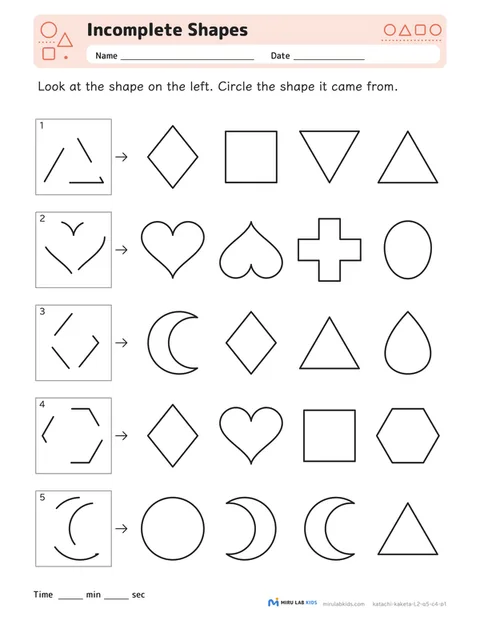
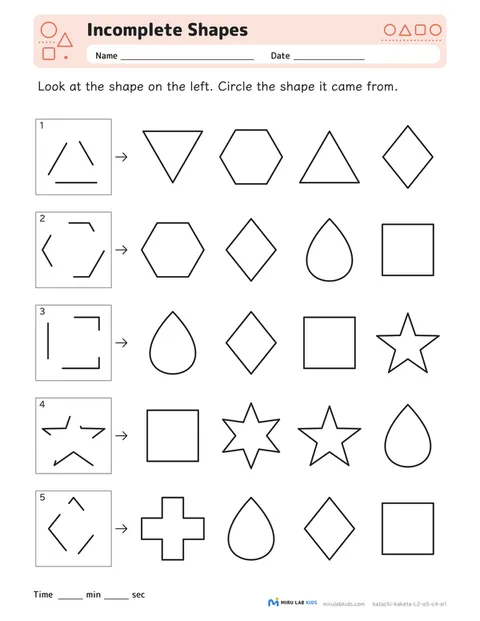
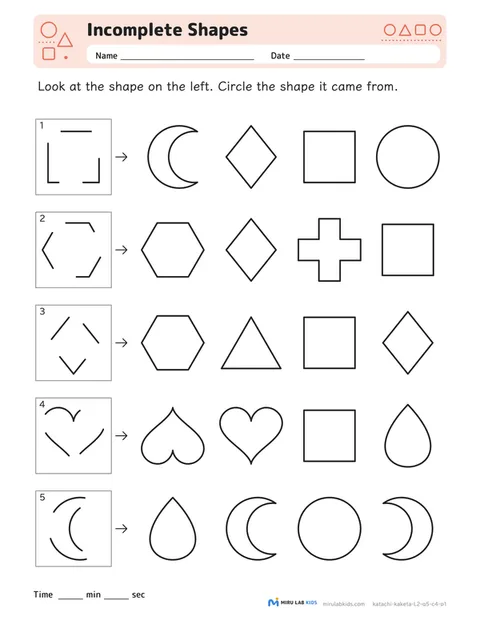
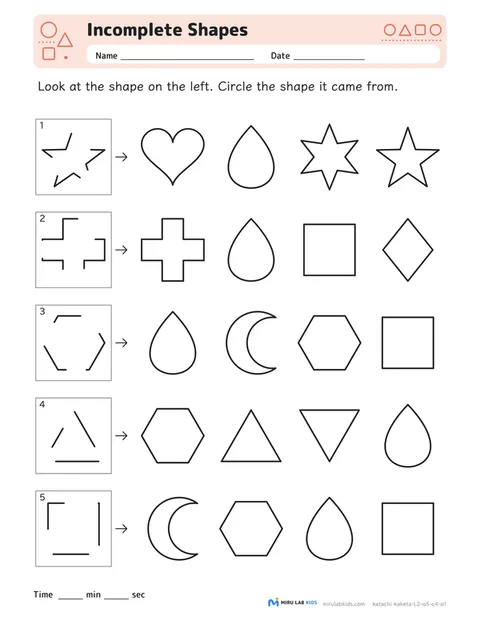
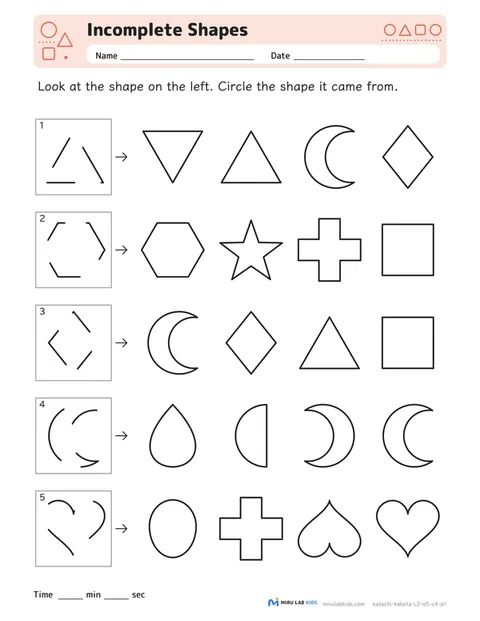
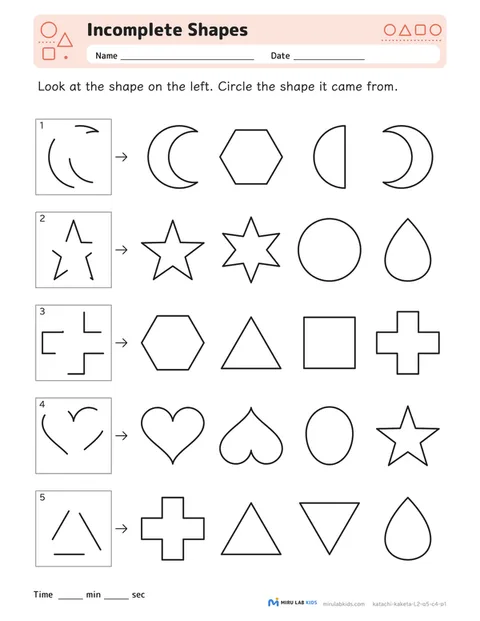
Level 3One shape. About 40% of the outline remains and most corners are missing. Your child extends the remaining lines.
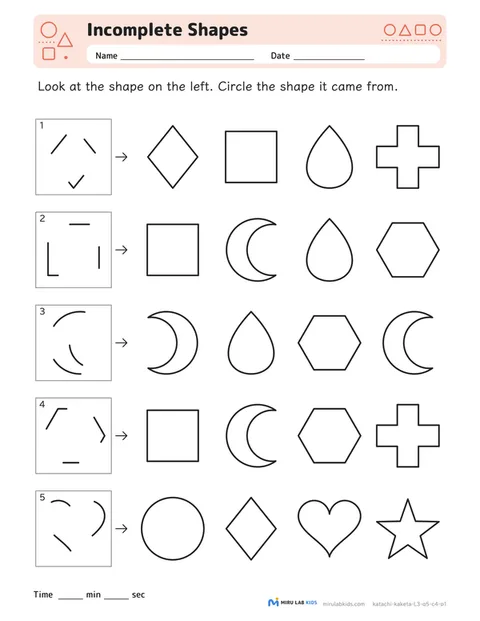
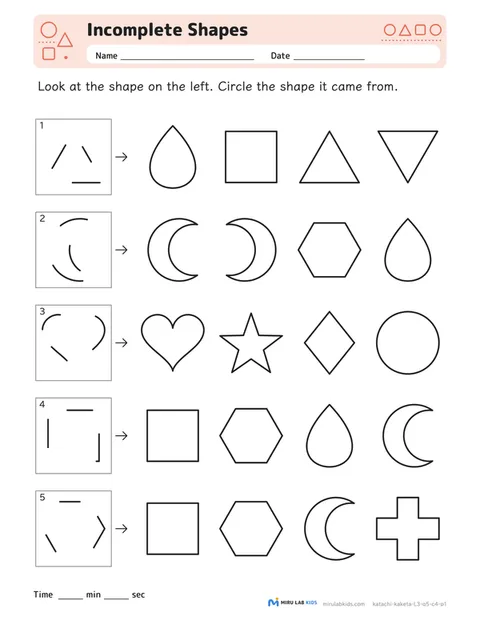
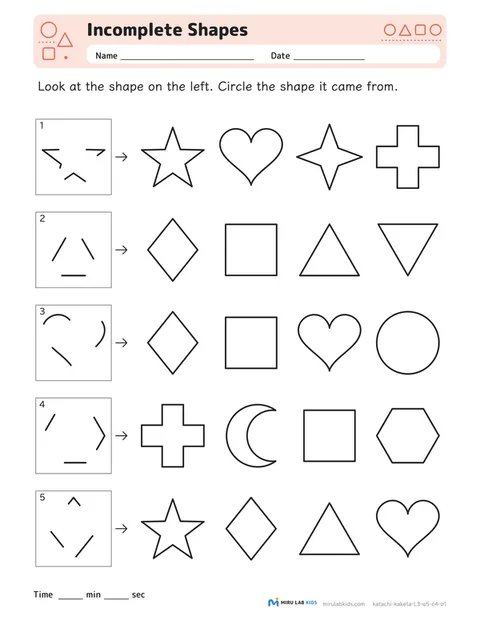
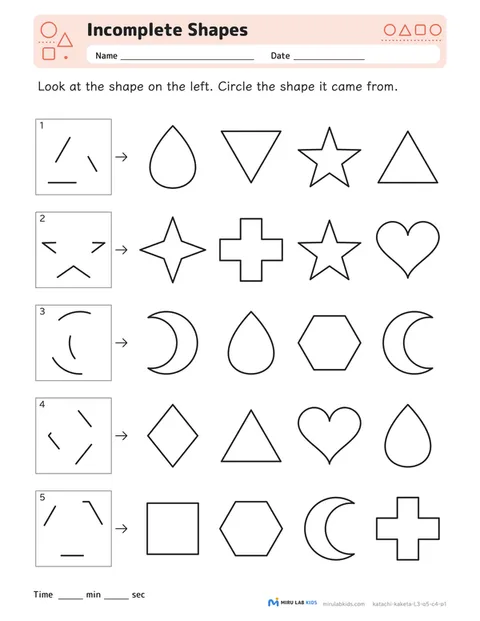
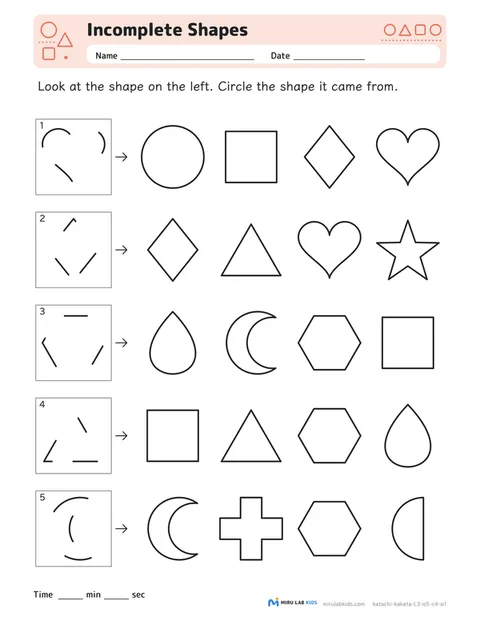
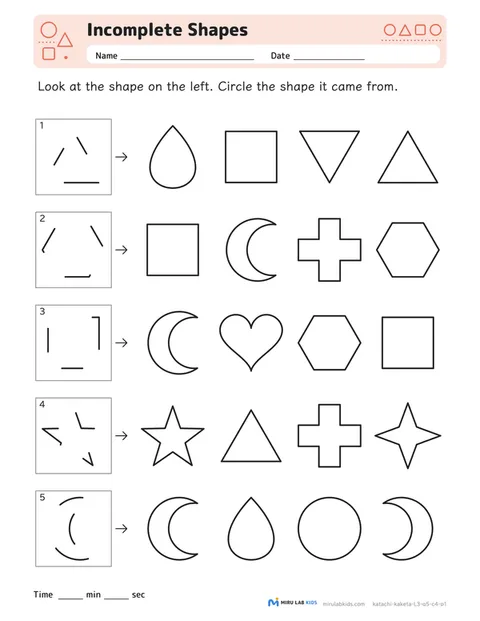
Level 4Two shapes combined. 4 choices that differ in the kind, position, or size of one shape.
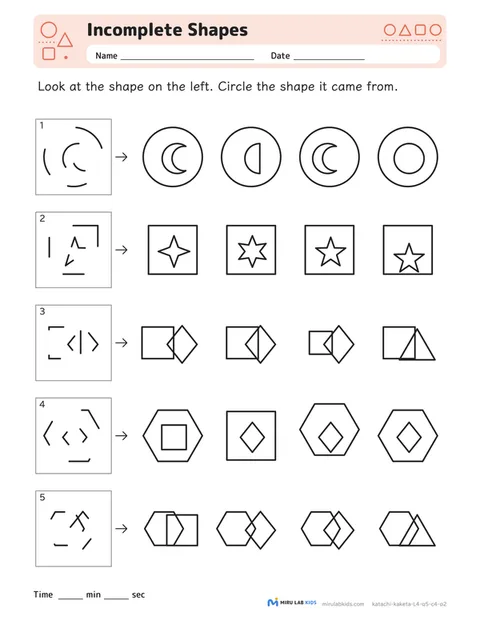
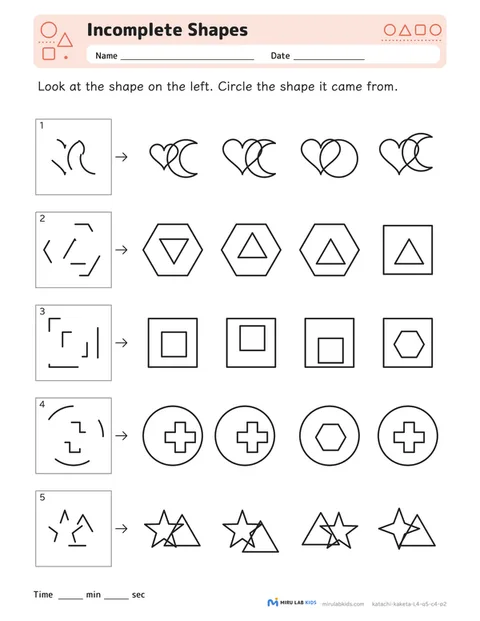
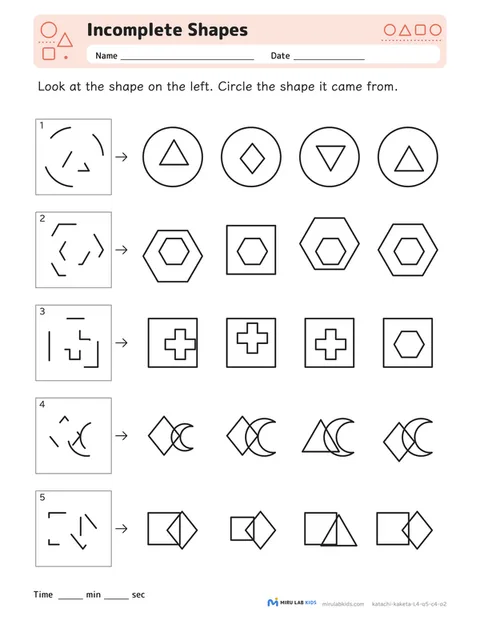
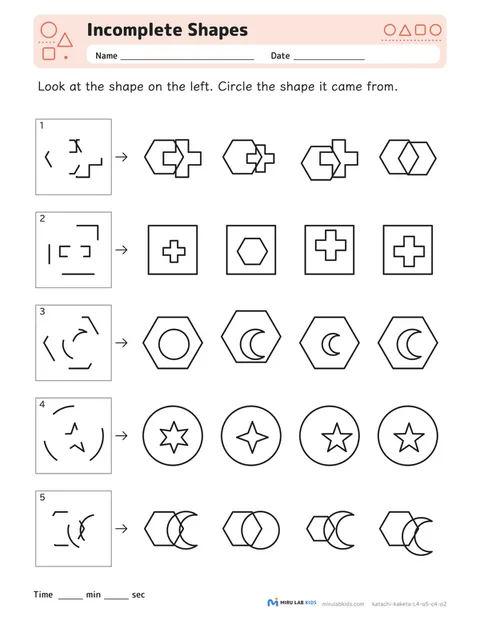
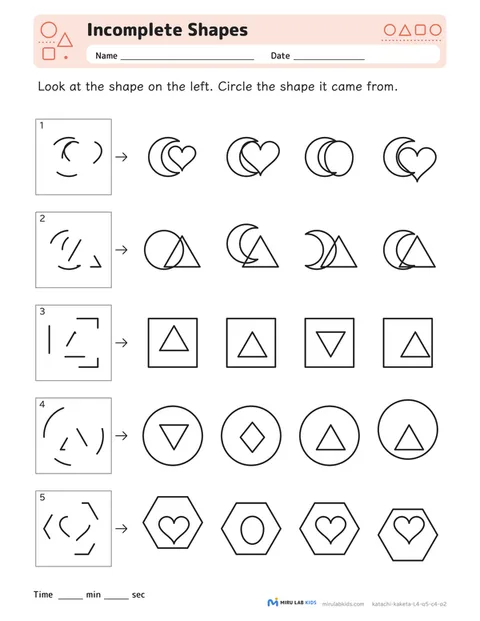
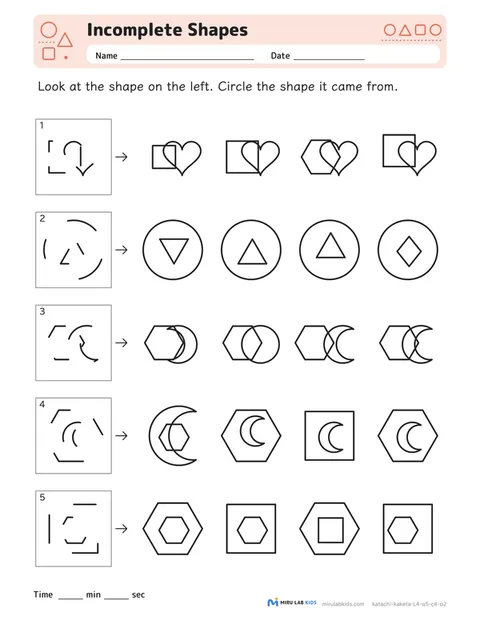
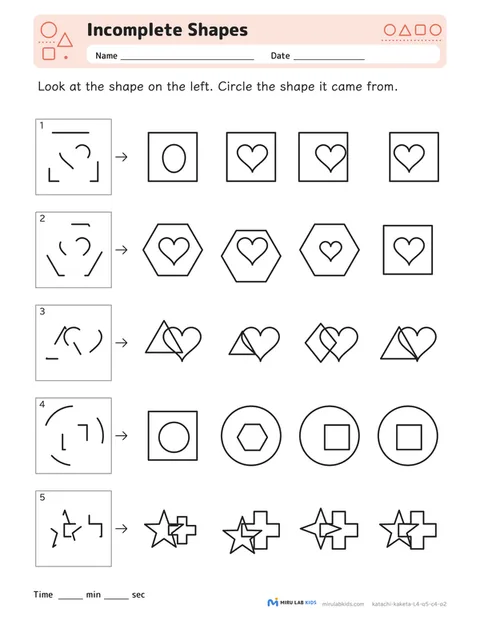
Level 5Two shapes. About a third of the outline remains and almost all corners are missing. 5 choices that need careful comparison.
Incomplete Shapes: a guide for grown-ups
Who it is for
- Lost when part is hiddenFor children who have trouble recognizing things that are partly hidden or faded.
- Answers too quicklyPractice comparing all the choices before deciding.
- Misses small differencesPractice noticing differences such as the number of points or which way a shape faces.
- Writing is hardYour child only draws a circle, so they can focus on looking.
- Short sessionsEach page has 4 or 5 questions, so it fits into a few spare minutes.
Choosing a level
Compared the choices and decided on their own
- Go up one level.
- Before circling, have your child draw in the missing lines with a pencil.
Guesses or stops quickly
- Go down one level.
- Trace the missing part with your finger and ask, "What if these lines joined up?"
- Point to the choices one by one and check together, "Does this line match?"
What to watch for
| Comparing | Does your child look at every choice before deciding? Or circle the first one that catches their eye? |
|---|---|
| Clues | Does your child trace the remaining lines with a finger or look back and forth between the shape and the choices? |
| Mistakes | Which kind of choice is easiest to mix up — look-alike shapes, upside-down shapes, or shapes in a slightly different position? |
| Time | Writing the time at the bottom of the page each time makes small changes easier to notice. Copying it onto the Time Log lets you line up results at the same level. |
If something keeps worrying you, it can help to talk with an eye doctor or another specialist rather than deciding on your own.
Things you can say
- Before startingSome lines are missing. What shape was it?Help your child notice that parts of the outline are gone.
- When unsureWhich shape does this line match?Before saying whether it is right, let your child compare the remaining lines with the choices.
- After choosingHow did you know?Asking which line gave it away helps your child notice that they compared carefully.
- CheckingAdd the red lines — it really is that shape!On the answer page, check together that the missing lines join up.
FAQ
Is there an answer page?
Yes. Page 2 of the PDF is the answer page. The correct choice is circled and the missing lines are added in red.
How much should we do at a time?
There is no set amount. Each page has 4 or 5 questions. See "Every Day? How Much?" for more.
Articles
About the code at the bottom right
The code at the bottom right of each worksheet (for example, katachi-kaketa-L1-q4-c3-p1) shows its difficulty settings. Worksheets with the same code have the same difficulty. If you contact us about a worksheet, including this code helps us find it right away.