Arrow PathFree printable worksheets
Aims
- Linking each arrow to a move up, down, left, or right (understanding direction)
- Holding the current square in mind while reading the next arrow (visual-spatial working memory)
- Moving their own position across the grid one square at a time in their mind (spatial relations)
- Counting squares while moving the number shown (Levels 4 and 5)
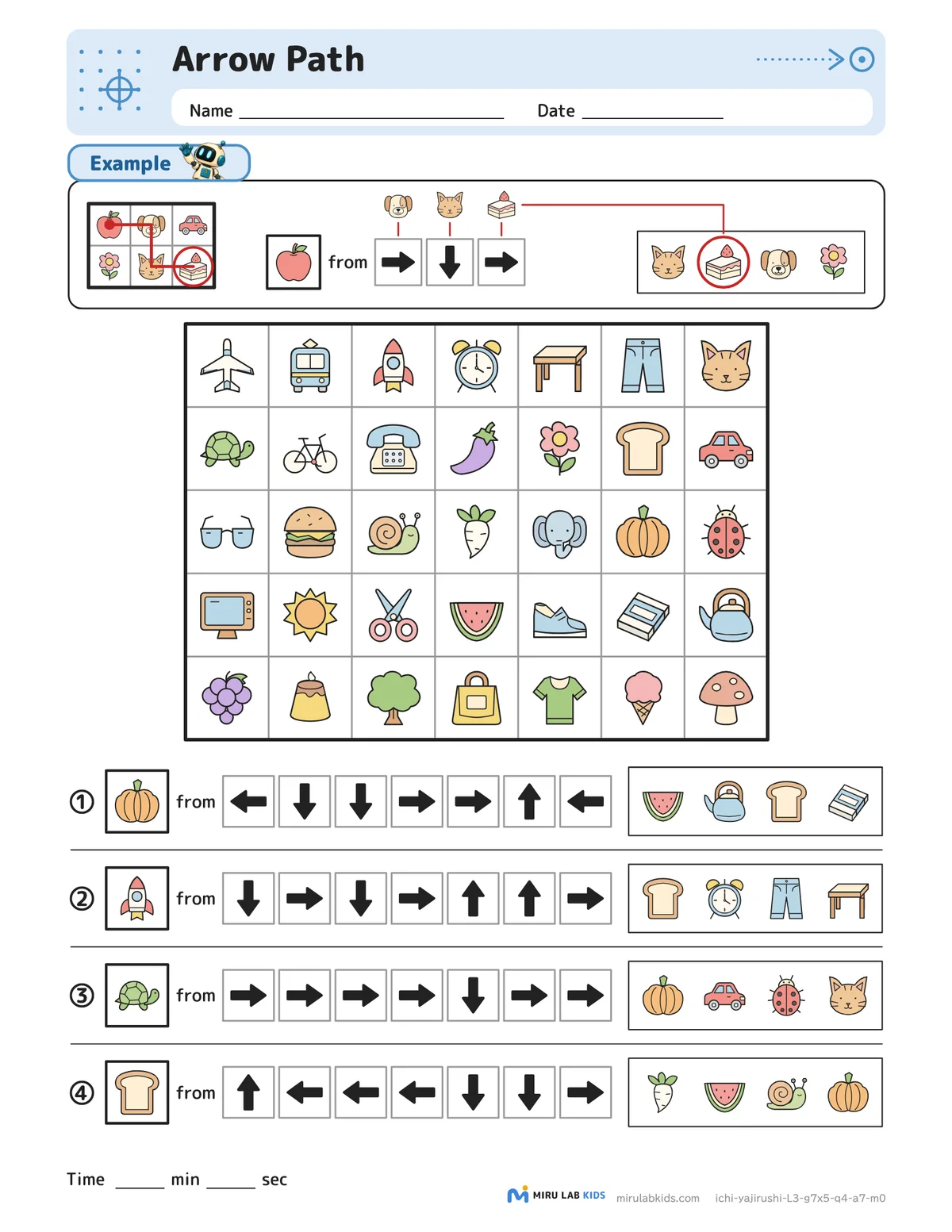
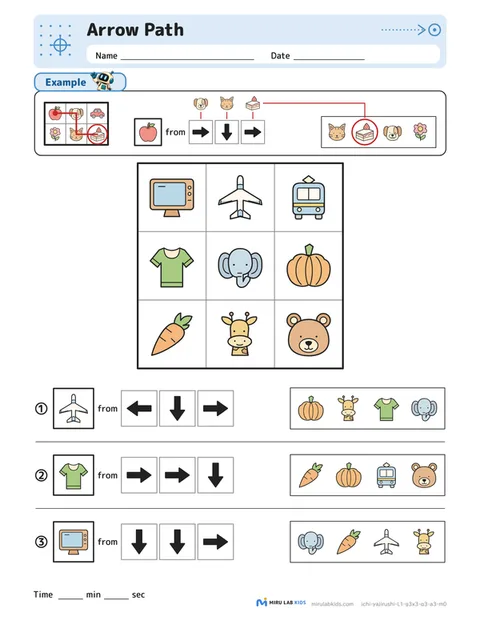
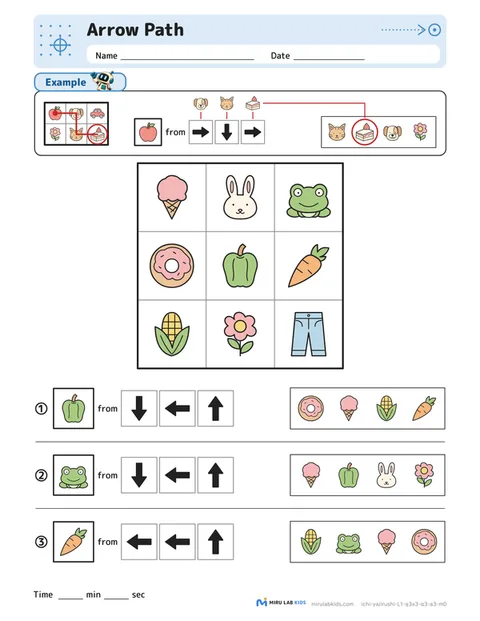
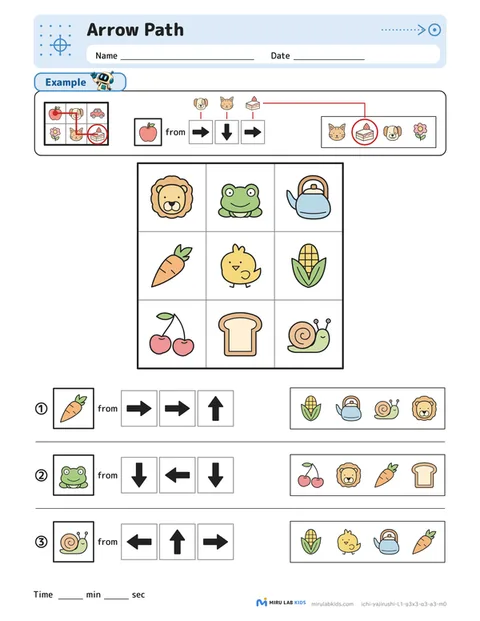
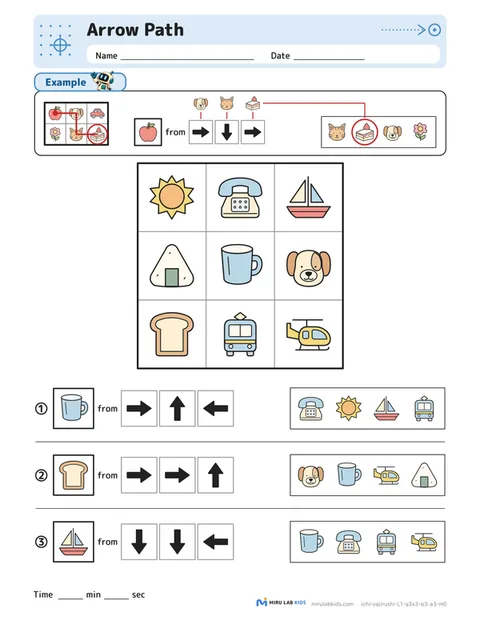
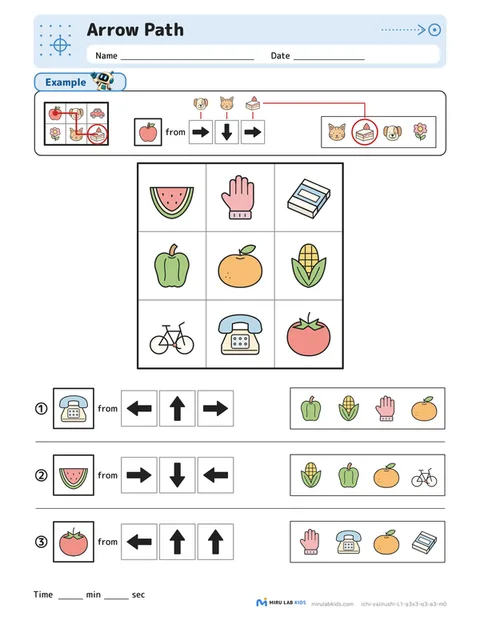
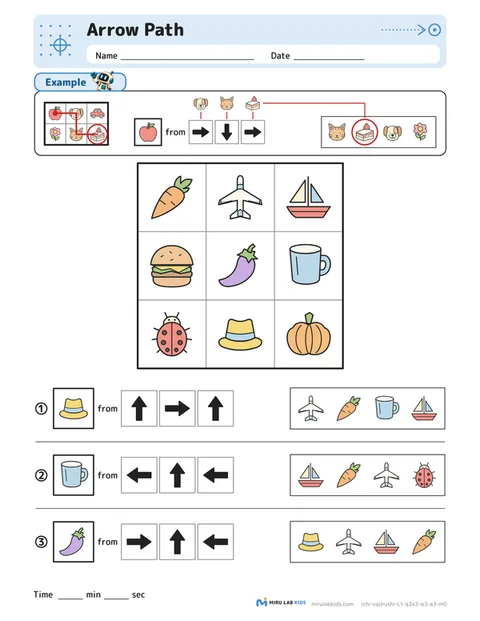
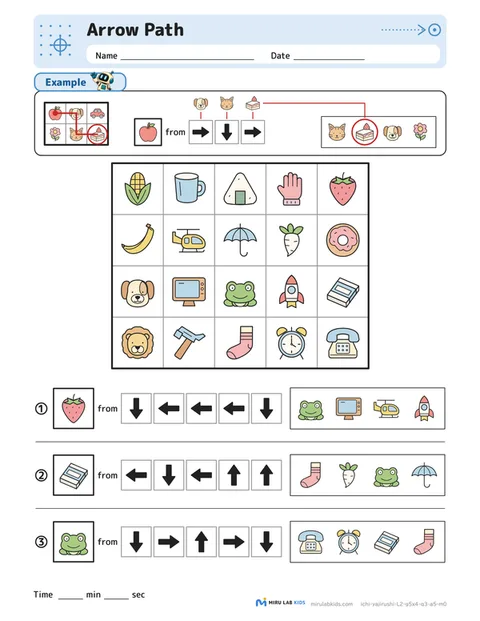
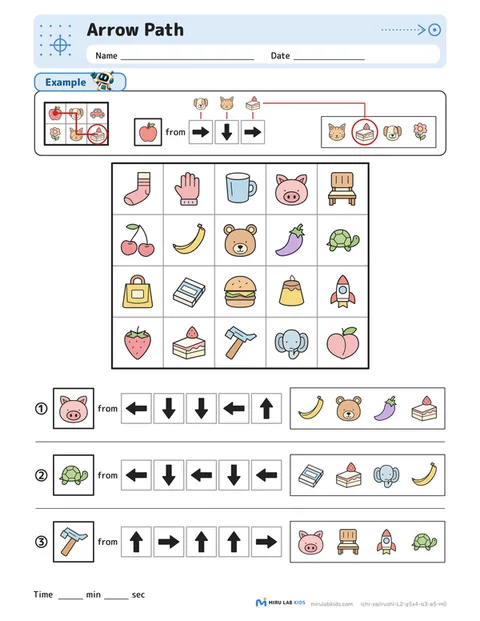
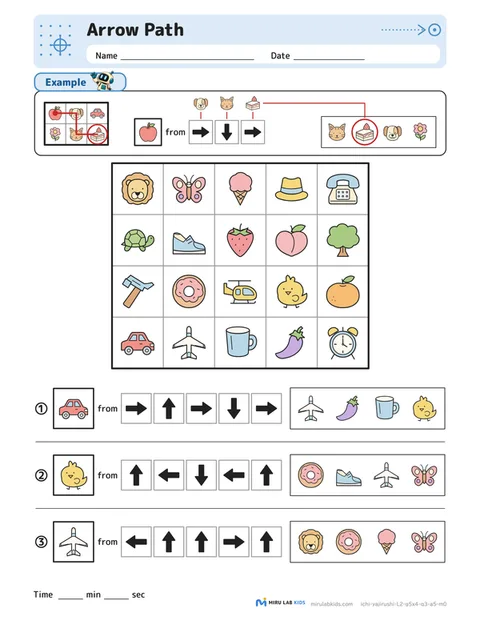
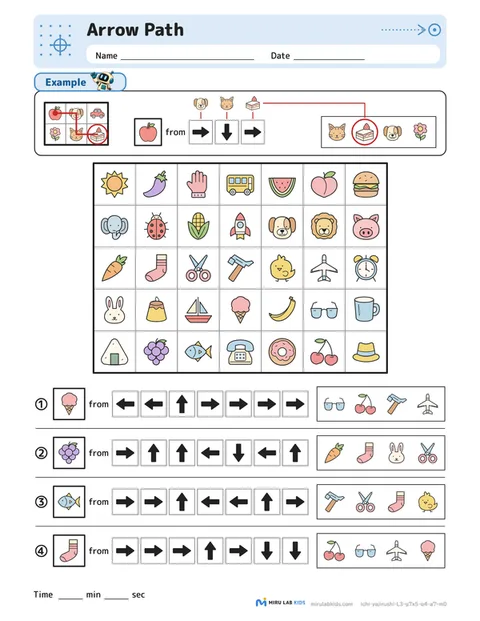
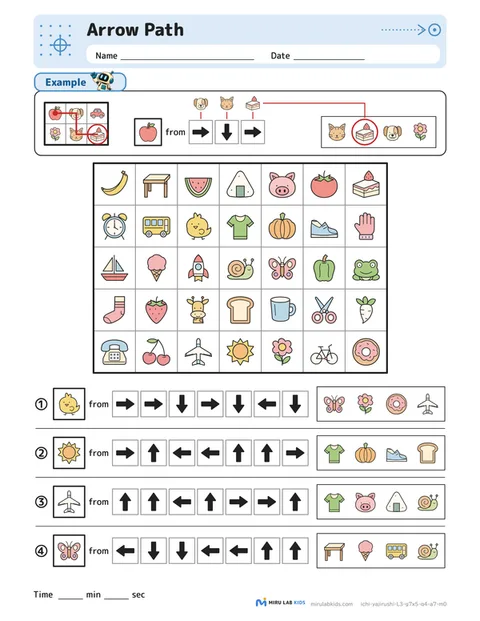
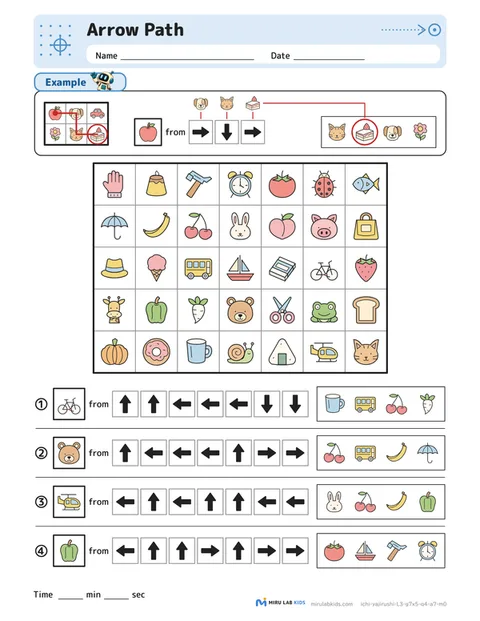
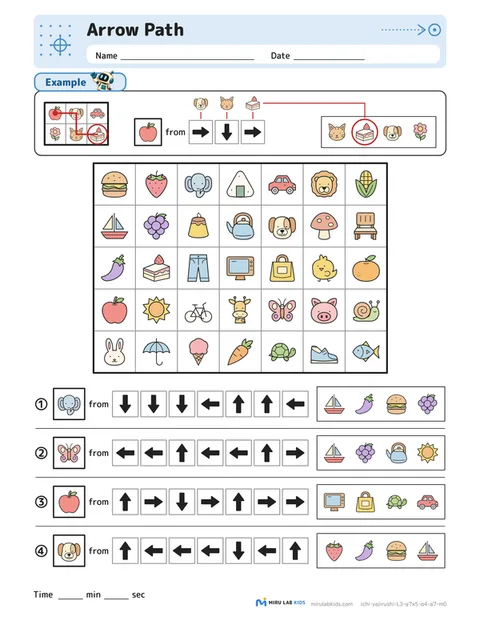
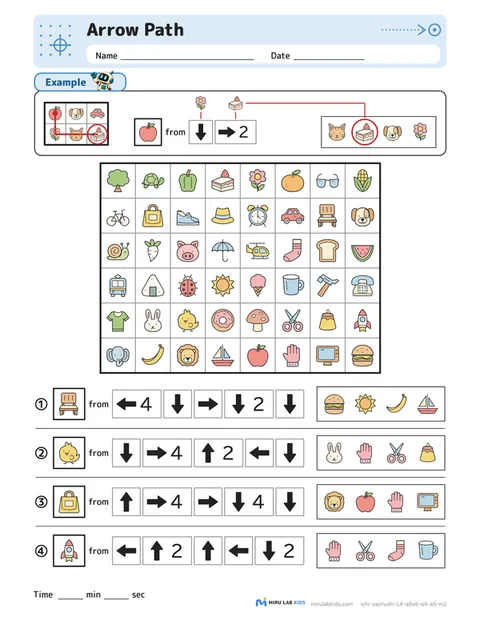
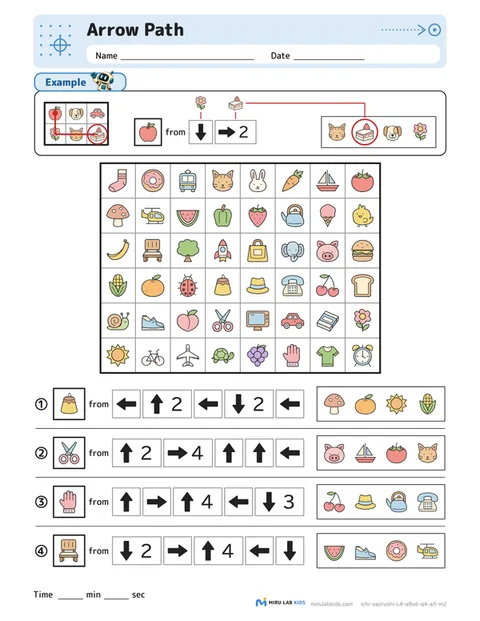
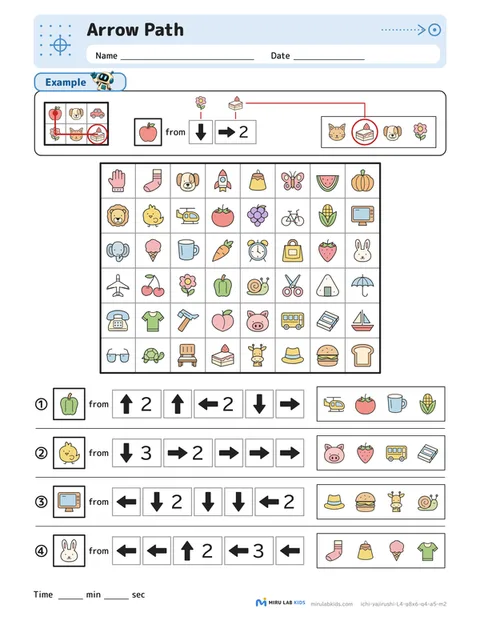
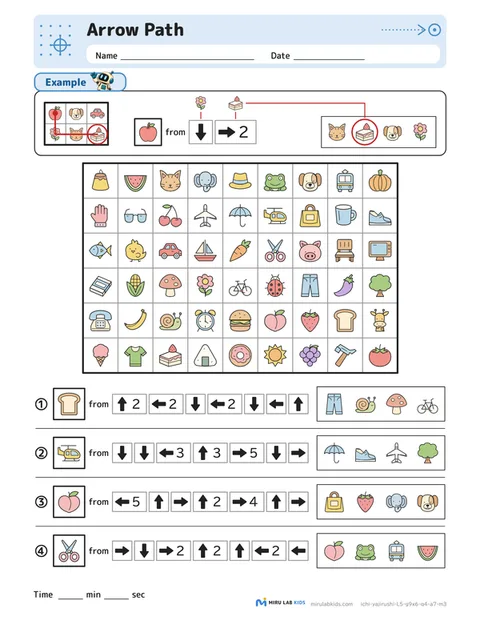
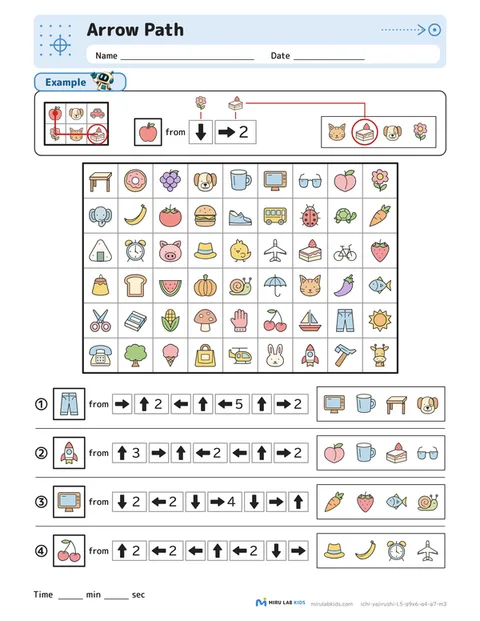
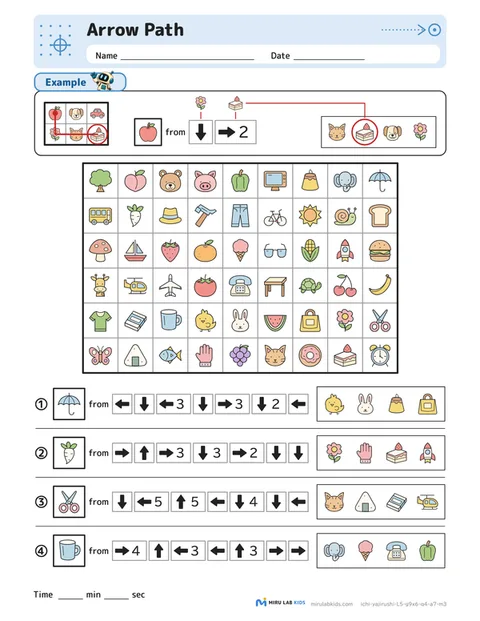
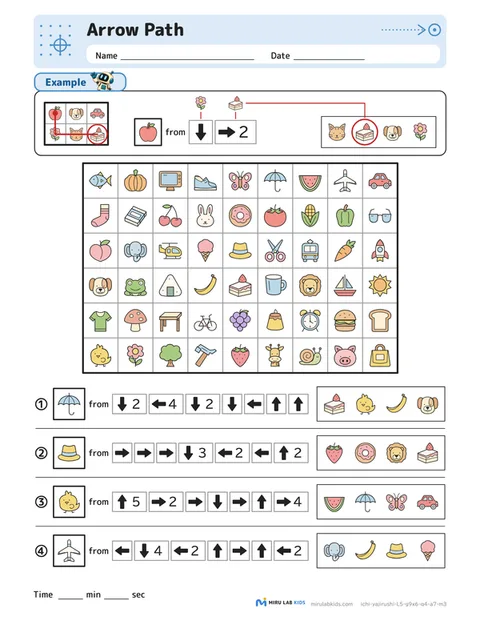
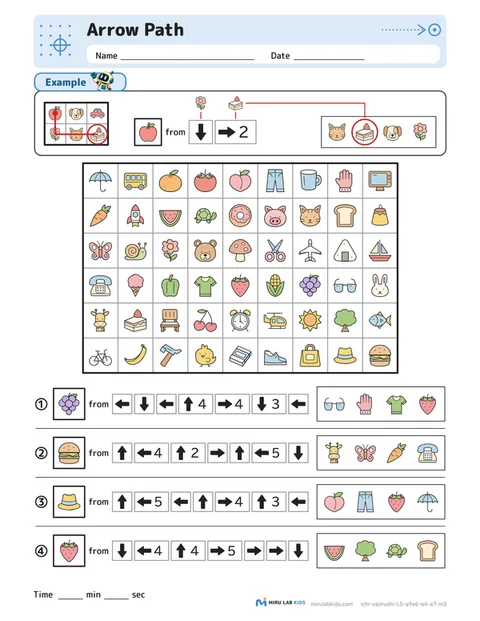
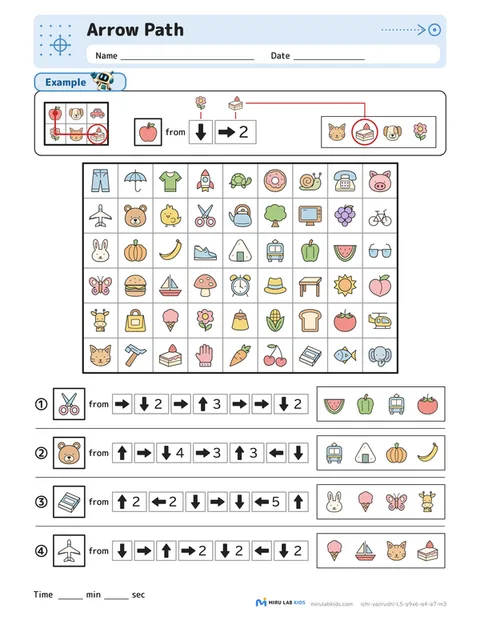
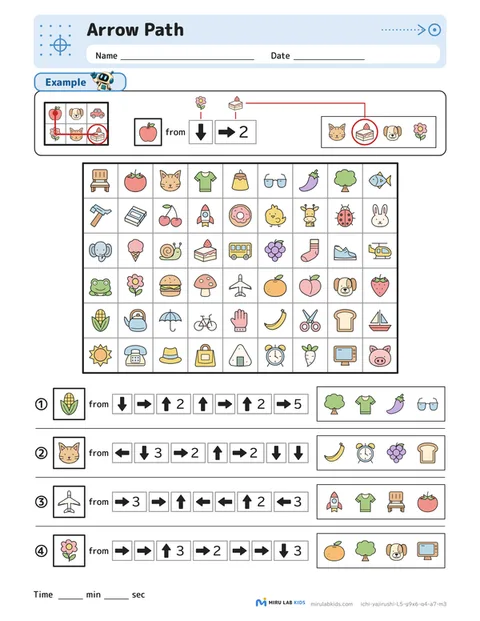
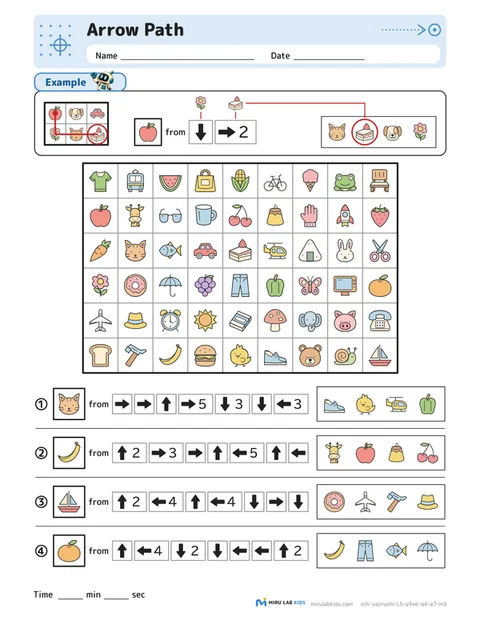
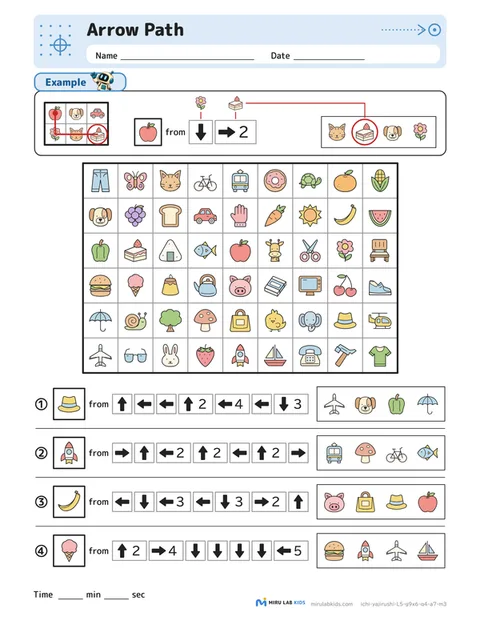
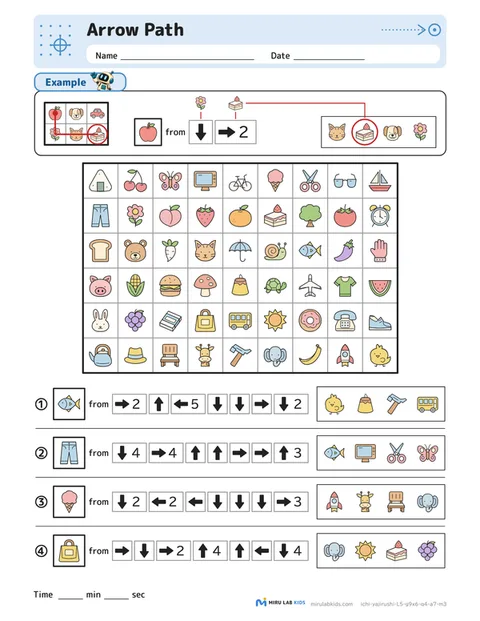
On a grid of pictures, your child starts at the given picture, follows the arrows, and circles the picture they land on from the 4 choices on the right.Nothing is drawn on the grid; your child moves with their eyes and in their mind, so they need to remember where they are while reading the next arrow.At higher levels the grid gets bigger and the arrows get longer.Levels 4 and 5 add numbered arrows such as "→2", so your child counts squares as they move.The activity aims to build the ability to understand directions and move their own position in their mind.
The pictures are in color, so color printing is recommended. In black and white the pictures can still be told apart by their shapes. On the answer page each question's path is drawn in its own color.
 Level 3 example ›
Levels
| Level 1 | A 3×3 grid. 3 arrows and 3 questions. | 10 worksheets |
|---|---|---|
| Level 2 | A 5×4 grid. 5 arrows and 3 questions. | 10 worksheets |
| Level 3 | A 7×5 grid. 7 arrows and 4 questions. | 10 worksheets |
| Level 4 | An 8×6 grid. 5 arrows, 2 of them numbered like "→2" (up to 4 squares). | 10 worksheets |
| Level 5 | A 9×6 grid. 7 arrows, 3 of them numbered (up to 5 squares). | 10 worksheets |
Tips
- Start by moving with your eyes and in your mind only. If it is hard, it is fine to trace with a finger or draw lines on the grid.
For what to say, choosing a level and what to do if it is too hard, see Arrow Path: a guide for grown-ups.
Worksheets
Choose a worksheet to open its printing page.
Level 1A 3×3 grid. 3 arrows and 3 questions.
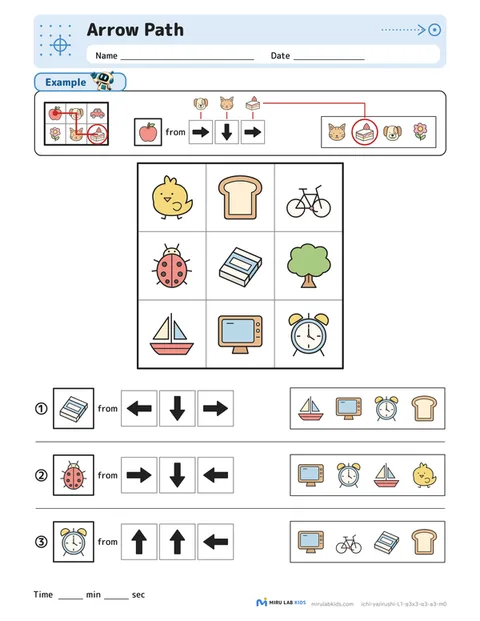
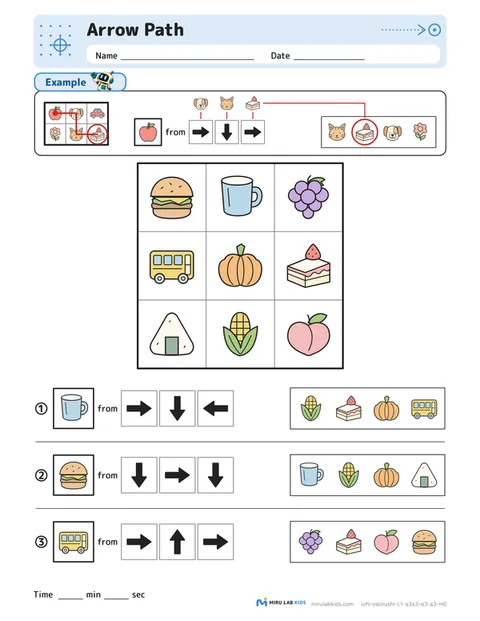
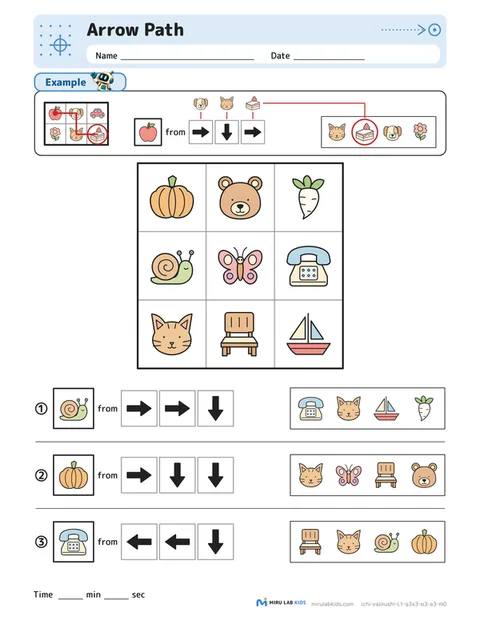
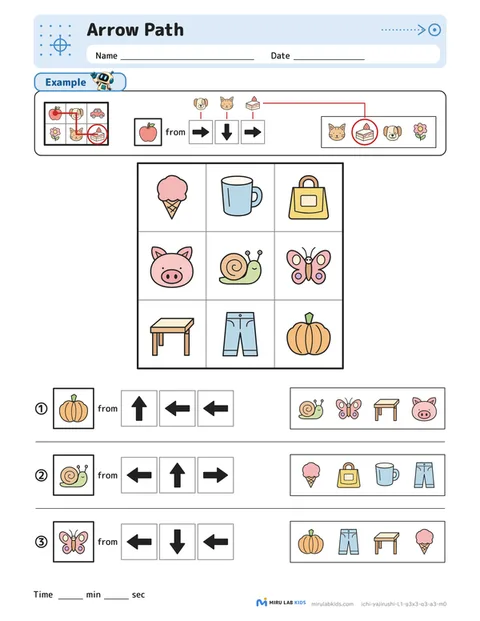
Level 2A 5×4 grid. 5 arrows and 3 questions.
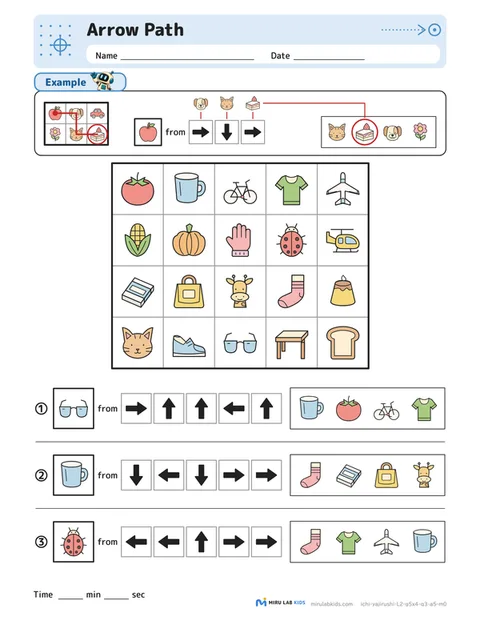
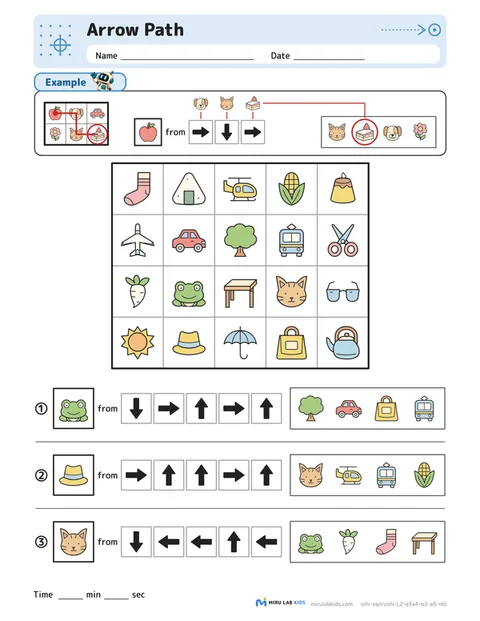
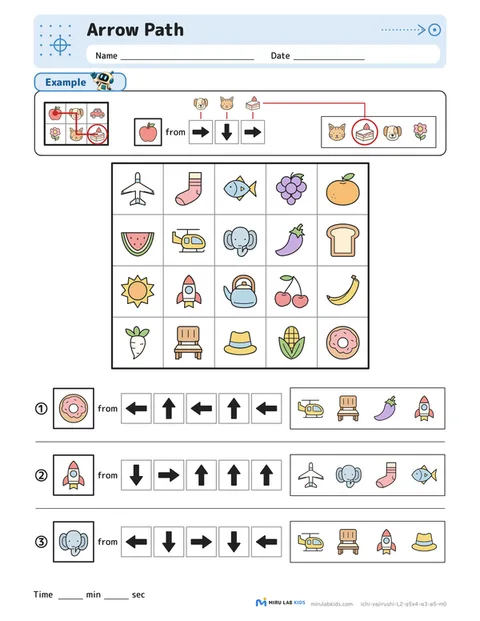
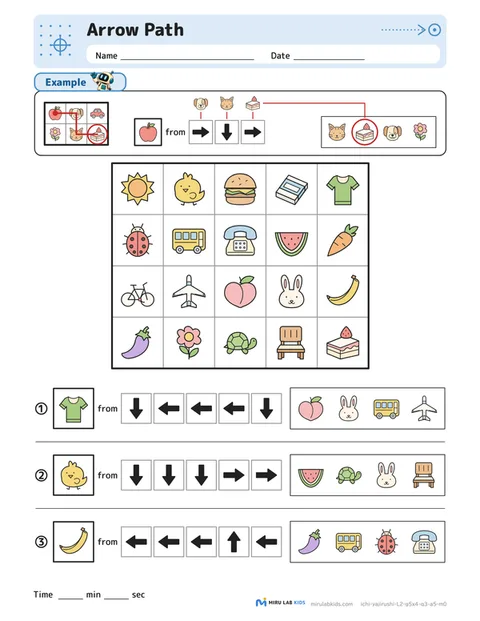
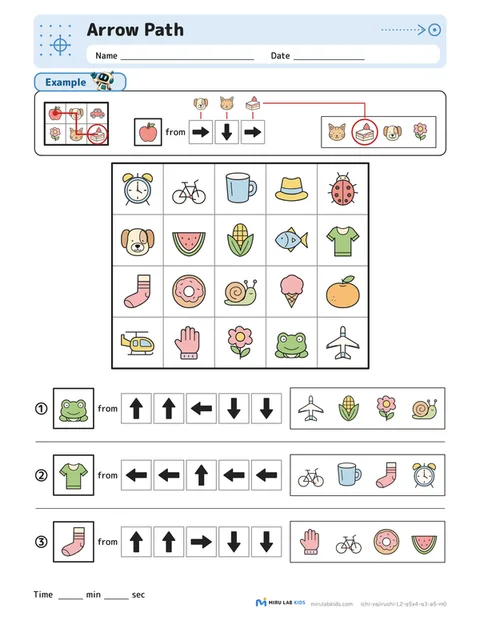
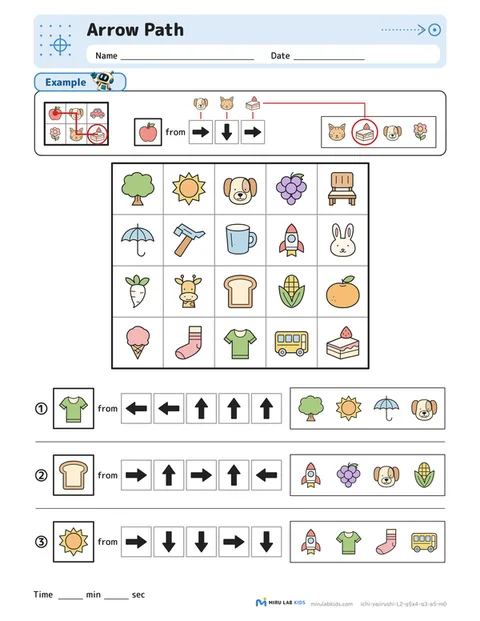
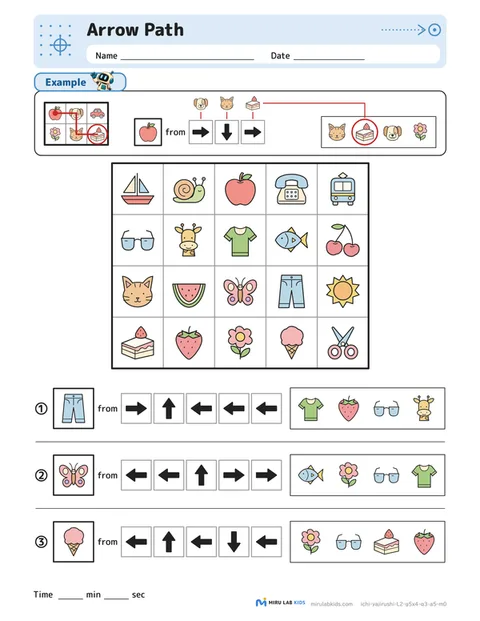
Level 3A 7×5 grid. 7 arrows and 4 questions.
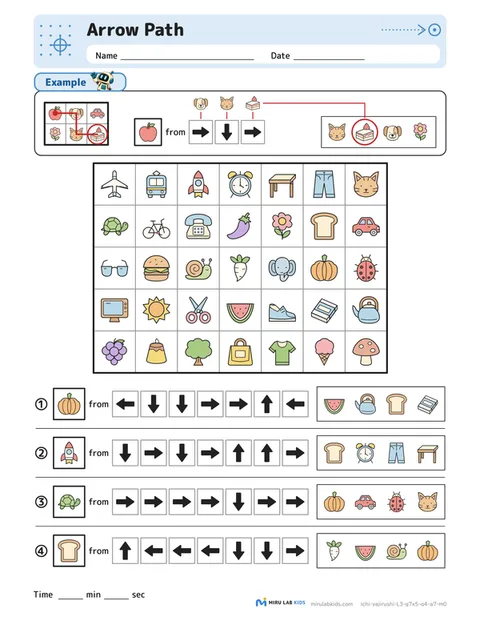
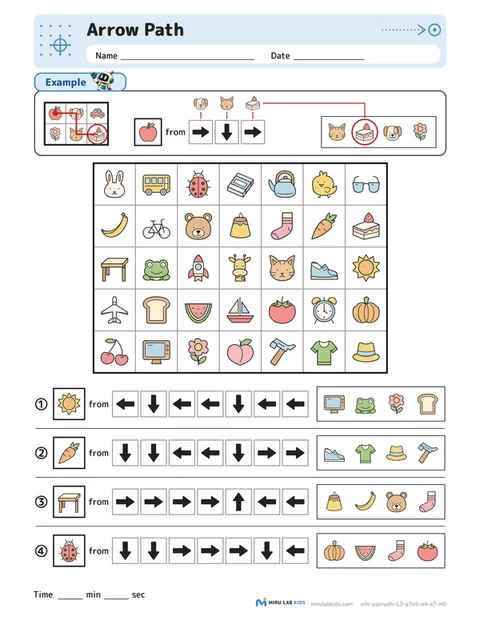
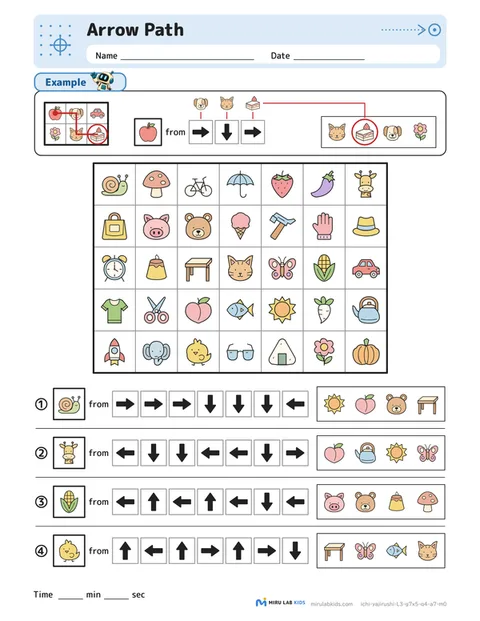
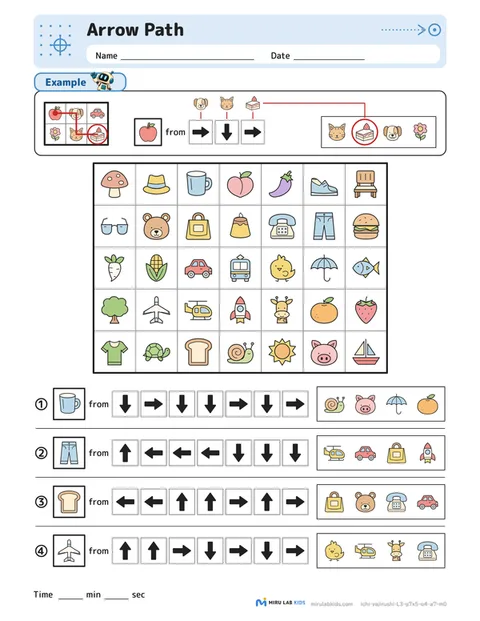
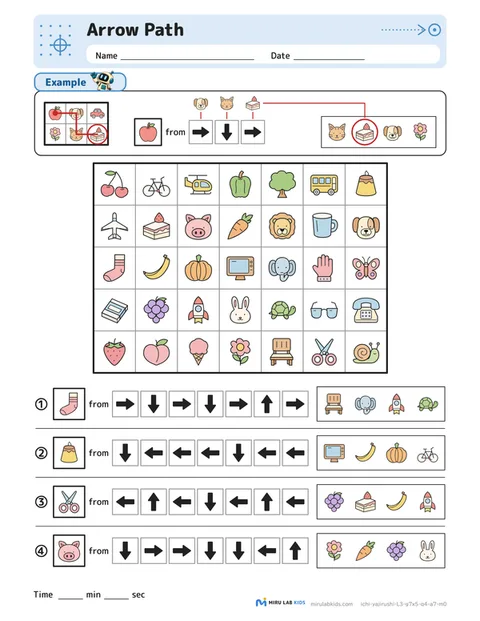
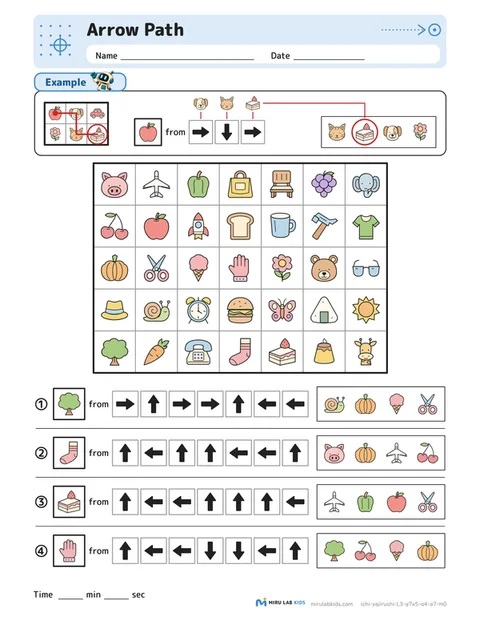
Level 4An 8×6 grid. 5 arrows, 2 of them numbered like "→2" (up to 4 squares).
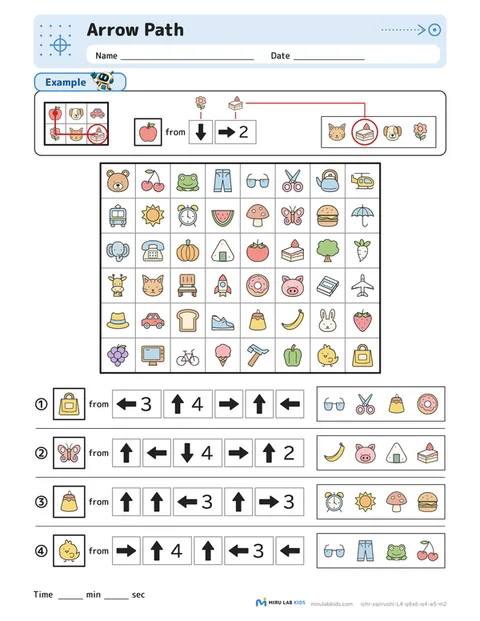
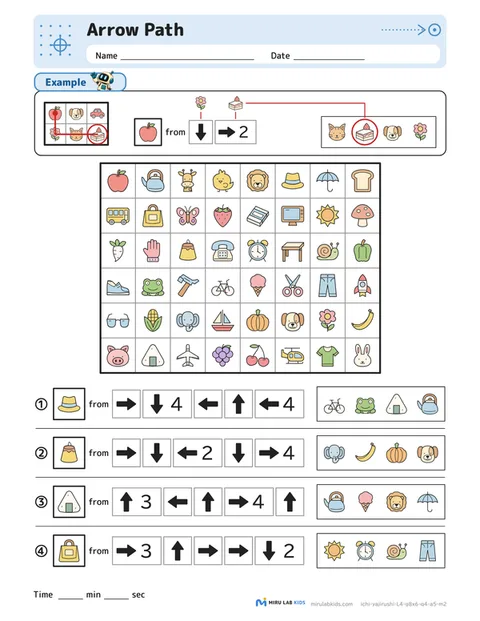
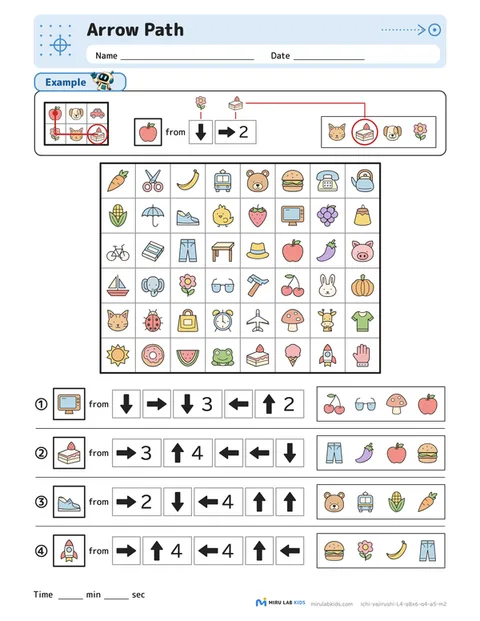
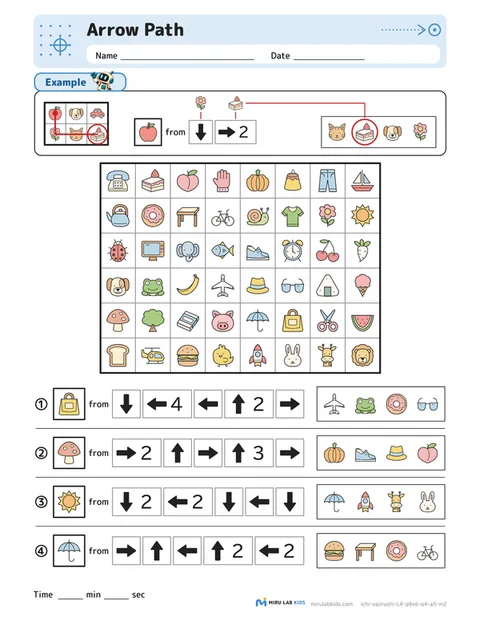
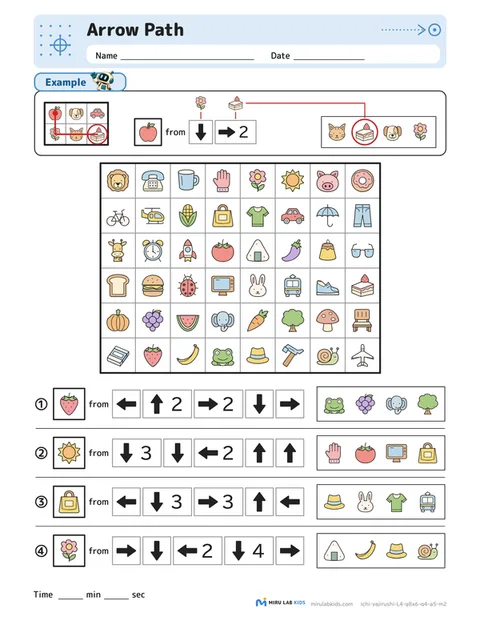
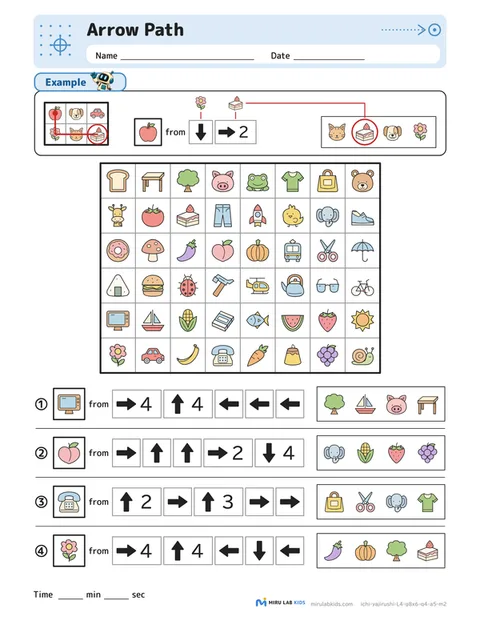
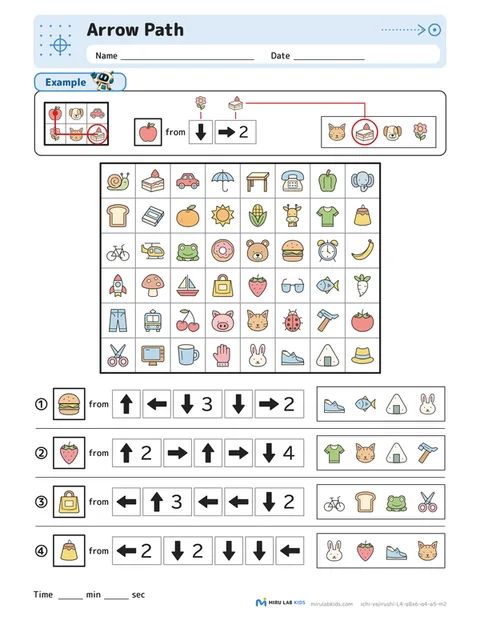
Level 5A 9×6 grid. 7 arrows, 3 of them numbered (up to 5 squares).
Arrow Path: a guide for grown-ups
Who it is for
- Still unsure of left and rightYour child moves by looking at arrows, so they can join in even if the words "left" and "right" are still shaky.
- Loses track partwayPractice remembering instructions while moving.
- Finds maps and directions hardPractice moving "where am I now" in their mind.
- Writing is hardYour child only draws a circle, so they can focus on looking and thinking.
Choosing a level
Chose the picture on their own, with or without tracing with a finger
- Go up one level.
- Move with the eyes only, without using a finger.
- Read all the arrows first, then look at the grid and move.
Loses their place partway or guesses
- Go down one level.
- Trace the path on the grid with a finger.
- Say each arrow out loud ("right", "down") as you read it.
What to watch for
| How they move | Does your child move with their eyes only? Trace with a finger? Start over from the beginning partway through? |
|---|---|
| Mistakes | The picture your child chose can show whether they skipped an arrow, mixed up left and right (or up and down), or missed a number. Compare it with the path on the answer page. |
| Time | Writing the time at the bottom of the page each time makes small changes easier to notice. Copying it onto the Time Log lets you line up results at the same level. |
If something keeps worrying you, it can help to talk with an eye doctor or another specialist rather than deciding on your own.
Things you can say
- Before startingLet's look at the example. If we start at the apple and follow the arrows, where do we land?Use the example at the top to check together that one arrow means one square.
- When unsureWhich picture are you on now?Before giving the answer, let your child say where they are.
- After choosingTell me how you moved.Describing the moves in order helps your child notice how they solved it.
FAQ
Is there an answer page?
Yes. Page 2 of the PDF is the answer page. The picture you land on is circled, and each question's path is drawn on the grid in its own color.
Can my child draw lines on the grid?
Yes. If it is hard, tracing with a finger or drawing lines is fine. As your child gets used to it, aim for moving with the eyes and in the mind only.
How much should we do at a time?
There is no set amount. Each page has 3 or 4 questions. See "Every Day? How Much?" for more.
Articles
About the code at the bottom right
The code at the bottom right of each worksheet (for example, ichi-yajirushi-L1-g3x3-q3-a3-m0) shows its difficulty settings. Worksheets with the same code have the same difficulty. If you contact us about a worksheet, including this code helps us find it right away.