Arrow PathLevel 1 · Easy
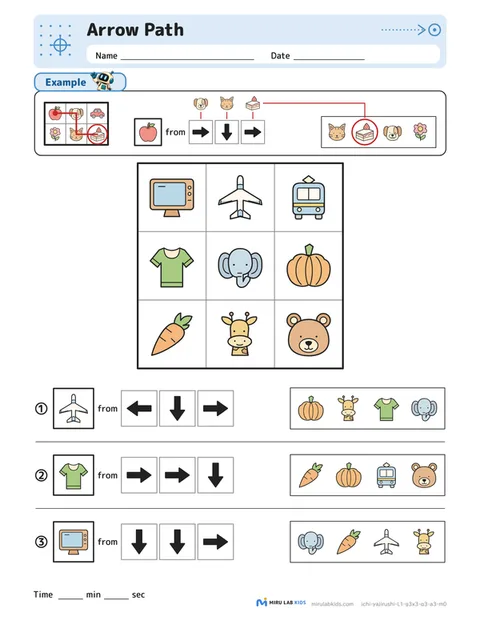
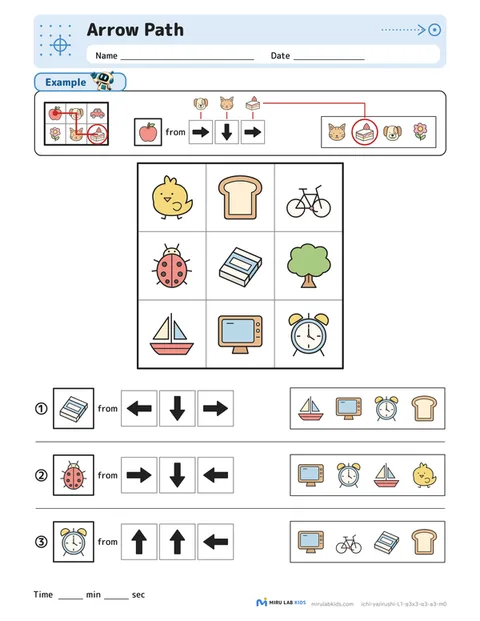
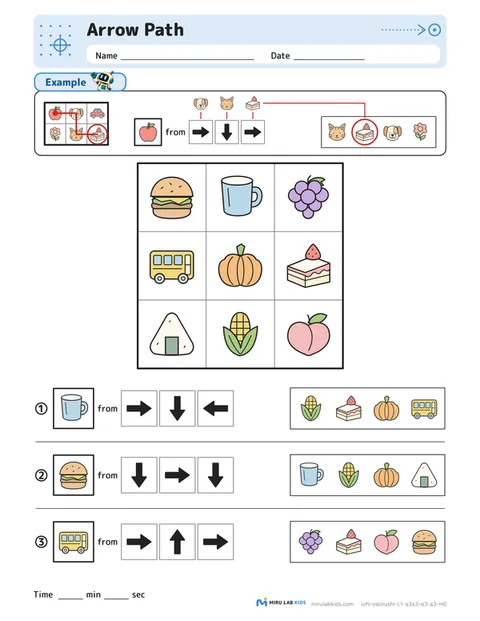
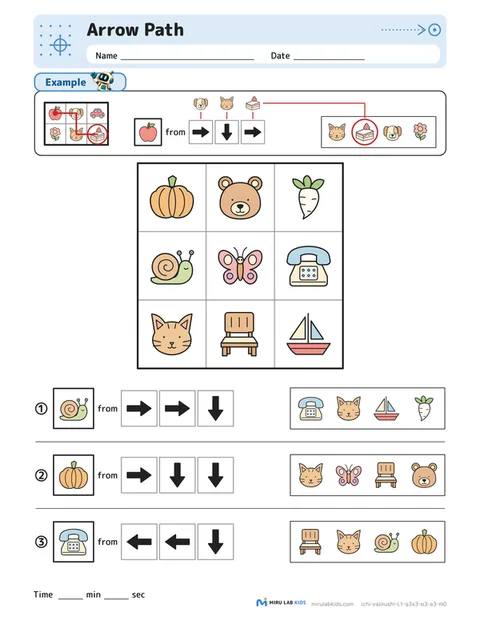
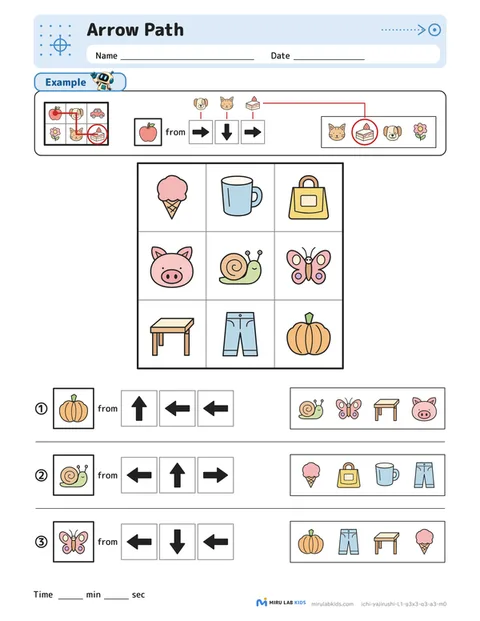
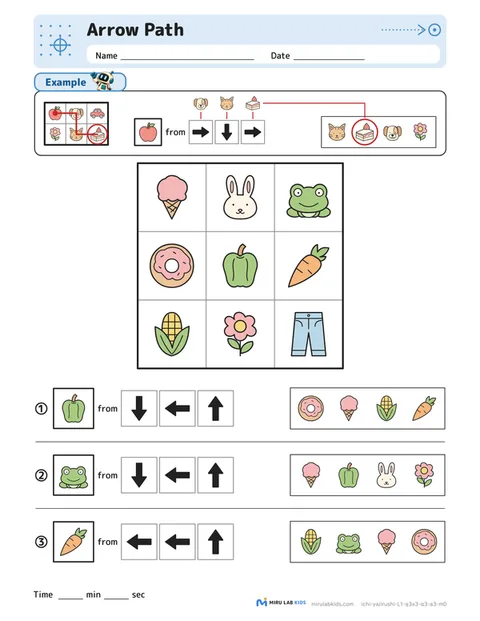
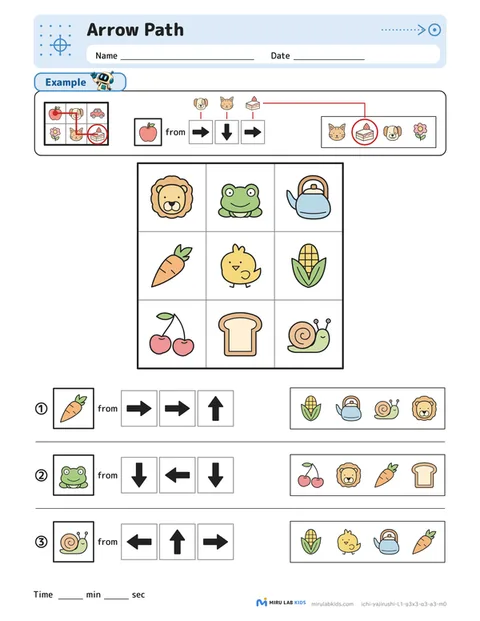
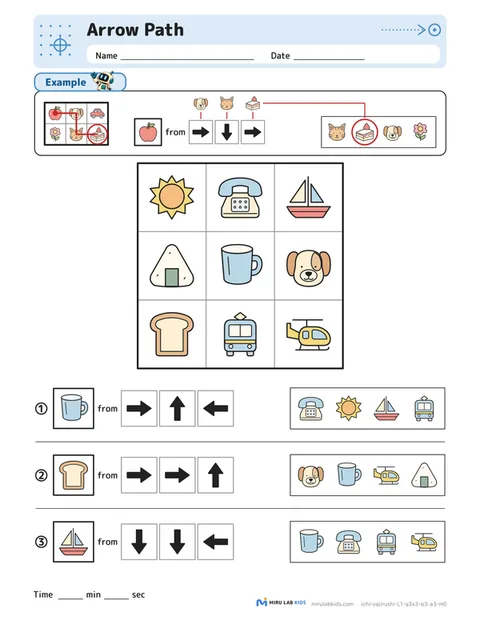
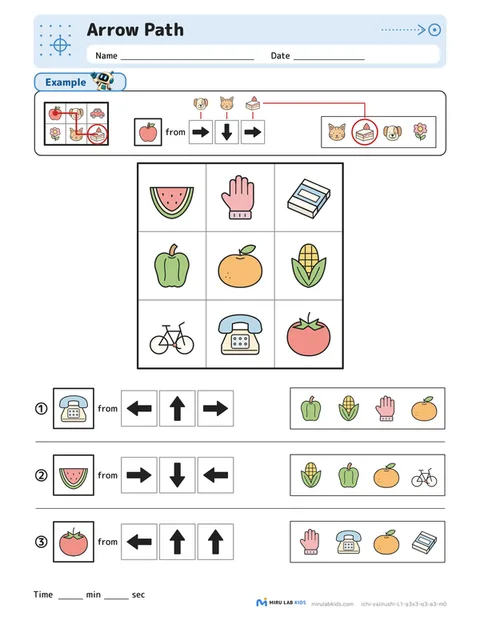
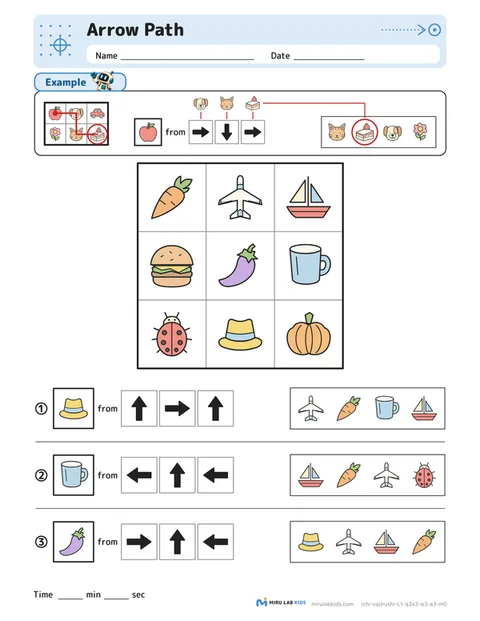
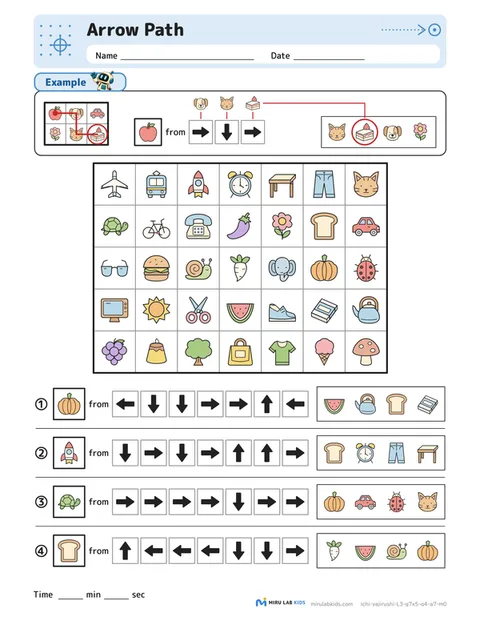
A 3×3 grid. 3 arrows and 3 questions.
Level 1A 3×3 grid. 3 arrows and 3 questions.
Keeping track?
Aims of this activity
- Linking each arrow to a move up, down, left, or right (understanding direction)
- Holding the current square in mind while reading the next arrow (visual-spatial working memory)
- Moving their own position across the grid one square at a time in their mind (spatial relations)
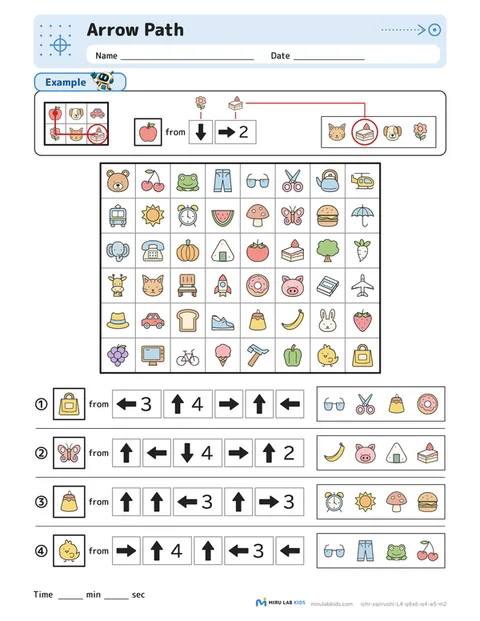
- Counting squares while moving the number shown (Levels 4 and 5)
On a grid of pictures, your child starts at the given picture, follows the arrows, and circles the picture they land on from the 4 choices on the right.Nothing is drawn on the grid; your child moves with their eyes and in their mind, so they need to remember where they are while reading the next arrow.At higher levels the grid gets bigger and the arrows get longer.Levels 4 and 5 add numbered arrows such as "→2", so your child counts squares as they move.The activity aims to build the ability to understand directions and move their own position in their mind.
Tips
- Start by moving with your eyes and in your mind only. If it is hard, it is fine to trace with a finger or draw lines on the grid.
For what to say, choosing a level and what to do if it is too hard, see Arrow Path: a guide for grown-ups.
Choosing a level
Start with a level that seems a little easy. Level 1 uses a 3×3 grid, which helps your child get used to the activity.
↓
Chose the picture on their own, with or without tracing with a finger
- Go up one level.
- Move with the eyes only, without using a finger.
- Read all the arrows first, then look at the grid and move.
Loses their place partway or guesses
- Go down one level.
- Trace the path on the grid with a finger.
- Say each arrow out loud ("right", "down") as you read it.
Things you can say
- Before startingLet's look at the example. If we start at the apple and follow the arrows, where do we land?Use the example at the top to check together that one arrow means one square.
- When unsureWhich picture are you on now?Before giving the answer, let your child say where they are.
- After choosingTell me how you moved.Describing the moves in order helps your child notice how they solved it.