 Visual-Motor Skills
Dot-to-DotFree printable worksheets
Aims
- Finding the next number among many with the eyes (visual search and saccades)
- Keeping attention on the order while working through the numbers (sustained attention)
- Drawing a line toward a dot while looking at it (eye-hand coordination)
Your child connects the dots in order, starting at 1, to complete a picture with one continuous line.The activity aims to build the ability to search for the next number, to stay focused on the order, and to draw lines to the right place.At higher levels, dots also spread into the background, so your child needs to check the numbers instead of guessing from the shape of the picture.
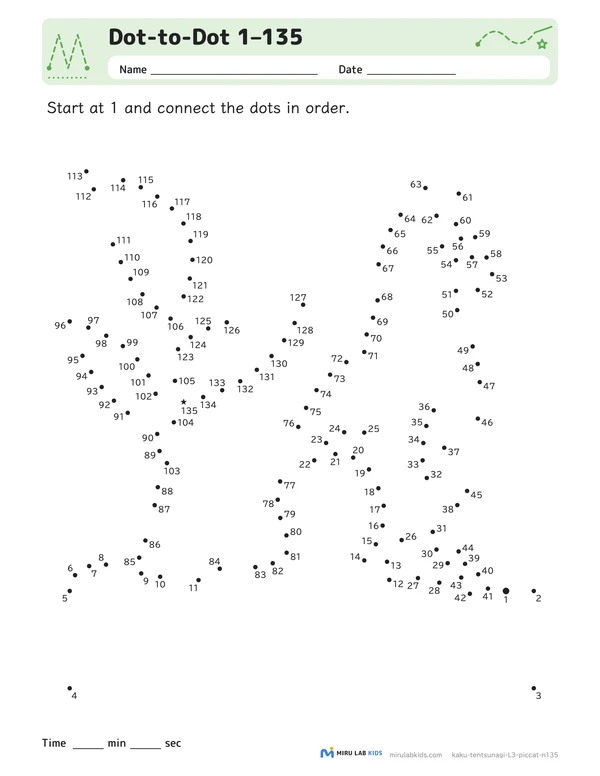 Level 3 example ›
Levels
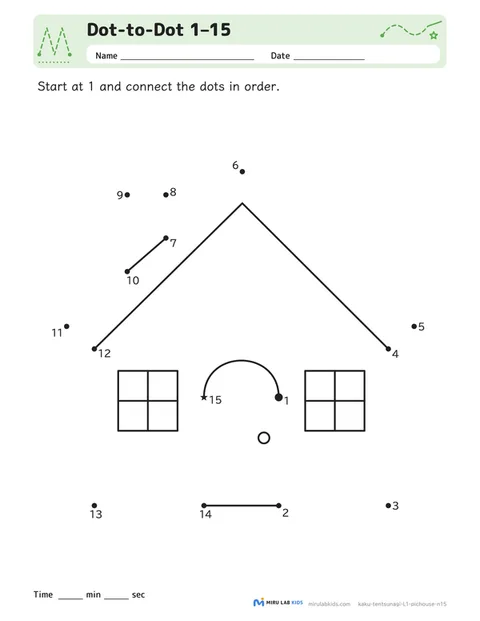
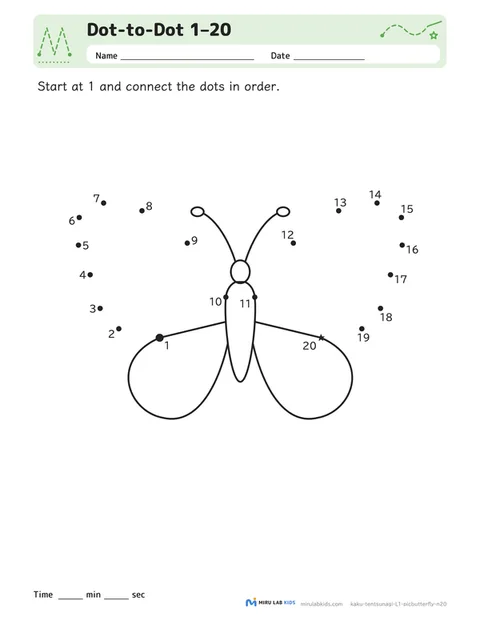
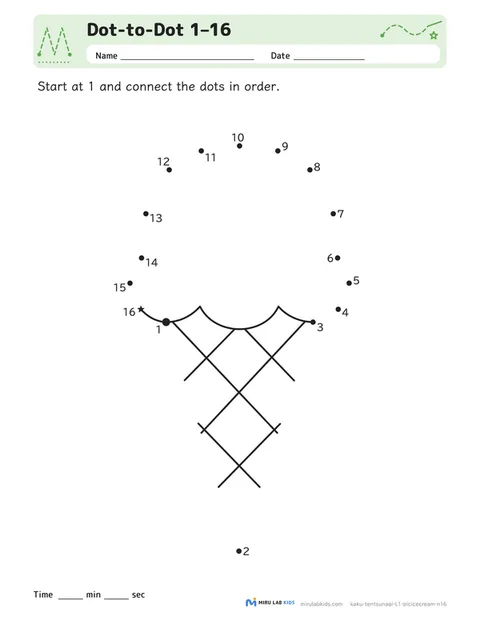
| Level 1 | 10–20 dots. Large numbers and dots, spaced far apart. | 6 worksheets |
|---|---|---|
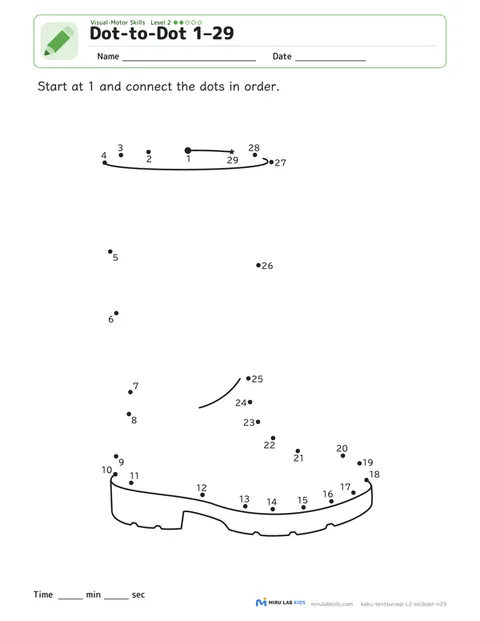
| Level 2 | 21–50 dots. More dots, so there is more searching for the next number. | 6 worksheets |
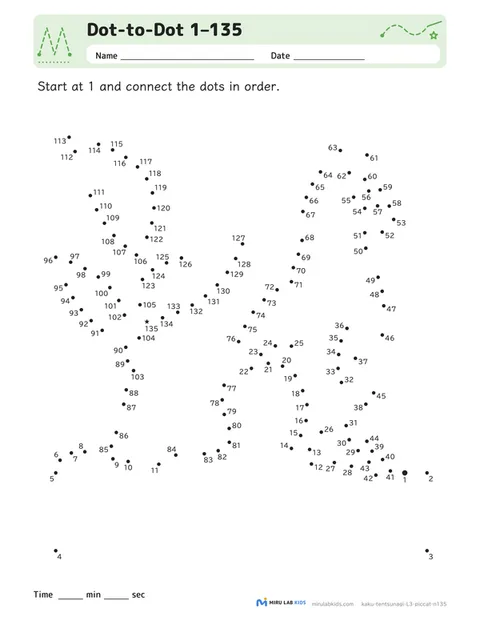
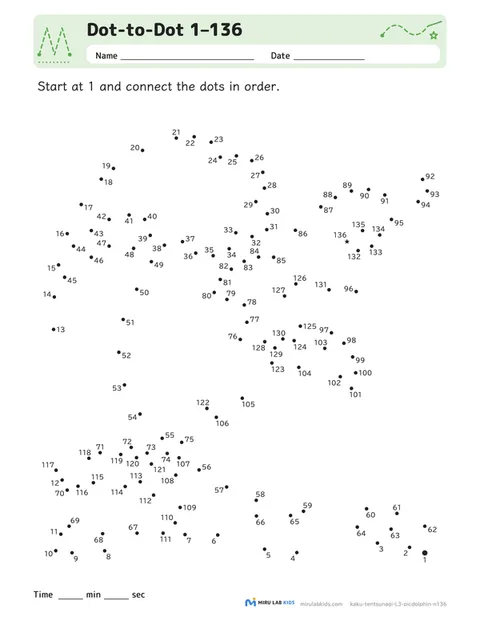
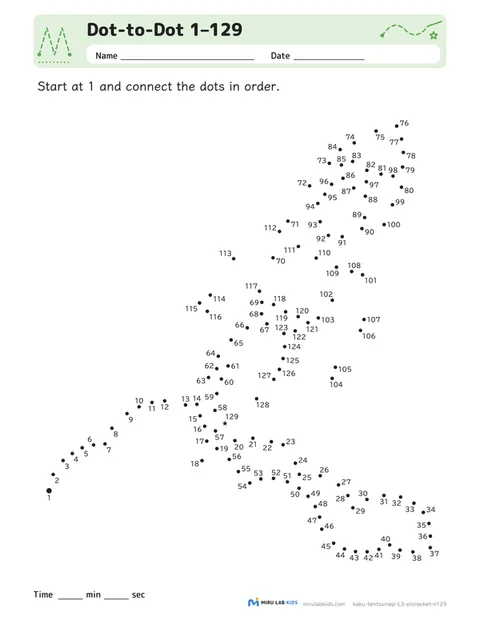
| Level 3 | 51–150 dots spread across the page. Some numbers have three digits. | 6 worksheets |
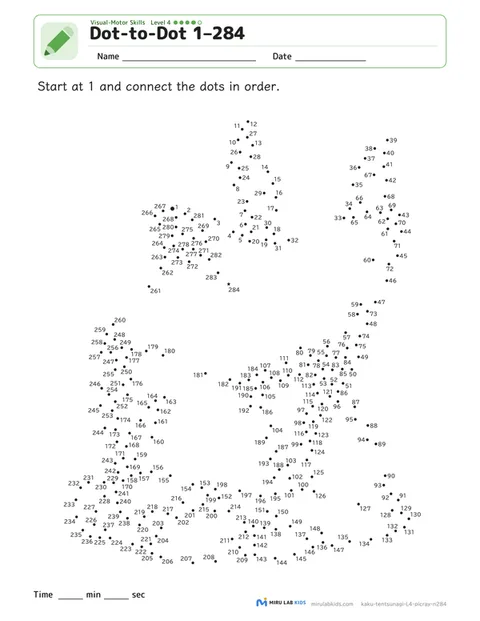
| Level 4 | 151–300 dots. Smaller numbers, so nearby dots and numbers need a careful look. | 6 worksheets |
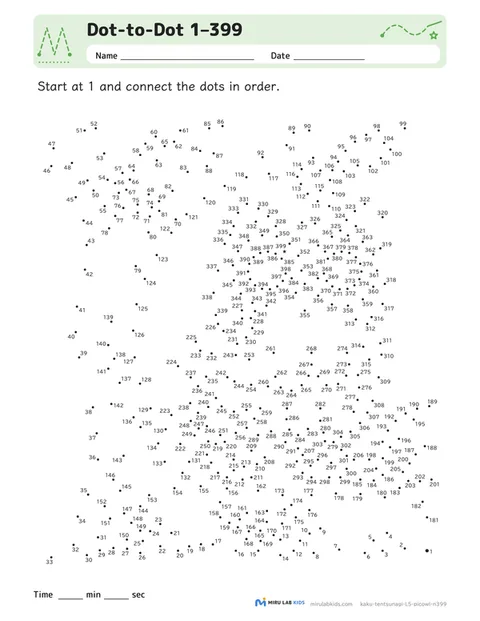
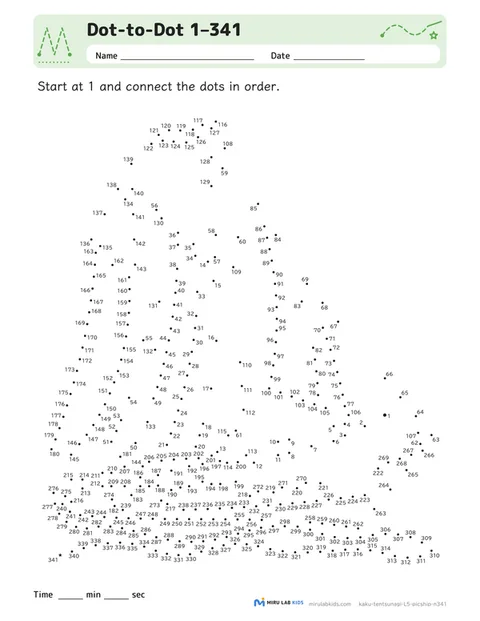
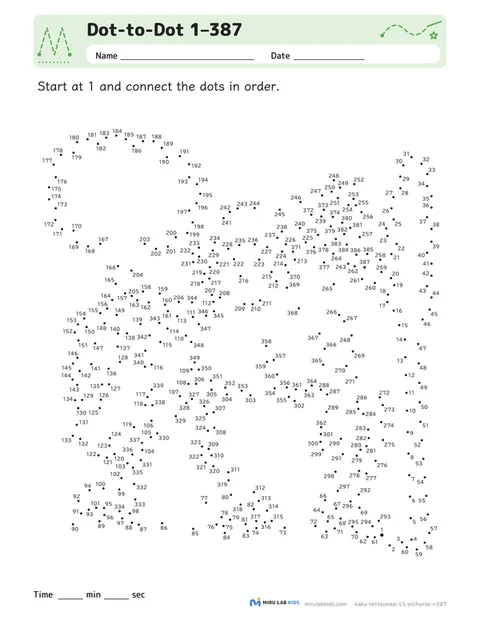
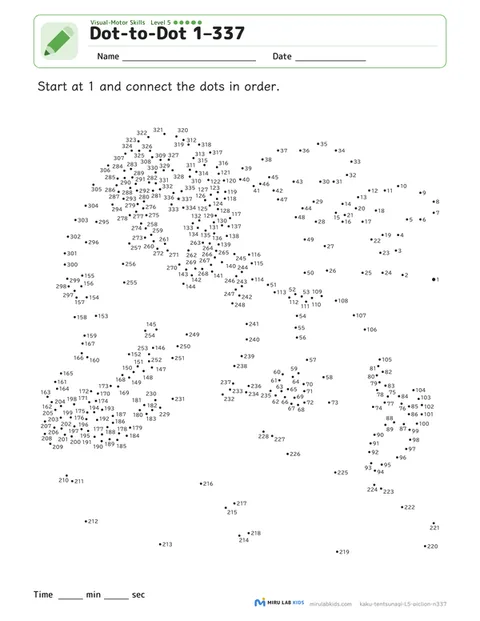
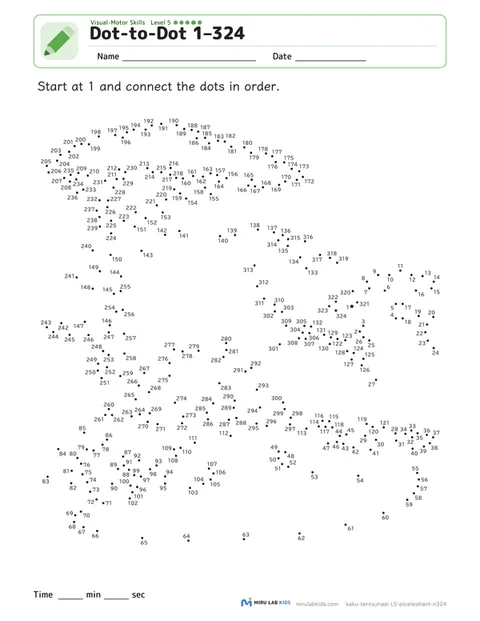
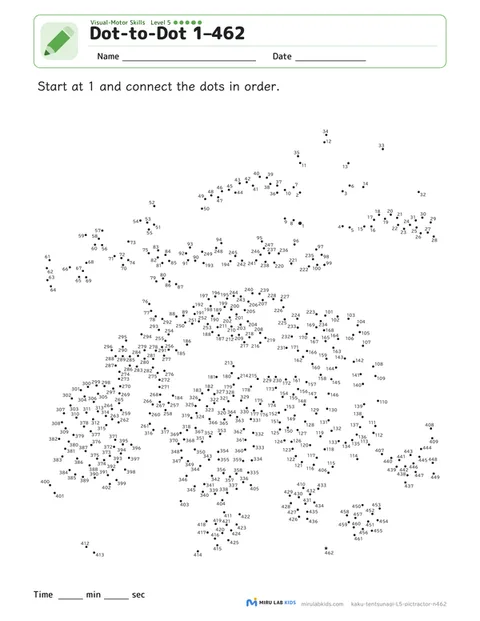
| Level 5 | 301–600 dots. A detailed picture with a background, using numbers spread across the whole page. | 6 worksheets |
Tips
- Find the next number first, then draw a straight line to it.
- Even when lines cross, follow the numbers instead of jumping to the closest dot.
For what to say, choosing a level and what to do if it is too hard, see Dot-to-Dot: a guide for grown-ups.
Worksheets
Choose a worksheet to open its printing page.
Print in bulk
Level 110–20 dots. Large numbers and dots, spaced far apart.
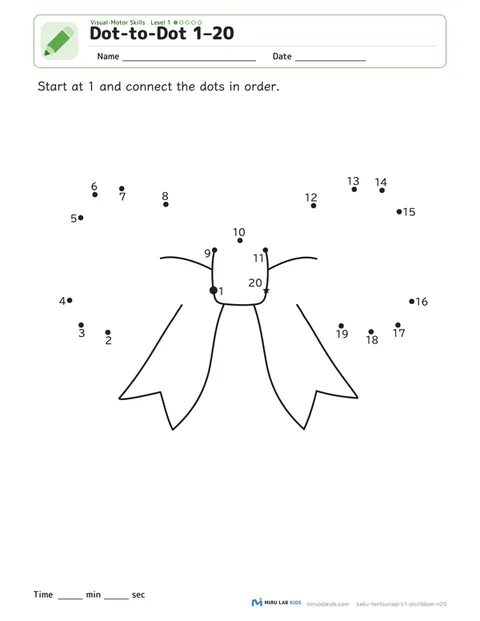
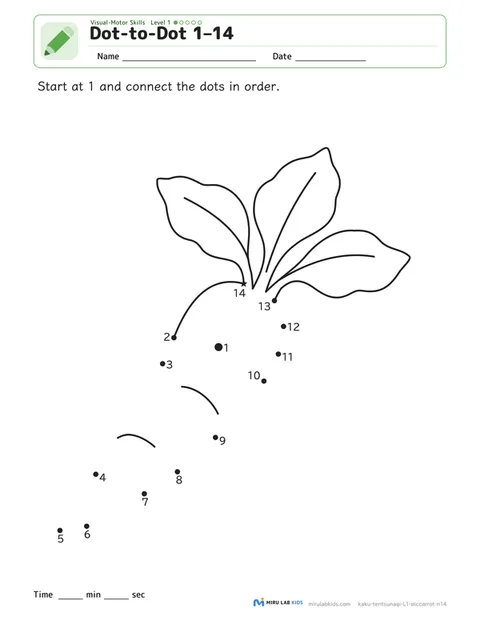
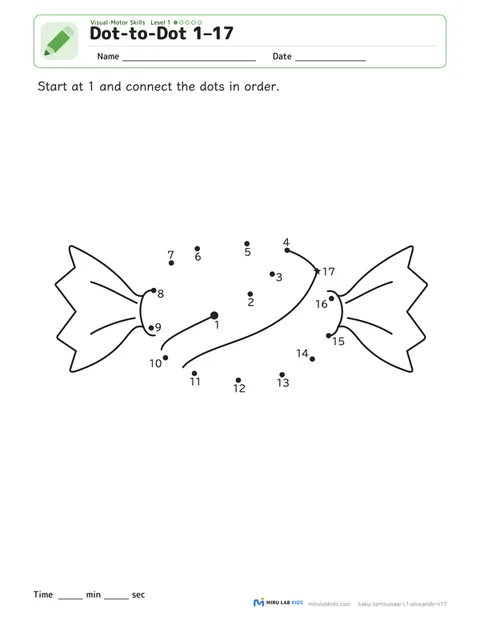
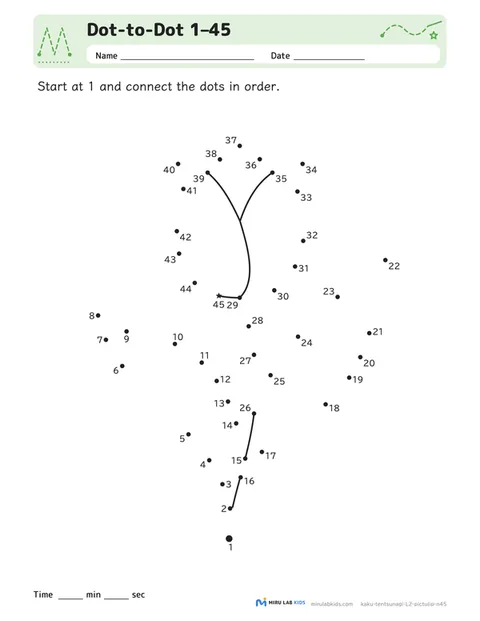
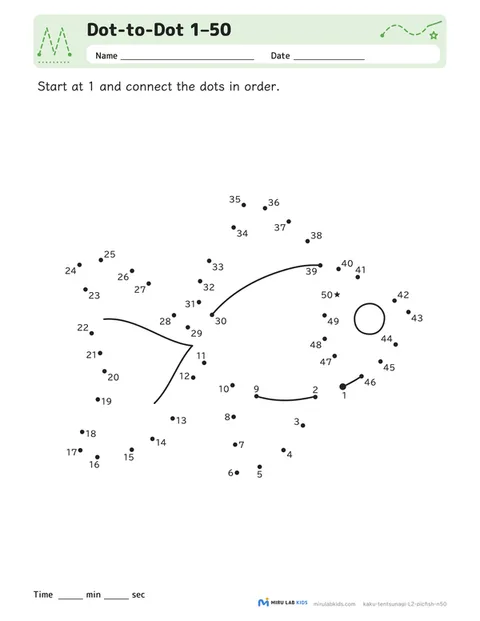
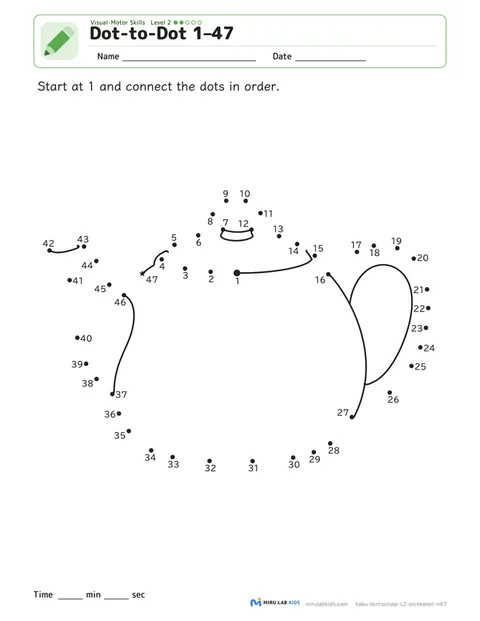
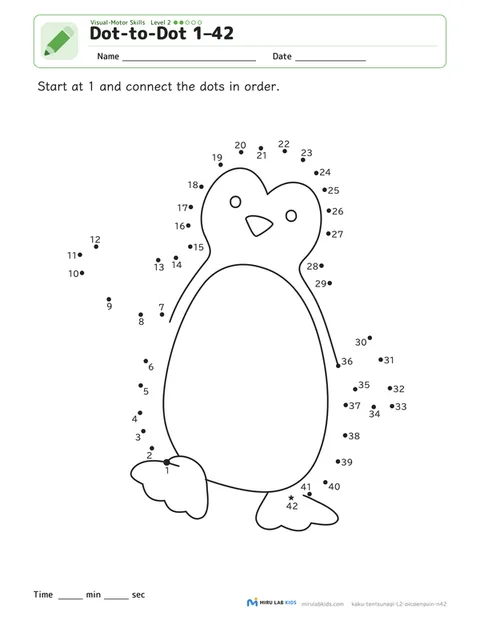
Level 221–50 dots. More dots, so there is more searching for the next number.
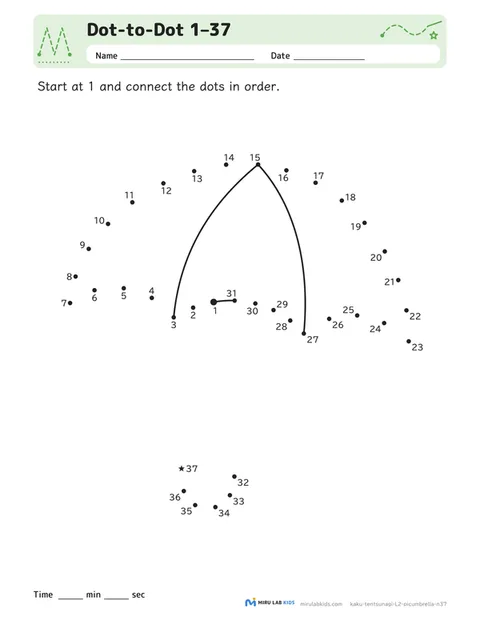
Level 351–150 dots spread across the page. Some numbers have three digits.
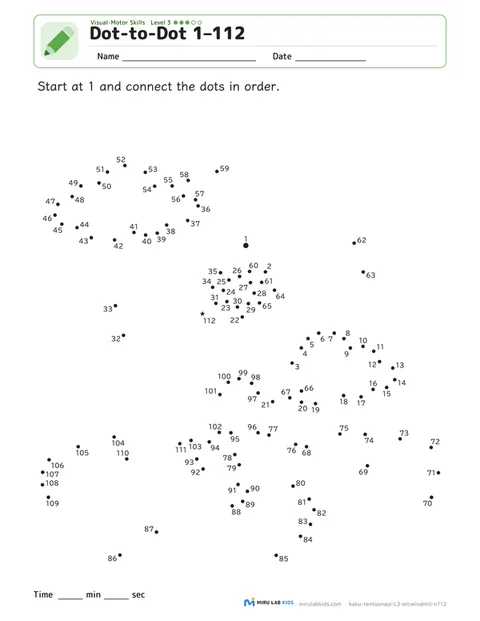
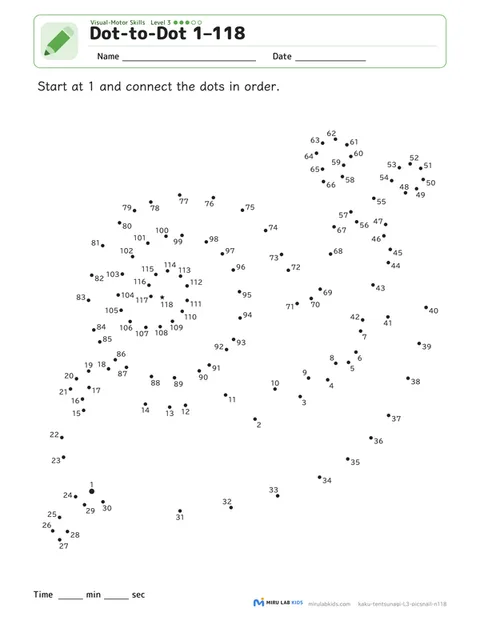
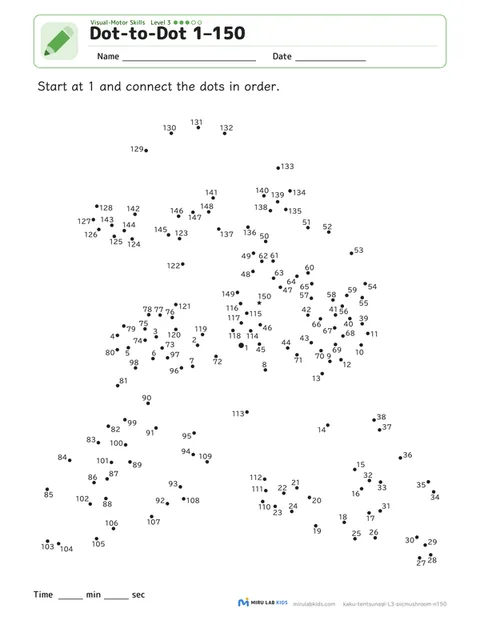
Level 4151–300 dots. Smaller numbers, so nearby dots and numbers need a careful look.
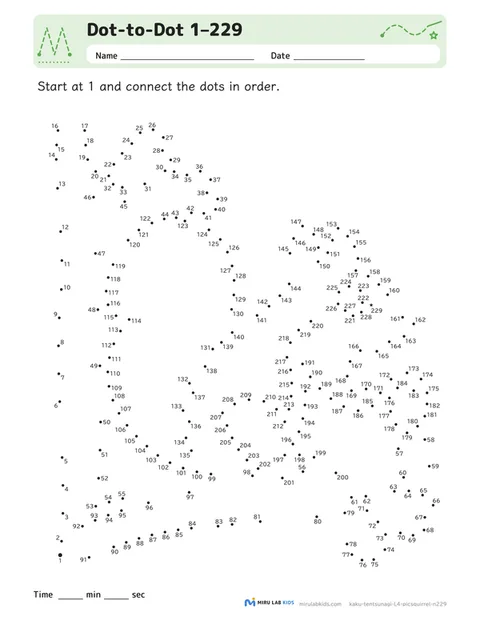
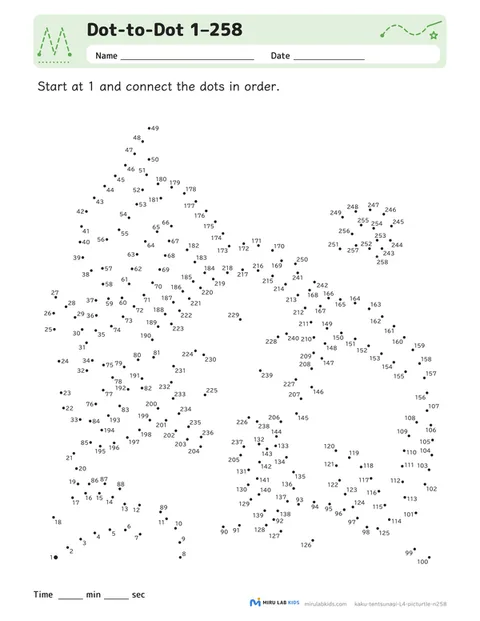
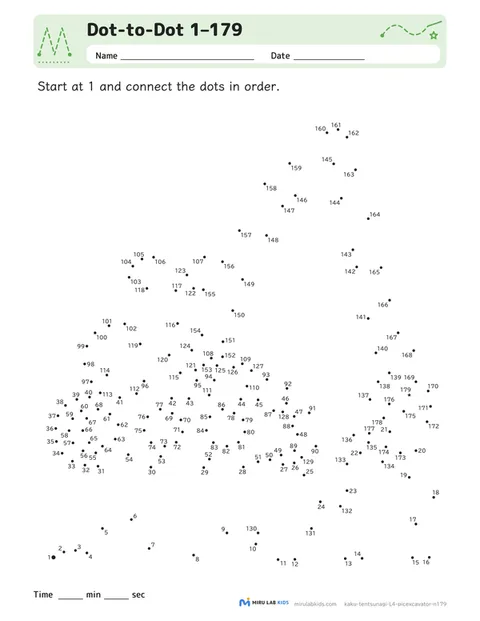
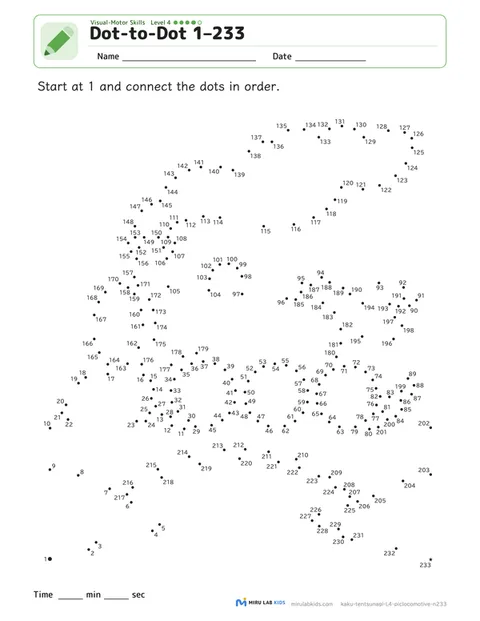
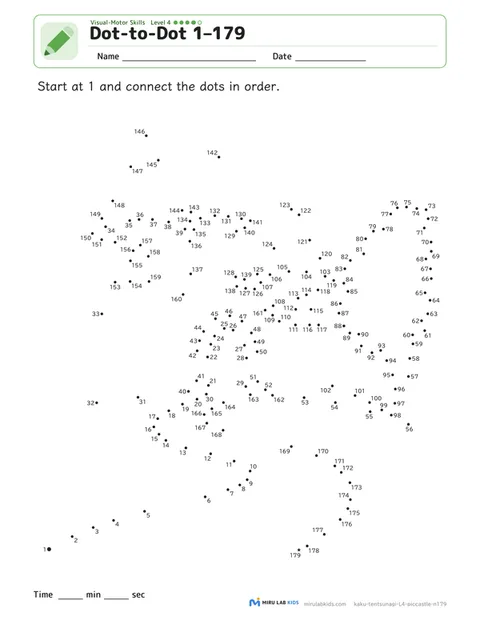
Level 5301–600 dots. A detailed picture with a background, using numbers spread across the whole page.
Dot-to-Dot: a guide for grown-ups
Who it is for
- Finding things by lookingSearching for the next number again and again is practice moving the eyes around the page.
- Drawing straight lines is hardAiming a line at the next dot is practice moving the hand while looking.
- Loves a surpriseA picture appears little by little, which makes finishing feel rewarding.
- Longer projectsPages with many dots can be finished over several days.
- Still learning numbersLevel 1 uses numbers up to 10 to 20, so it also helps check number order.
- Therapy and classroom sessionsAll you need is one sheet of paper and a pencil, and you can enjoy the finished picture together.
Choosing a level
Finished the picture happily
- Choose a level with more dots.
- Give fewer hints and let your child find each number on their own.
- Try a different picture at the same level, so your child cannot rely on remembering the dots.
Cannot find the next number or stops partway
- Choose a level with fewer dots.
- Point to the area where the next number is.
- Before drawing each line, touch the current dot and the next dot with a finger.
- Take turns, with one person finding the number and the other drawing the line.
What to watch for
| Search | Does your child look for the next number nearby first, or do the eyes jump all over the page? |
|---|---|
| Order | Does your child check the order as they go, without jumping to the closest dot? |
| Lines | Does each line reach the dot? Does it stop short or go past it? |
| Look-alikes | Does your child mix up numbers such as 46 and 64, or misread small numbers? |
| Posture | Is the face very close to the page? Is the other hand holding the paper? |
| Changes over time | Near the end, do the lines get messy or does searching slow down? This can be a sign of tiredness. |
| Time | Writing the time at the bottom of the page each time makes small changes easier to notice. Copying it onto the Time Log lets you line up results at the same level. |
If something keeps worrying you, it can help to talk with an eye doctor or another specialist rather than deciding on your own.
Things you can say
- Before startingIf we connect them from 1, what will it be?Go over the rule together, "connect the dots in order, starting at 1."
- When stuckNext is 25.Say only the next number and wait a little. Do not point to the dot.
- Taking a breakYou got up to 80 today!There is no need to finish in one sitting. Note the last number and take a break.
- When finishedWhat did you make?Look at the finished picture together and enjoy it.
- Looking backHow did you find the numbers?Ask what your child did to find the numbers. If you record the time, try not to make speed the only goal.
FAQ
Is there an answer page?
Yes. Page 2 of the PDF shows the finished picture.
Can I print in black and white?
Yes. The sheets are lines and numbers, so black and white printing does not change the difficulty.
Do we have to finish in one sitting?
No. Pages with many dots can be done over several days. If an adult notes the last number, your child can pick up where they left off.
Can I show the finished picture first?
If your child sees it first, they may follow the shape instead of checking the numbers. When the goal is practice finding numbers, keep the picture as a surprise.
How much should we do at a time?
There is no set amount. It is best to stop while your child still wants a little more. See "Every Day? How Much?" for more.
Articles
- What Is Visual Perception? More Than Good Eyesight
- Why Does My Child Put Clothes On Backwards or Inside Out? Getting Dressed Uses More Visual Skills Than You Think
- When a Child Has Trouble Catching a Ball: Breaking It Down from "Tracking" to "Reaching"
- When a Child's Tracing Slips onto Another Shape: Understanding Figure-Ground Perception
About the code at the bottom right
The code at the bottom right of each worksheet (for example, kaku-tentsunagi-L1-pichouse-n15) shows its difficulty settings. Worksheets with the same code have the same difficulty. If you contact us about a worksheet, including this code helps us find it right away.
 Shape Recognition
 Spatial Relations
 Visual Scanning
 Visual Memory
 Visual Planning