 Visual Planning
Number MazesFree printable worksheets
Aims
- Following a path with the eyes and looking ahead (visual tracking, smooth pursuit, and scanning)
- Drawing a line inside a narrow path without going over (eye-hand coordination)
- Seeing the shape of the number as a whole (form perception)
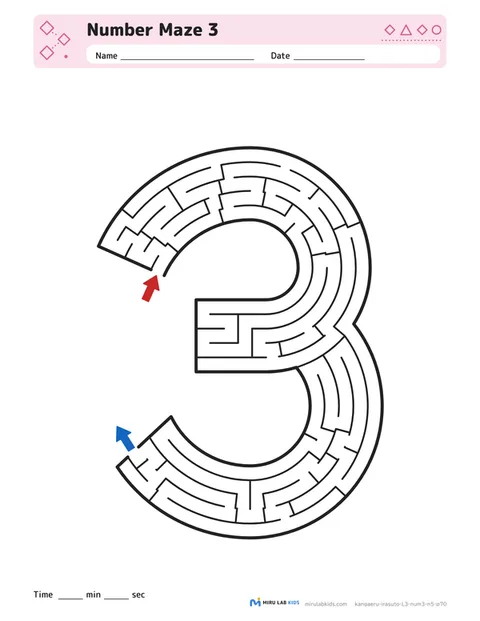
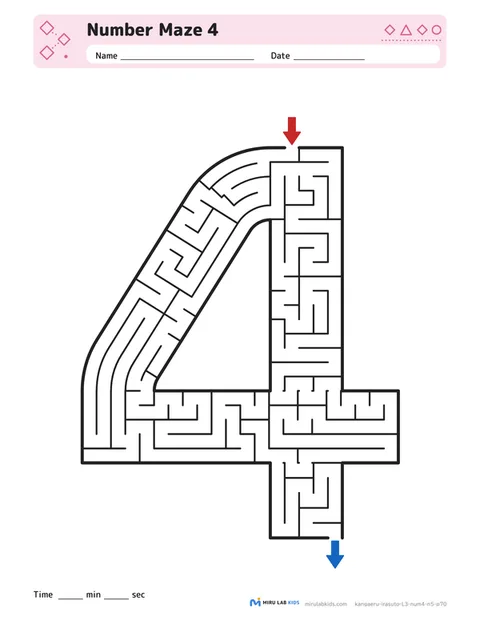
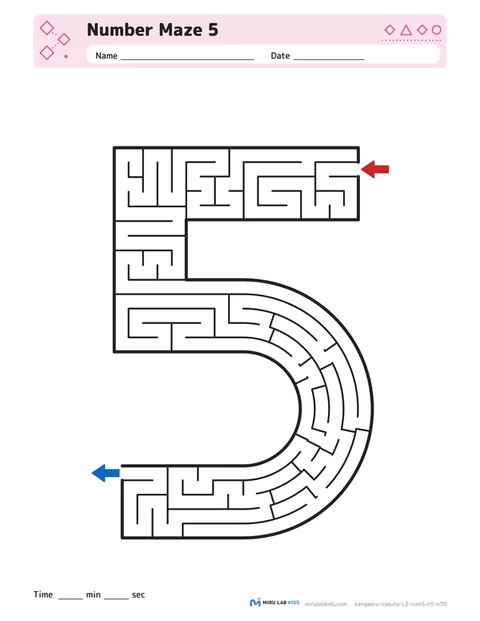
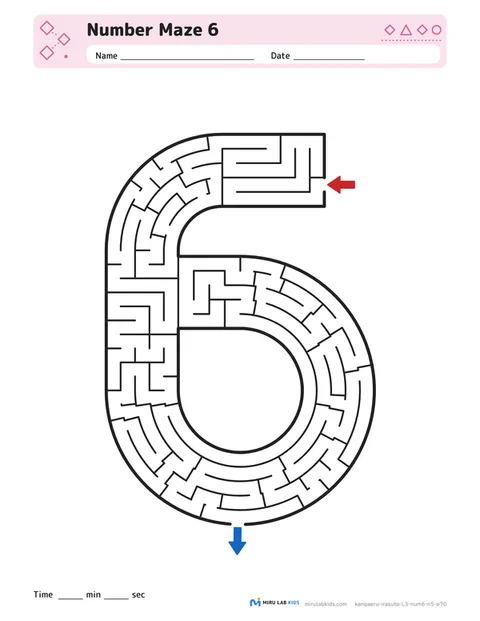
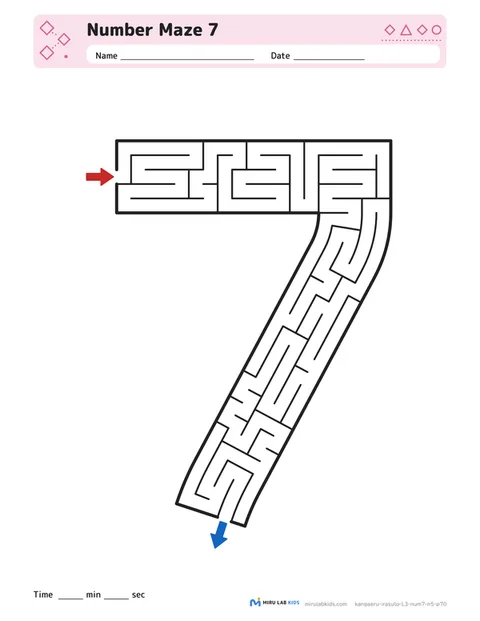
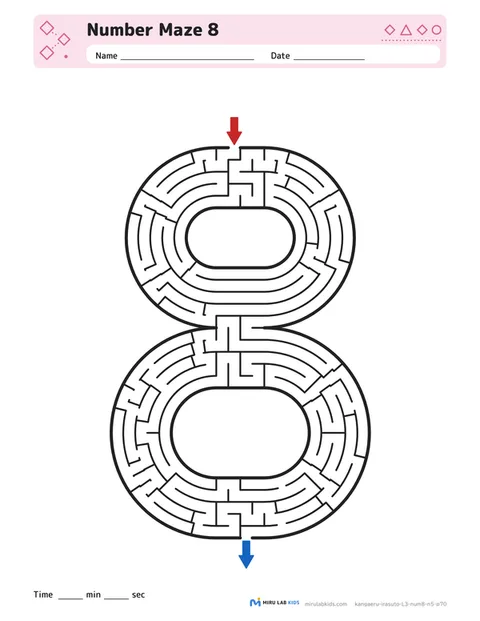
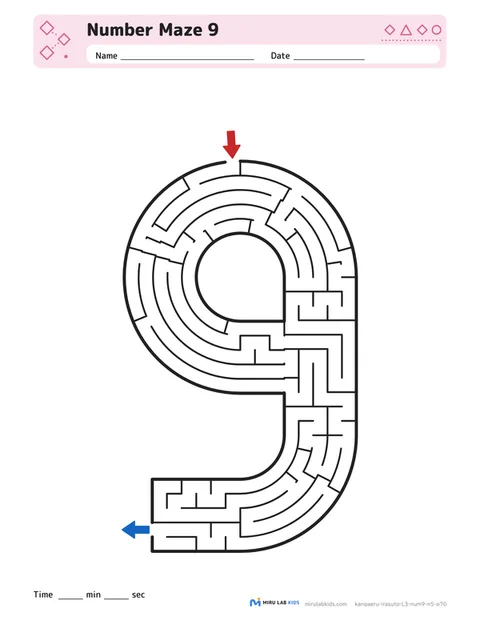
Your child traces a path through a maze shaped like a number, from the start to the finish, with their eyes and a pencil.The path winds through the whole number, so solving the maze means tracing the shape of the number.The activity aims to build the ability to follow a path ahead with the eyes, and to draw a line carefully inside a narrow path.
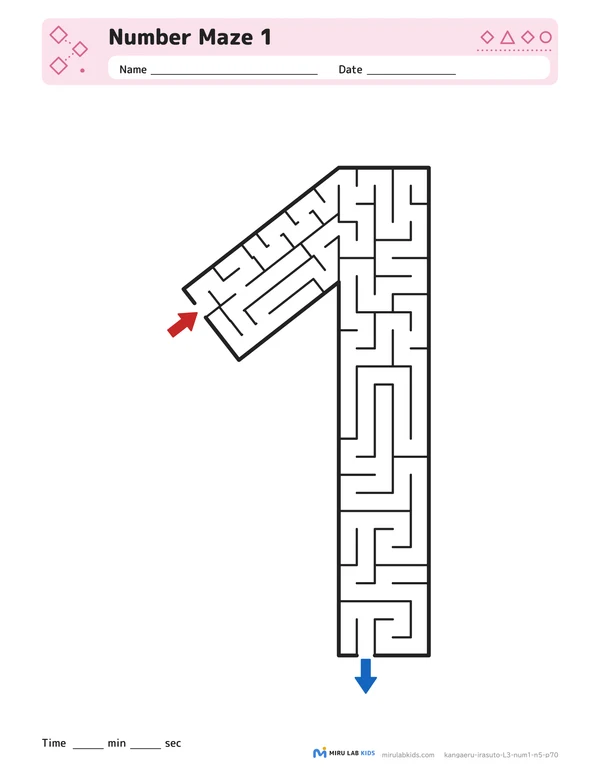 Level 3 example ›
Levels
| Level 1 | Easy. 3 paths inside the number, with wider paths. | 9 worksheets |
|---|---|---|
| Level 3 | Hard. 5 paths inside the number, with narrower paths and more branches and dead ends. | 9 worksheets |
Tips
- Draw a line with a pencil along the path inside the number, from the red arrow (start) to the blue arrow (finish).
For what to say, choosing a level and what to do if it is too hard, see Number Mazes: a guide for grown-ups.
Worksheets
Choose a worksheet to open its printing page.
Print in bulk
Level 1Easy. 3 paths inside the number, with wider paths.
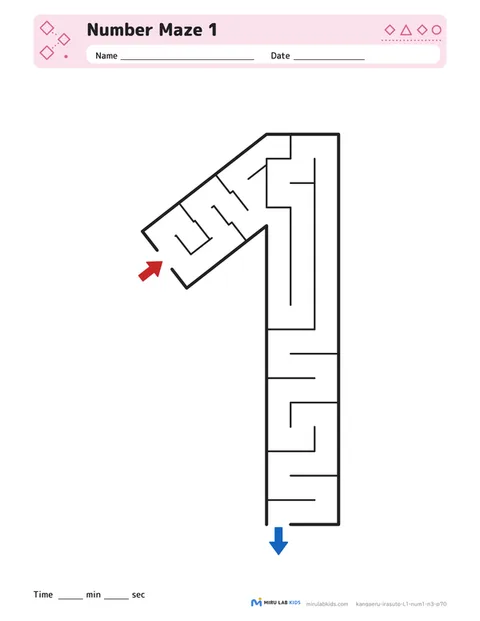
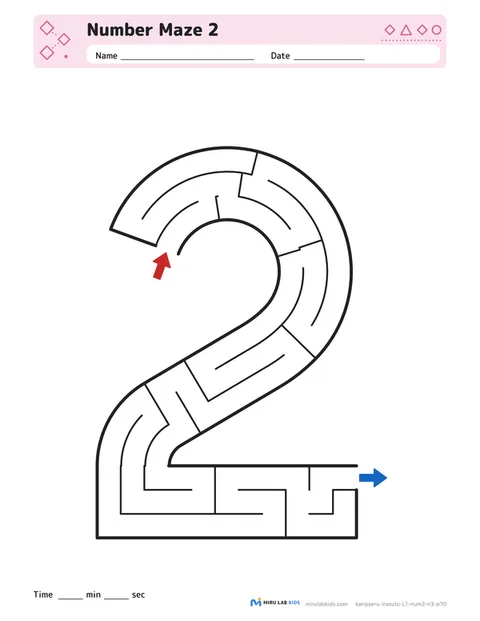
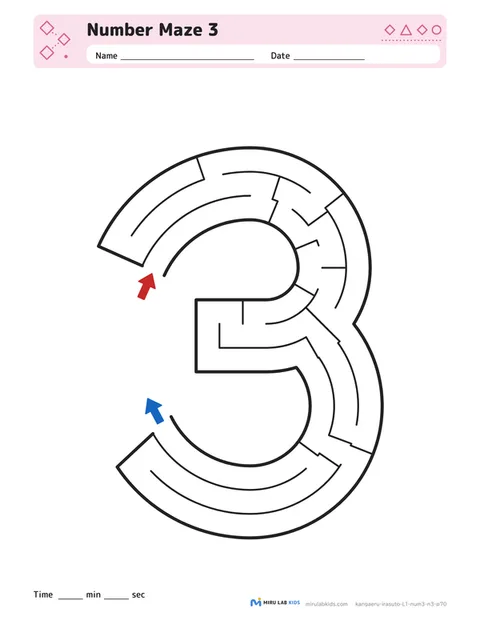
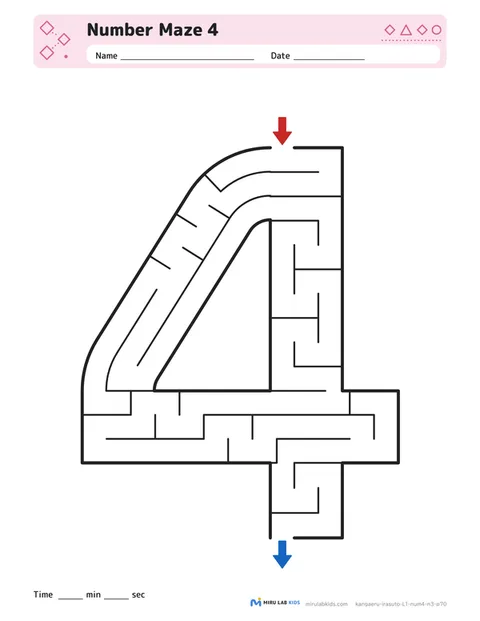
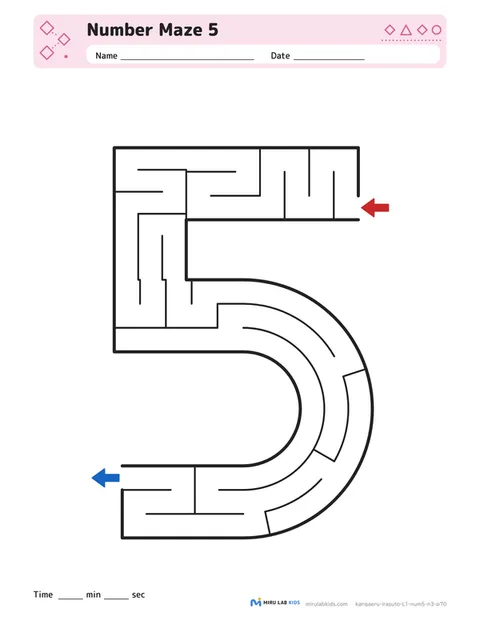
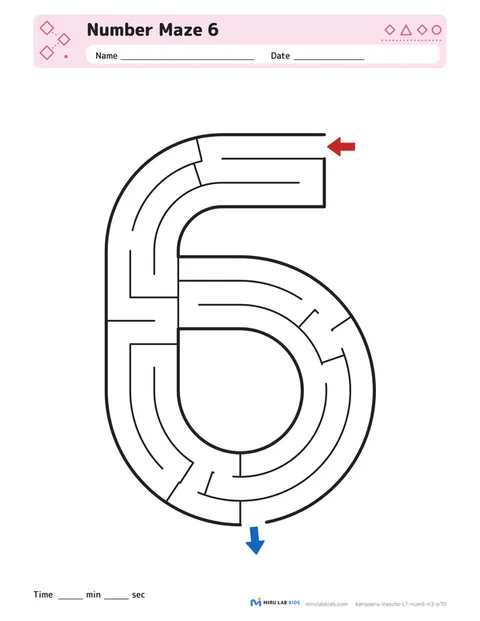
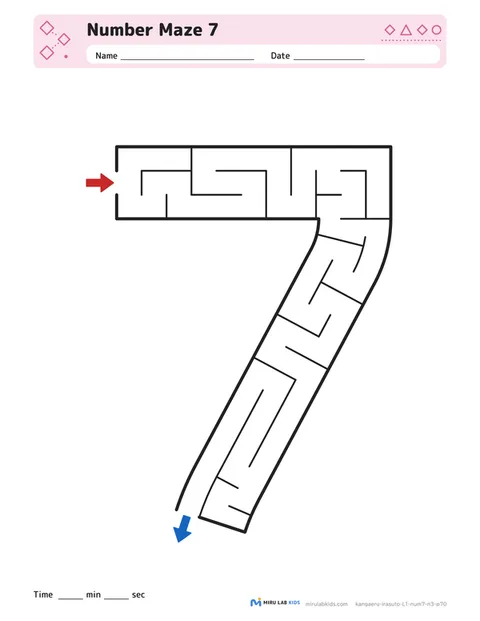
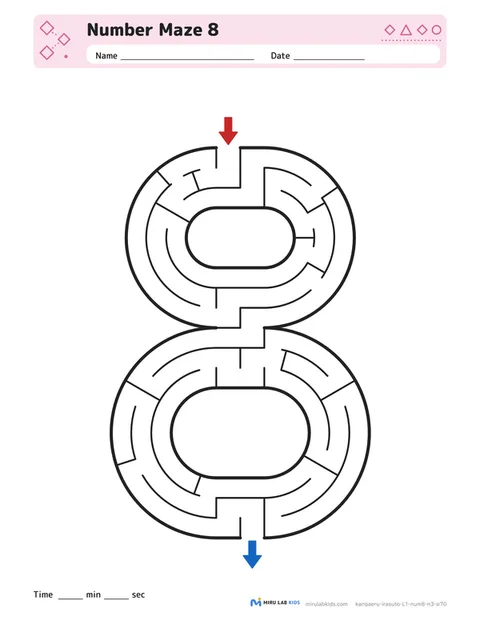
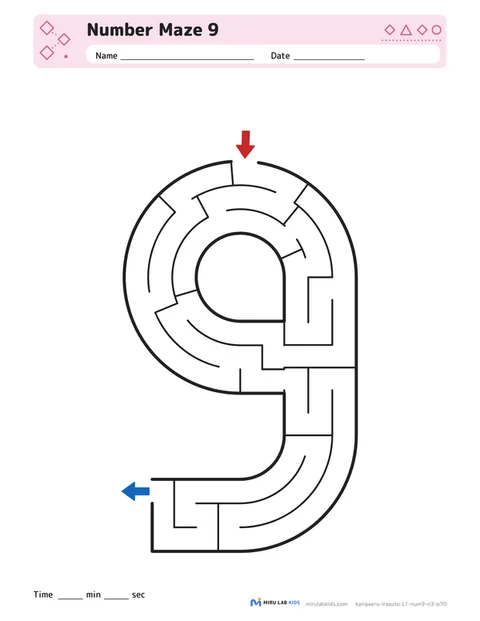
Level 3Hard. 5 paths inside the number, with narrower paths and more branches and dead ends.
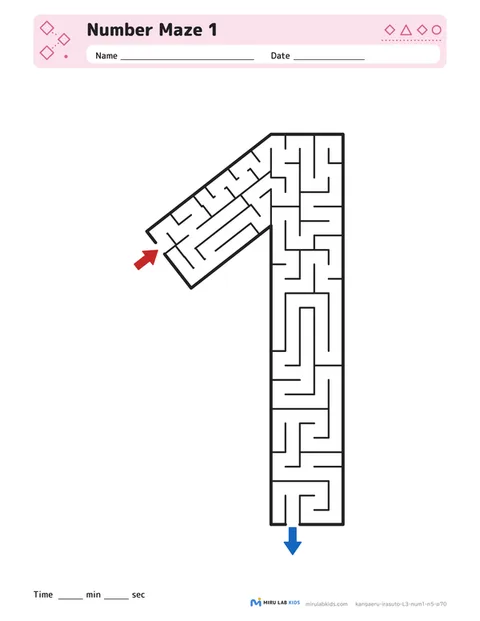
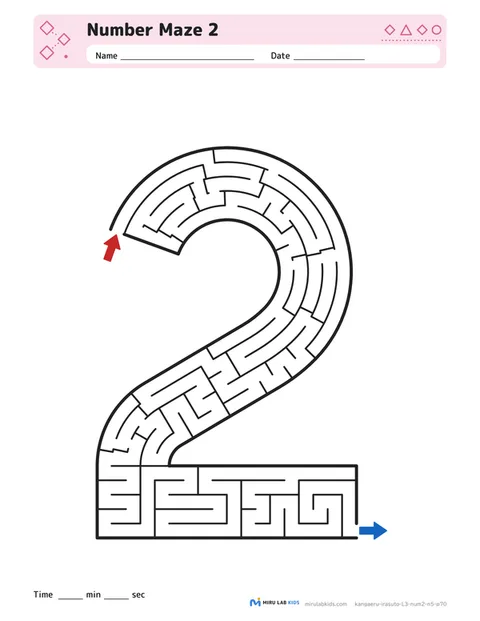
Number Mazes: a guide for grown-ups
Who it is for
- Still learning number shapesSolving the maze means tracing the shape of the number.
- Staying inside the lines is hardPractice moving the hand while looking, so the line stays on a narrow path.
- Following with the eyes is hardPractice following a winding path ahead with the eyes.
- Loves mazesA favorite game that also builds familiarity with numbers.
- Doesn't like writing numbersNot a writing drill. Your child traces the number shape as a maze.
- Therapy and classroom sessionsAll you need is one sheet of paper and a pencil.
Choosing a level
Reached the finish happily, inside the path
- Choose Hard (Level 3).
- Try numbers with loops (6, 8, and 9).
Keeps going into dead ends or the line goes over the walls
- Choose Easy (Level 1).
- Start with numbers that have long straight parts (1 and 7).
What to watch for
| Looking ahead | Does your child look ahead along the path before moving the pencil? Or just go wherever the pencil leads? |
|---|---|
| Loops | Does your child get lost on paths that go around a loop, as in 6, 8, and 9? |
| Lines | Does the line stay inside the narrow path? Does it go over at the corners? |
| Pencil grip | Is your child gripping the pencil too hard? Is the other hand holding the paper? |
| Number shape | After finishing, does your child know which number it was? |
| Time | Writing the time at the bottom of the page each time makes small changes easier to notice. Copying it onto the Time Log lets you line up results at the same level. |
If something keeps worrying you, it can help to talk with an eye doctor or another specialist rather than deciding on your own.
Things you can say
- Before startingWhich number is this?After naming the number, point to the red arrow (start) and the blue arrow (finish) together.
- At a branchWhich way gets to the finish?Do not give the answer right away. Let your child look ahead and choose.
- At a dead endLet's go back and try another way.Going into a dead end is not a failure. Going back and trying again is fine.
- When finishedYou traced the whole 3!Say the name of the number along with the praise.
- Next timeYou stayed inside the path today!Notice changes in care, not just speed.
FAQ
Is there an answer page?
Yes. Page 2 of the PDF is the answer page. Worksheet-only and answers-only PDFs are also available.
Can I print in black and white?
The start is a red arrow and the finish is a blue arrow. If you print in black and white, point to the start and finish together before beginning.
Why are there only two levels, Easy and Hard?
The path runs inside the shape of a number, so the levels are set by the number of paths. Easy has 3 paths and Hard has 5.
Are there square mazes?
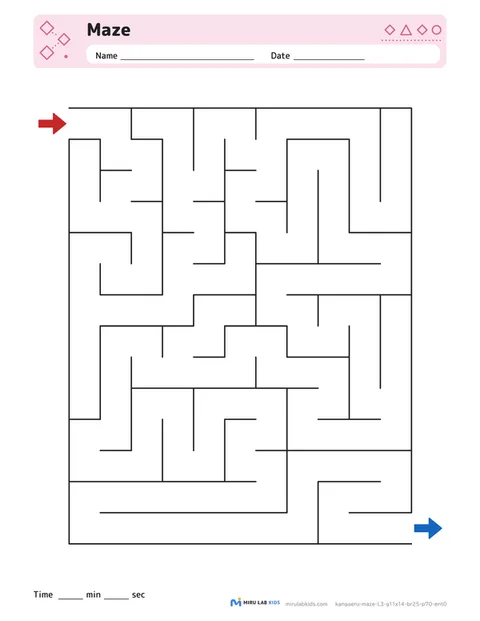
Yes. "Mazes" are square grid mazes with five levels.
How much should we do at a time?
There is no set amount. One or two mazes at a time is a good guide, and it is best to stop while your child still wants a little more. See "Every Day? How Much?" for more.
Articles
- What Is Visual Perception? More Than Good Eyesight
- Why Does My Child Put Clothes On Backwards or Inside Out? Getting Dressed Uses More Visual Skills Than You Think
- When a Child Has Trouble Catching a Ball: Breaking It Down from "Tracking" to "Reaching"
- When a Child's Tracing Slips onto Another Shape: Understanding Figure-Ground Perception
About the code at the bottom right
The code at the bottom right of each worksheet (for example, kangaeru-irasuto-L1-num1-n3-p70) shows its difficulty settings. Worksheets with the same code have the same difficulty. If you contact us about a worksheet, including this code helps us find it right away.
 Shape Recognition
 Spatial Relations
 Visual Scanning
 Visual Memory
 Visual-Motor Skills