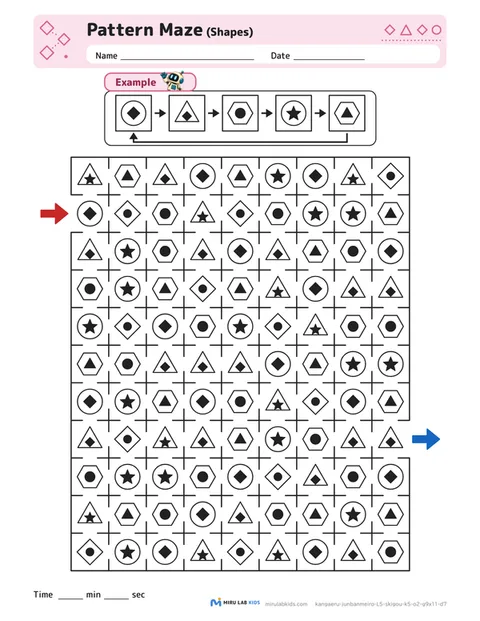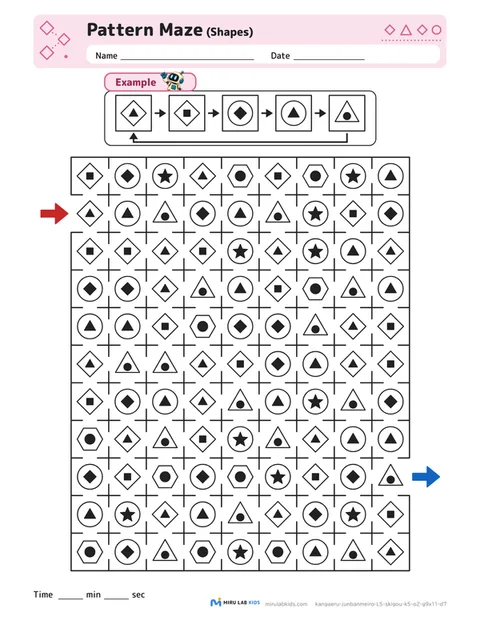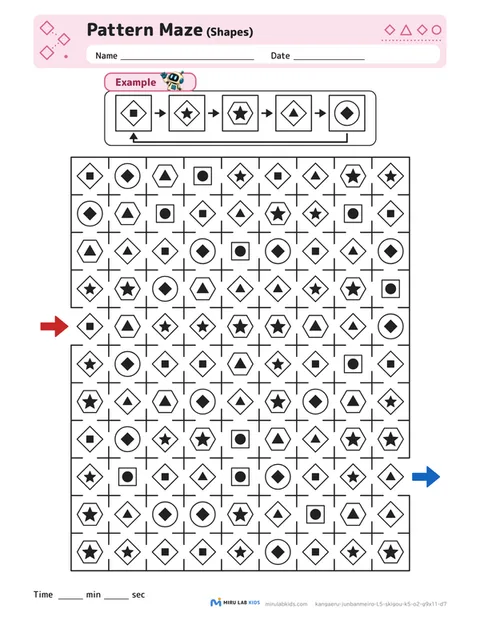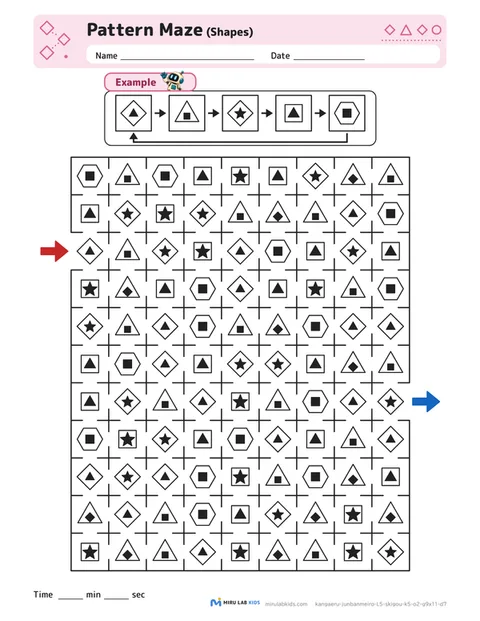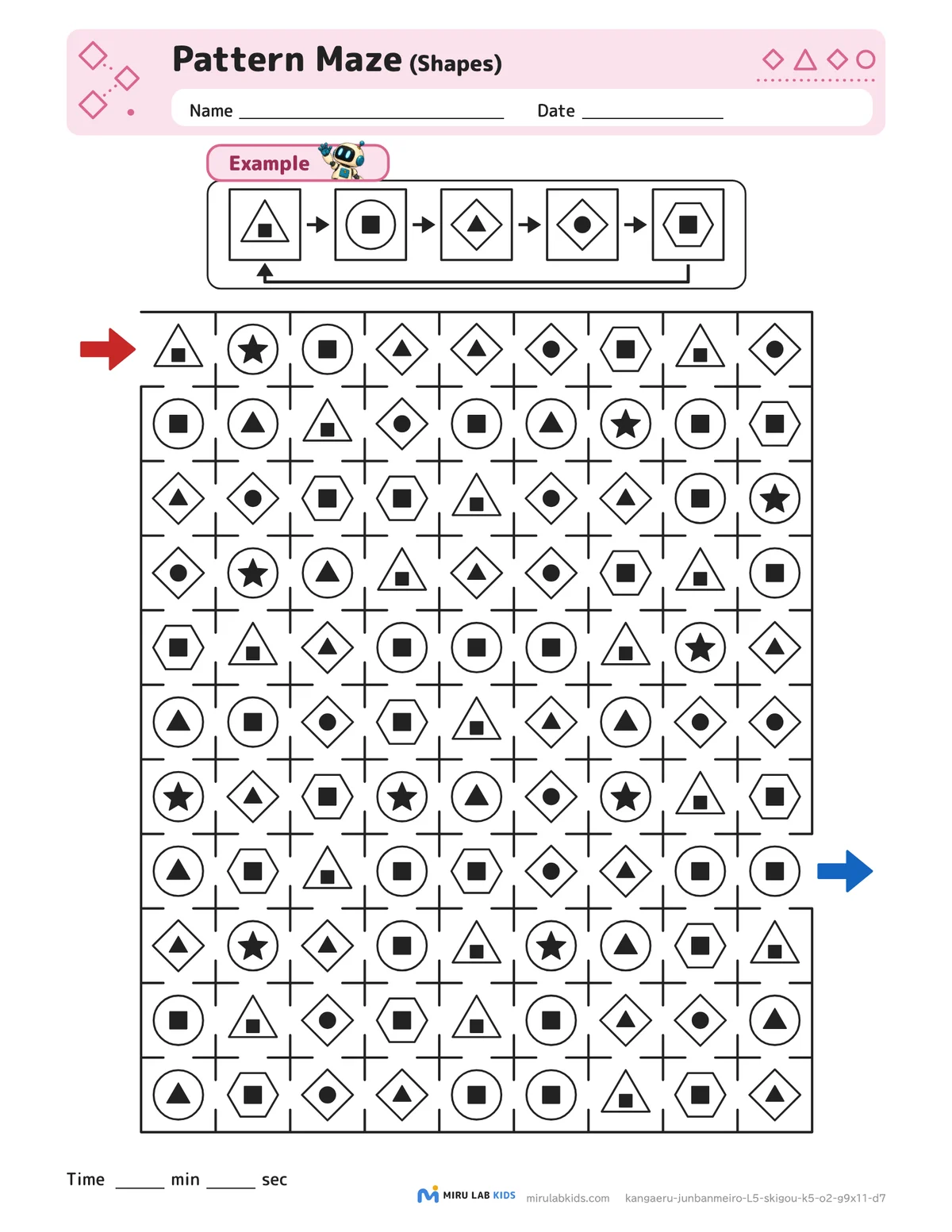
Pattern Maze: ShapesLevel 5 · No. 3
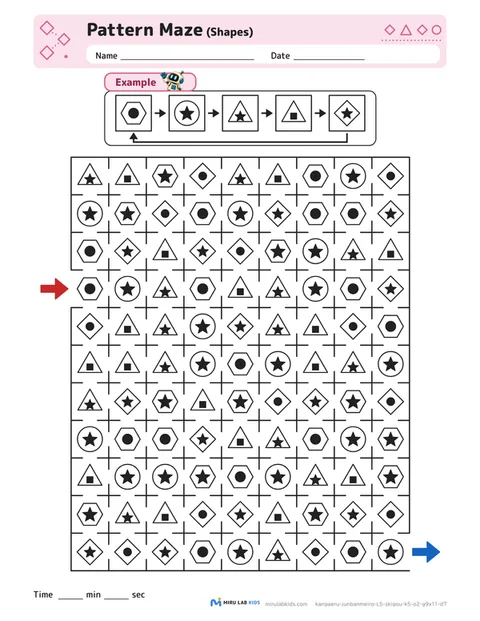
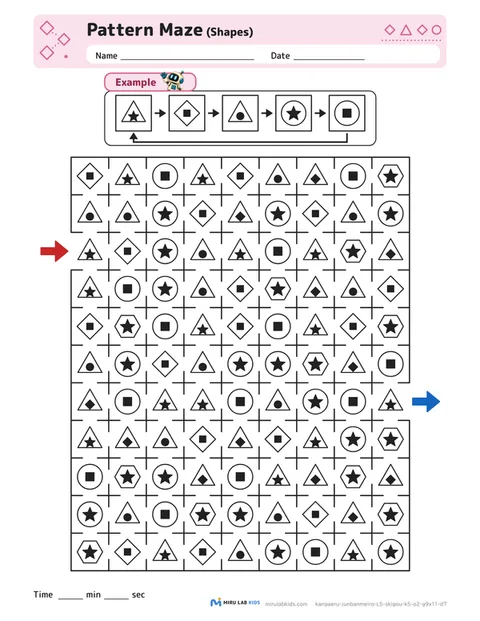
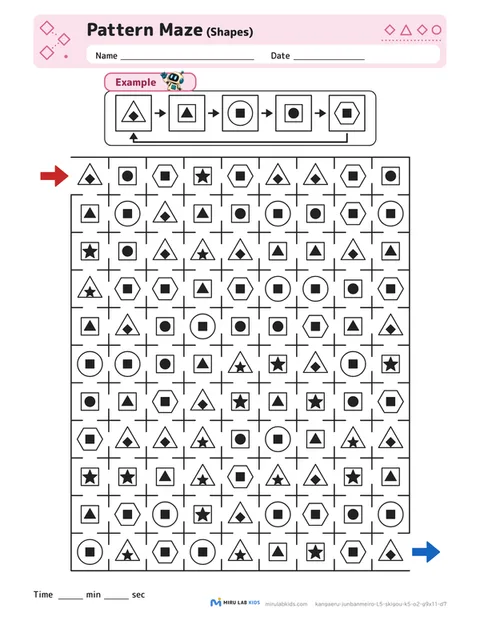
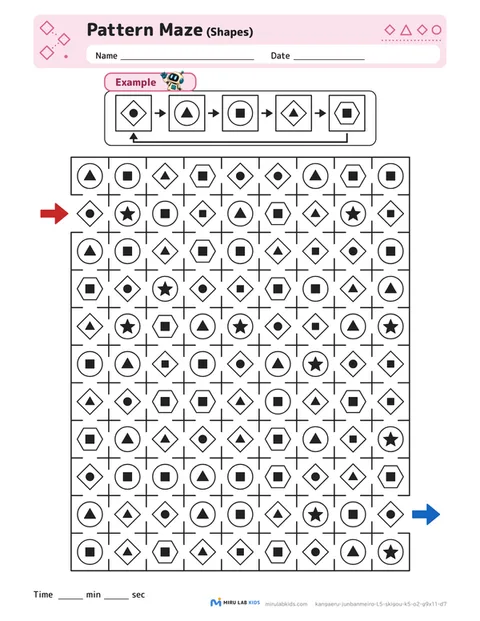
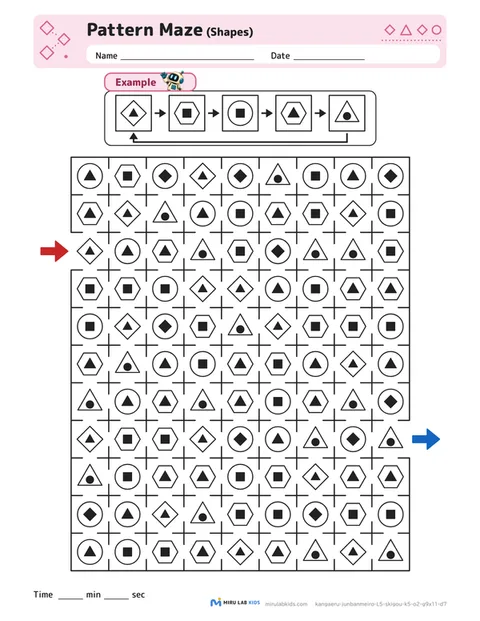
9 × 11 squares, a pattern of 5 symbols. Symbols that share only the outer shape or only the inner shape are mixed into the pattern.
Aimsvisual discrimination / visual search / working memory / planning
PrintUS Letter
Worksheet + answers2 pagesA4 paper
Opens a PDF. Page 1 is the worksheet and page 2 is the answers. Please do not repost or sell the worksheets.
Prints well in black and white.
Terms of Use
Aims of this activity
- Telling apart small differences in shape (visual discrimination)
- Finding the next symbol among the nearby squares while comparing it with the pattern (visual search)
- Keeping a pattern that is hard to name in mind while moving (working memory)
- Looking ahead at a branch to choose the way (planning)
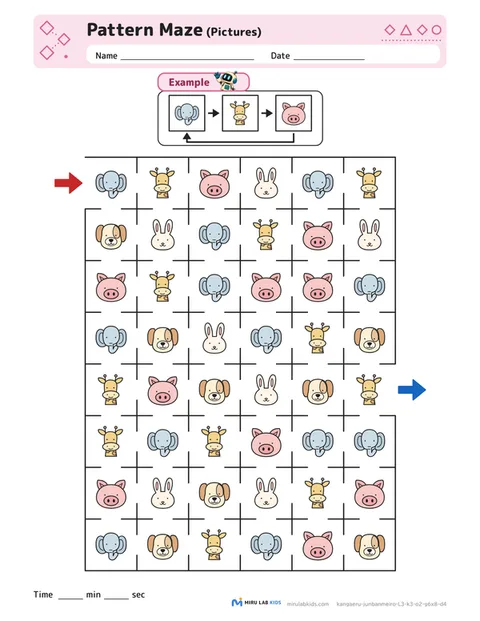
Your child follows the symbols in the order shown at the top of the page (after the last symbol, the pattern starts again from the first), moving from the start to the finish.The rule is the same as in "Pattern Maze: Pictures," but the symbols have no color, and at higher levels they become hard to name, like "a star in a circle." Your child cannot simply say the names while moving, so they need to compare small differences in shape with the pattern again and again.It is a step up, best tried after the picture version.
Code at the bottom right: kangaeru-junbanmeiro-L5-skigou-k5-o2-g9x11-d7
Tips
- Check the order of the symbols at the top. After the symbol on the right, go back to the symbol on the left.
- From the square at the red arrow (start), draw a line with a pencil to the next square up, down, left, or right, following the pattern. No diagonal moves.
- The maze is done when the line reaches the blue arrow (finish).
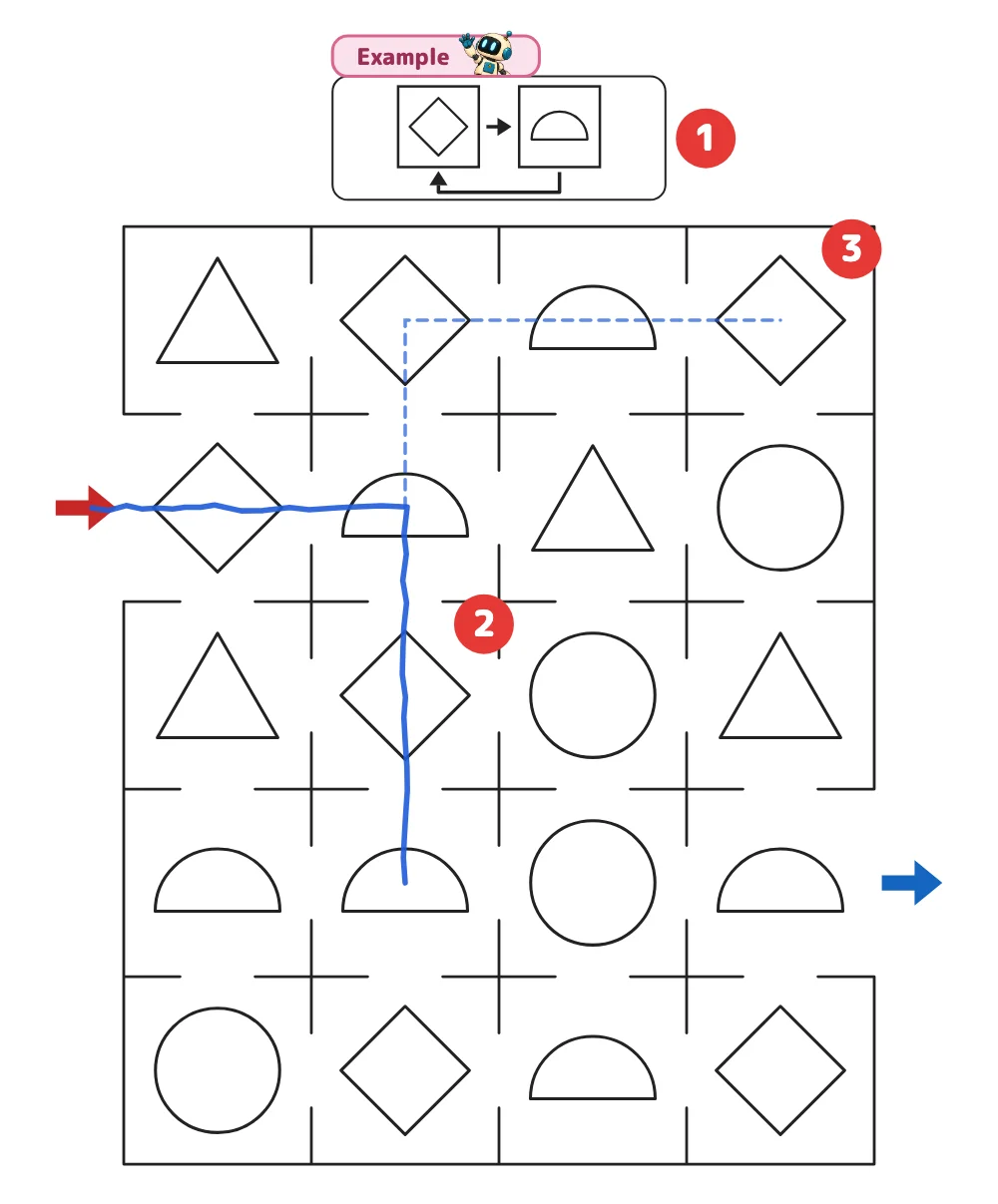
- Follow the patternDiamond → half circle → diamond → half circle … After the last symbol, start again from the first.
- Up, down, left, or right onlyThe corners of each square are closed, so no diagonal moves.
- At a dead end, go backWhere the next symbol is in two neighboring squares, the path branches. Going into a dead end is fine. Just go back and look for another way.
For what to say, choosing a level and what to do if it is too hard, see Pattern Maze: Shapes: a guide for grown-ups.