Count the ShapesLevel 4 · No. 3
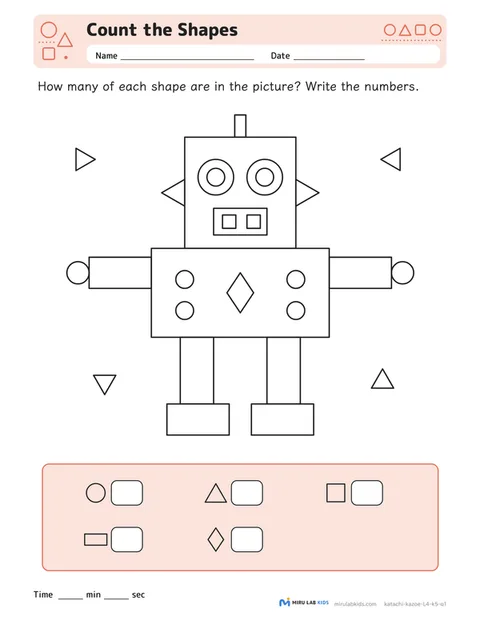
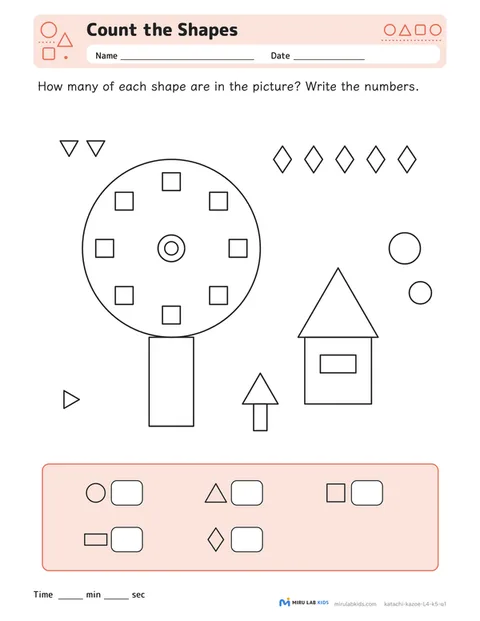
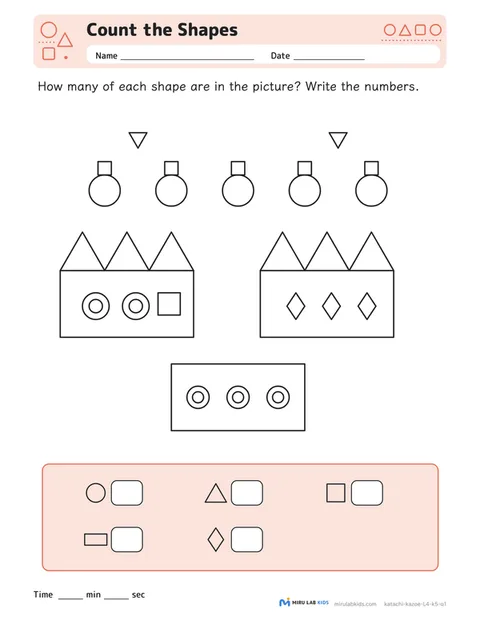
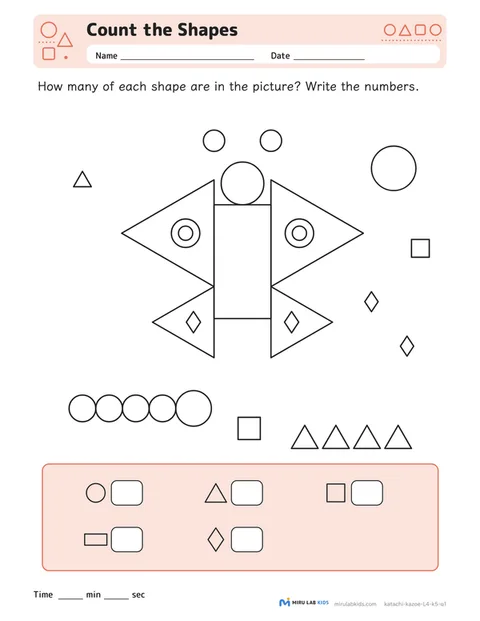
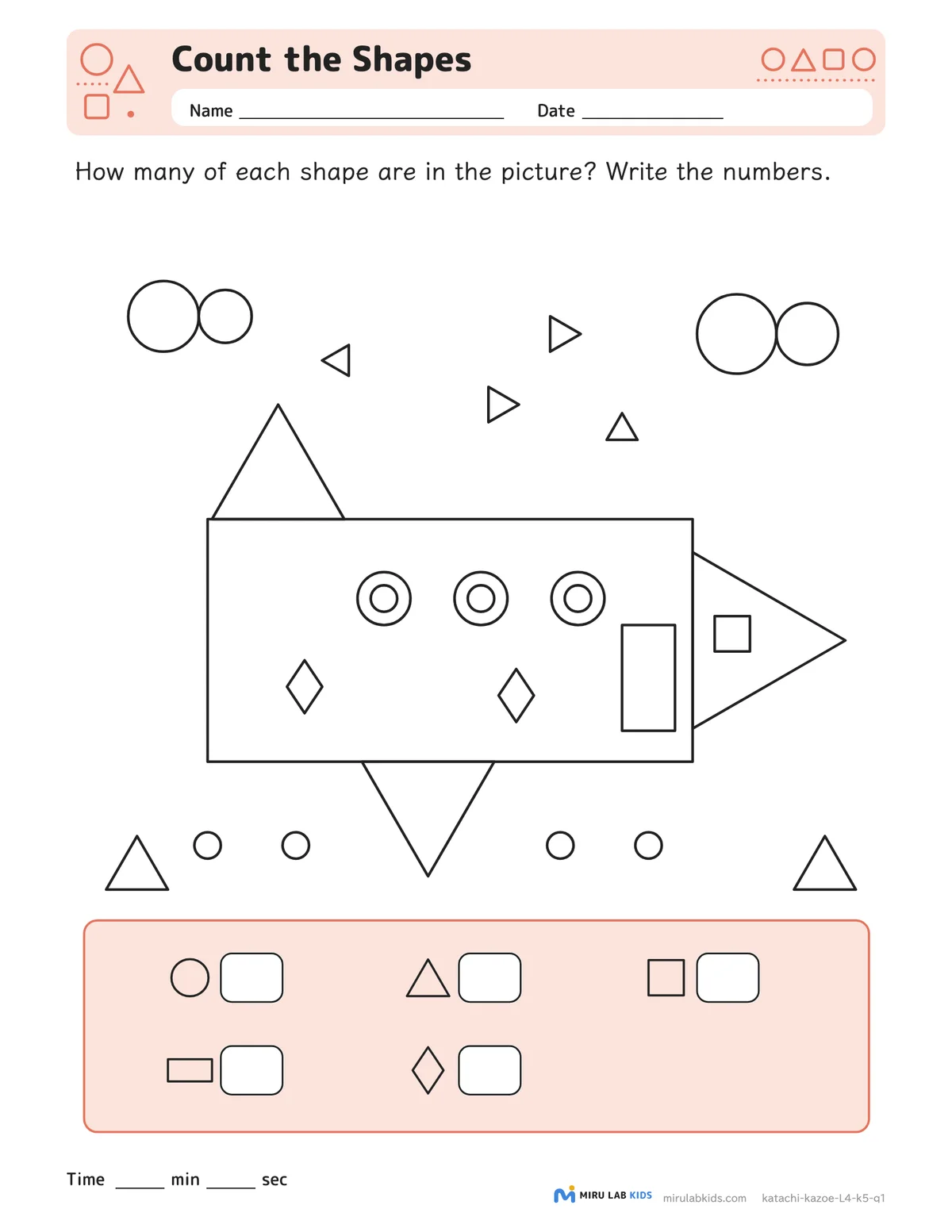
Diamonds are added (5 kinds). About 26 to 35 shapes, with triangles turned in different directions and circles inside circles. 1 picture per page.
Aimspart-whole perception / form constancy / visual discrimination / attention and visual scanning
PrintUS Letter
Worksheet + answers2 pagesA4 paper
Opens a PDF. Page 1 is the worksheet and page 2 is the answers. Please do not repost or sell the worksheets.
The worksheets print fine in black and white. The answer page colors each kind of shape differently, so color printing is recommended for it.
Terms of Use
About this worksheet
| Pictures | "Airplane" |
|---|---|
| Shapes to count | circle, triangle, square, rectangle, diamond |
| How shapes meet | touching, shapes inside shapes, circles inside circles, triangles turned |
- Before counting, talk about what the picture shows and which shapes it is made of.
Aims of this activity
- Seeing a whole picture as separate shapes (part-whole perception)
- Knowing a shape is the same even when its size or direction changes (form constancy)
- Telling apart similar shapes, such as squares and rectangles (visual discrimination)
- Keeping track of which shapes have been counted so none are missed (attention and visual scanning)
Your child looks at a picture made of shapes, counts how many of each shape are in it, and writes the numbers in the boxes.To do this, they need to see a house, a vehicle or an animal not as one picture but as many separate shapes.At higher levels there are more shapes and more kinds, shapes touch each other, and shapes sit inside other shapes.Levels 4 and 5 also include triangles pointing in different directions and circles inside circles.Every shape has the same proportions as the shape in the answer box; only the size changes.Your child can compare and ask, "Which ones match this shape?" The activity aims to build the ability to break a picture into shapes and to count without missing any.
Code at the bottom right: katachi-kazoe-L4-k5-q1
Tips
- Pick one kind of shape, find only that shape in the picture, and write how many in the box. Putting a check mark on each shape as you count helps avoid missing one or counting it twice.
For what to say, choosing a level and what to do if it is too hard, see Count the Shapes: a guide for grown-ups.